
Skip to content
Broken UFO Project BROKEN UFO
Archive / Document
SOURCE PUBLIC DOCUMENT DOC-00702 REPORT GEPAN — CENTRE NATIONAL D'ÉTUDES SPATIALES (CNES)

GEPAN Technical Note No. 16: the report that says, in writing, that it does not know

Sixty gray pages from the French space agency about a patch of Provençal earth. No craft, no cosmic hypothesis, not one adjective too many. The most important document a European public body has produced on this subject.

DOCUMENT SUMMARY

GEPAN technical report on the event reported on January 8, 1981 in Trans-en-Provence (Var). It covers the intervention of the Draguignan Gendarmerie, the photographic and dimensional record of the trace, the soil and vegetation sampling protocol with controls, the physico-chemical analyses and the plant biochemical study by Michel Bounias's team. It documents compaction and heating of the ground and alterations in the pigments and metabolism of the nearby plants, and states that it does not identify a cause.

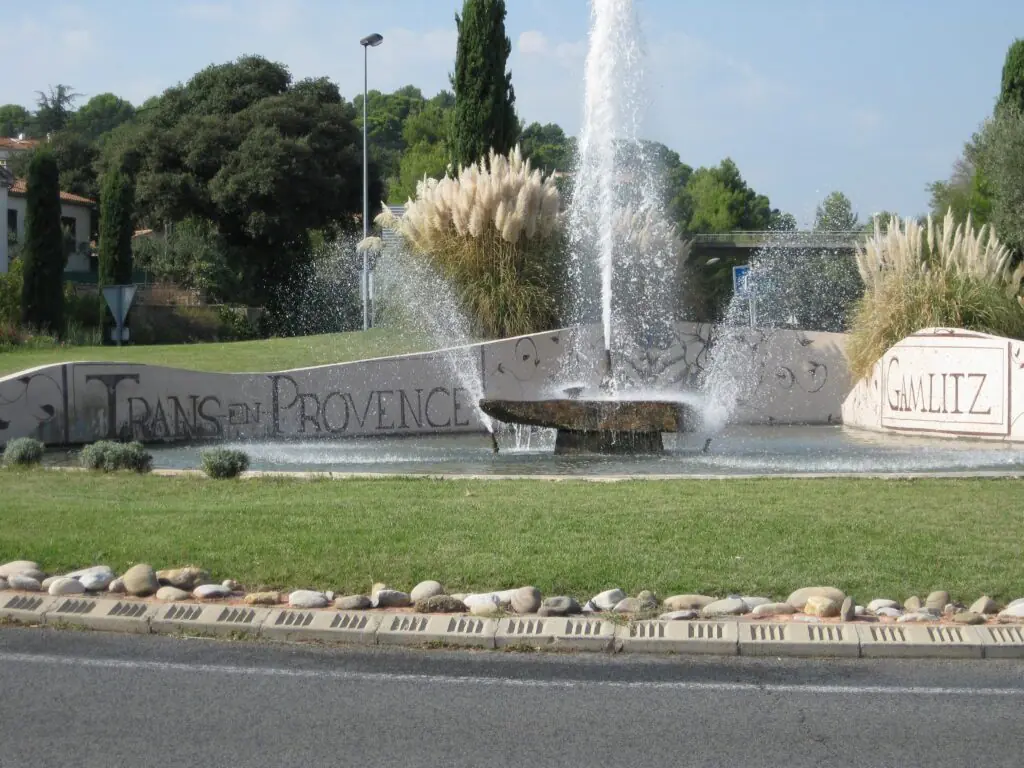
Fountain at the entrance to the village of Trans-en-Provence, in southeastern France.
CLASSIFIED DOC-00702
Type
REPORT
Source material
PUBLIC
Agency
GEPAN — Centre National d'Études Spatiales (CNES)
Date
01 Mar 1983
Reference
Note Technique n.º 16 — “Enquête 81/01, Analyse d'une trace”
Log
21.05.2026 · 490 words · 3 min
Start reading
Agency GEPAN — Centre National d'Études Spatiales (CNES)
Date 01/03/1983
Source material PUBLIC
Words 490

Sixty-odd pages, gray cover, space agency letterhead. A title that promises nothing: “Enquête 81/01 — Analyse d’une trace.” Inside, black-and-white photographs of a patch of Provençal earth, dimensioned diagrams, laboratory result tables and sampling protocols. No craft. No cosmic hypothesis. Not one adjective too many.

This is the most important document a European public body has produced on this subject, and it is so dull that almost no one who cites it has read it.

CENTRE NATIONAL D'ÉTUDES SPATIALES — GEPANREF: NOTE TECHNIQUE N° 16

Enquête 81/01 — Analyse d'une trace

Document · NOTE TECHNIQUE N° 16

Report on the investigation of the event reported on January 8, 1981 in Trans-en-Provence (Var). It contains the record of the intervention by the Gendarmerie brigade of Draguignan, the photographic and dimensional record of the trace, the protocol for taking soil and vegetation samples with their controls, the results of the physico-chemical analyses and the biochemical study of the plant material.

What it actually contains

The structure of the report is that of any engineering technical note, and that ordinariness is its greatest virtue. First, the administrative facts: who reports, when, to whom, what is done. Then, the physical description of the site with dimensioned plans. Next, the sampling protocol, which is the part to read closely: samples were taken inside the trace and at increasing distances outward, precisely so that they could be compared.

Then come the results. The soil of the trace showed anomalous compaction relative to the controls and signs of having been heated. Differences were recorded in the concentration of certain elements between the samples from the mark and those taken a few meters away. And the plant material (wild alfalfa, luzerne) showed, against the controls, a significant loss of photosynthetic pigments and a biochemical profile that the team of Michel Bounias, of the agronomic research institute in Avignon, described as characteristic of accelerated aging.

And at the end, the sentence that makes the document great: no cause is identified. No embellishment, no insinuation, nothing dropped in passing. A public body saying in writing that it does not know.

What it does NOT contain, which is what you need to learn

  • It does not say that a craft landed.
  • It does not propose an origin, human or otherwise.
  • It does not claim the witness told the truth or lied: it records his statement as what it is, a statement.
  • It does not explicitly rule out that the trace could have had a conventional mechanical origin predating the event, because nobody reconstructed the earlier use of that terrace.
☢
THE FIGURES ATTRIBUTED TO IT THAT ARE NOT THERE
Very specific quantities circulate online, attributed to this report: exact tonnages of load, exact temperatures in degrees, exact percentages of chlorophyll loss. A good part of those numbers come from secondhand summaries and popular books. The document is published and can be consulted: before citing a figure, look for it inside. This site refuses to repeat numbers it cannot point to on the page.

Why it remains the gold standard

Because it is auditable. That is the whole point.

A report that publishes its protocols allows someone, forty years later, to point out its flaws. And they have been pointed out: the delay in analyzing part of the plant material, the absence of a reconstruction of the land’s prior use, the reliance on a single witness. Those objections exist because the document made them possible. A report that does not publish its method cannot be criticized, and a report that cannot be criticized is worth nothing, however spectacular its conclusion.

The full case file this note belongs to is developed in our case profile, and the document can be consulted in the public archive the agency opened in March 2007. Read it before citing it. It is a good exercise: it takes an afternoon and cures a good many things.

OSINT – Source traceability

File completeness50/70
View breakdown
  • +15 Type: oficial
  • +10 Identified entity
  • +10 Source date
  • +5 Editorial notes
  • +5 Verification level assigned
  • +5 Documented corroboration
Source type Official
Entity / Origin GEPAN / CNES
Verification level V1 · Verified
Timeline
Published source
Published on BUFO
OSINT editorial notes

The content of the report is described in qualitative terms, and the specific figures that circulate attributed to it are deliberately avoided, since they mostly come from secondhand summaries.

Sources
[01] GEPAN (CNES), Note Technique nº 16: “Enquête 81/01 — Analyse d'une trace”, 1983. Case file for the Trans-en-Provence case, January 8, 1981.
Channel active
Newsletter
SEC:BUFO
Email newsletter

Get a briefing when something moves in the dark.

New case files, declassified documents, recommended reading and signs of anomalous activity. One email when it matters. Zero noise. Zero spam.

No mass mailings
Unsubscribe anytime
OSINT-friendly
Activate subscription
Alternate channel
Follow via RSS
Unit note

We don't sell your email, we don't run campaigns, we don't chase you with cookies. We only send what deserves a place in your archive.

Stable signal No ads One-click unsubscribe