
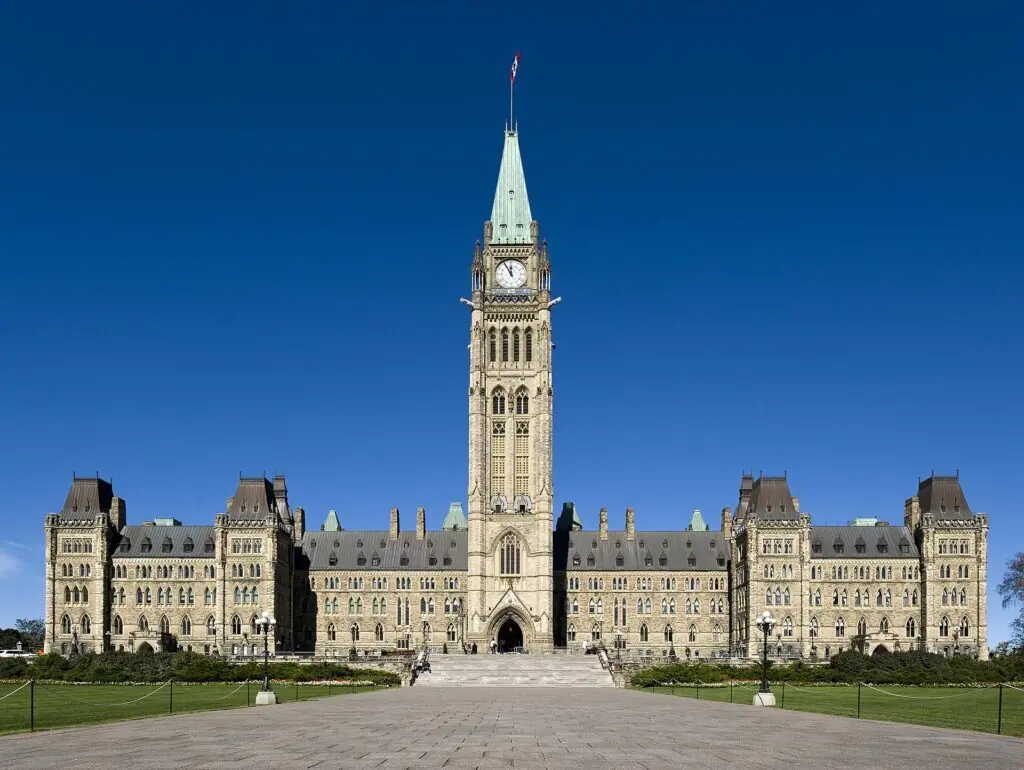
174 Signatures in Ottawa: The Petition to Open Canada’s UAP Files
An electronic petition opened on November 4 in the House of Commons asks for a federal framework, parliamentary oversight and public data on UAP. It has 174 signatures; this is what it asks for and what it does not guarantee.
The House of Commons of Canada opened electronic petition e-7920 on UAP on 2026-11-04. As of 2026-11-08 it has 174 validated signatures and it closes on 2027-03-04.
Executive summary of the case file. Everything essential before you dig deeper.
Fact sheet
OSINT - Traceability
Some petitions arrive with trumpets and others arrive like a guard report: one line, a time, a stamp. This one is the second kind. On Wednesday, November 4, 2026, at 9:47 a.m. (Ottawa time), the House of Commons of Canada opened electronic petition e-7920, on unidentified anomalous phenomena, for signatures. Four days later, on November 8, the official page showed 174 validated signatures.
One hundred seventy-four, with a caveat: the record gives no time for the count, and the copy I saved is from 07:20 UTC that day. It is worth saying so early and plainly, because with a figure like this the easy headline would be to inflate it, and the other easy one would be to dismiss it. What is worth doing is reading what it asks for, what exactly a petition of this kind is, and what the official report it relies on says.
What it asks for
The original text is in English. It starts from a recital: that the Sky Canada Project, run by the federal government itself, identified gaps in the collection, analysis, coordination and public information on unidentified anomalous phenomena (UAP; the petition says “Unidentified Anomalous Phenomena” and the report says “Unidentified Aerial Phenomena”), and recommended more transparency, scientific research and public access to the data. Another recital asks that credible incidents be documented without presuming their origin or nature.
On that basis, the signatories ask the Government for five things, which I summarize closely:
- A coordinated federal framework to document, analyze and investigate UAP incidents in Canadian airspace.
- Parliamentary oversight, with mechanisms to review classified information.
- That departments review historical and current UAP records so they can be declassified and published to the extent the law allows.
- A central, public repository of the records that can be released.
- Regular public reports on the incidents investigated.
Note what is missing: not a word about craft, visitors or conspiracies. It is a petition about archives and procedure. Whoever signs it does not declare that there is anything up there; they ask that, if someone is looking, they write it down, keep it and show it.
What an e-petition is, and what it is not
The House itself warns about this at the foot of each record, and it is the part almost nobody quotes. No Member of Parliament is obliged to present a petition. A member authorizing its publication or presenting it does not imply that they support it. And until a member presents it in the House, it does not enjoy parliamentary privilege. If it does get presented, the Government’s response is published as is. It can only be signed once and signatures cannot be withdrawn.
In other words: today this is a text with 174 supporters on a parliamentary website. There is no debate, no committee, no commitment from anyone. If the Government does end up replying, that will be what happens next, and today’s record does not say it has happened.
What the report it relies on says
The Sky Canada Project is a work of the Office of the Chief Science Advisor. Its report, “Management of Public Reporting of Unidentified Aerial Phenomena in Canada”, is dated June 2025 and contains fourteen recommendations, which it lists without numbering; I cite them by their order in the list. The petition does not invent its basis: the report says, in English, that “Currently, UAP reports are scattered across multiple government and non government organizations” and that “There is no official, accessible platform for Canadians to report UAP sightings”.
It also says that “Most departments do not compile the reports they receive” and that there are “very few funded projects related to UAPs”.
Numbers 8 and 13 deserve a line of their own, because they are the ones that link to what the petition asks. Recommendation 8 says that UAP data “should be made available to the public for transparency and to support research”. Number 13 proposes that the responsible body partner with international entities such as AARO and NASA (United States), GEIPAN (France) and SEFAA (Chile).
The report describes GEIPAN as the body whose mission is “to collect, investigate and archive UAP reports, and make its findings available to the public”, and says that SEFAA publishes monthly reports with the cases received, investigated and closed.
Where the report and the petition part ways
Here is the most interesting part, and it comes from reading the documents, with no opinion in between. The petition is classified by the House under “National defence and military operations”.
The report, by contrast, says it focuses “primarily on the civilian aspects of UAP sightings in Canada”, that is, it leaves military sightings out.
Nor does it describe any Canadian parliamentary oversight of the matter. It cites the Mexican Congress hearings of September 2023 and a U.S. law, the Safe Airspace for Americans Act, introduced in January 2024.
What it does not do is propose anything similar for the Parliament in Ottawa. That is, the petition cites the report as backing and then goes further: it asks to look inside the defense sphere, review classified material and bring oversight to the members of Parliament.
There is no official, accessible platform for Canadians to report UAP sightings.
Sky Canada Project, June 2025 report (verbatim in English; own translation: “There is no official and accessible platform for Canadians to report UAP sightings”)
Outside Canada, that debate already exists. In the United States, for example, there is a partial waiver of the nondisclosure agreements of Pentagon personnel, a Grusch lawsuit against the Pentagon under the Freedom of Information Act (FOIA) and the testimony of David Grusch, who testified before Congress in 2023.
None of those U.S. episodes proves what Canada is asking for; they only show where the bar stands today south of the border. That it goes further does not invalidate it. But whoever reads it as “what the Government already recommended” will be reading half of it.
The report also recalls that this is not starting from zero. It says that Library and Archives Canada holds a collection of UFO documents, estimated at 15,000 pages, open to the public, with papers from 1947 to 1995 that come mainly from Defence, Transport, the National Research Council and the RCMP.
And in 1967 the transfer of responsibility to the NRC included, according to the report, the declassification of Project Second Storey (Defence) and Project Magnet (Transport). Canada has opened archives once before; the petition asks what happens with the later ones.
How many reports there are, according to the report
The report gives four figures that help measure the size of the matter, all with their caveats. Some public sources, it says, estimate that Canadians report between 600 and 1,000 sightings a year. The Office of the Chief Science Advisor received some 250 inquiries from citizens during the project. Transport Canada’s CADORS system identified only 17 events reported by pilots in 2023 that could be UAP. And the NRC handled about 40 related inquiries in the last decade.
Look at the distance between “600 to 1,000” and “17”. One is an estimate from unnamed public sources; the other is an official count from a single system. They are not comparable, and the report does not compare them either. But they explain why the sentence “reports are scattered” is not rhetoric: nobody adds up the two columns.
Who has signed so far
The count by territory on the official record draws a concrete picture. Ontario contributes 55 signatures and Nova Scotia 43, the home province of the initiator, Elliott Van Dusen, who lives in Sydney. With Nova Scotia’s 43 and the 174 total, a quarter of the support comes from his own province (43 of 174, my calculation).
Alberta adds 28, British Columbia 19 and Quebec 11. The rest are single-digit figures: Manitoba and New Brunswick 6 each, Saskatchewan 3, Newfoundland and Labrador 1 and Prince Edward Island 1. Those ten rows add up to 173, one fewer than the official total of 174; the record does not say why.
Four days is too short to draw conclusions, and the record gives no breakdown by day. The only thing that can be said with a basis is that the petition is not a single-region phenomenon, and that the core of the support is where its launcher lives. Whoever sees a wave or a failure there is adding something the data do not bring.
The precedent: e-5178
It is not the first time. Petition e-5178, by Benjamin Bruce Schofield, of Winnipeg, was open from November 20, 2024 to January 19, 2025, with MP Larry Maguire (Brandon–Souris, Conservative) on the record.
It gathered 811 signatures in about two months, compared with 174 for the current one in four days (different periods, not directly comparable), and it asked for a national UAP task force with Defence, Transport Canada, Public Safety and scientists, reporting protocols, a public reporting system and international collaboration. The page I downloaded shows no government response, and I have not been able to check whether it was ever presented in the House.
e-5178 opens
Benjamin Bruce Schofield asks for a national UAP task force.
Source ↗e-5178 closes
It ends with 811 signatures.
Source ↗Sky Canada Project report
The Office of the Chief Science Advisor publishes fourteen recommendations.
Source ↗e-7920 opens
Elliott Van Dusen demands a federal framework, parliamentary oversight and public data.
Source ↗174 signatures
Count from the official page at 07:20 UTC.
Source ↗Scheduled closing
The petition closes at 9:47 EDT.
Source ↗What to watch from here
There are three things that can be checked without trusting anyone. First, the counter on the record, which updates itself and closes on March 4, 2027 at 9:47 EDT. Second, whether a member of Parliament presents it in the House, because the record would show it, and without that there is no response to wait for. Third, whether the Government replies, because its response is published as is on the same page. Three empty boxes today. Nothing more.
My own reading
What follows is my opinion, not fact. A petition with 174 signatures does not move a government, and the previous one, with 811, left no visible trace on the page either. What it does do is leave a date and a text in a public record: someone asked for this, on a specific day, citing an official report. For an archive, that is already something. For politics, not yet.
An open case, then, until March 4.
OSINT – Source traceability
Official primary source, accessible. Signature count according to the record downloaded on 2026-11-08 at 07:20 UTC. Anything marked as my own reading is opinion.