
An Air Force Call and 40 Pages of 6,632: What the Papers in Grusch’s Lawsuit Against the Pentagon Say
David Grusch has taken the Pentagon to a Virginia courthouse to force a better search for the papers on an alleged 2023 complaint against him. The forty pages handed over confirm a call from the Air Force, deny that any complaint was filed with that office, and do not include any paper on the call itself.
David Grusch sued the Department of Defense on March 2, 2026 because it had not answered his September 2024 FOIA request about an alleged unauthorized disclosure complaint filed against him in 2023. The Pentagon located 22 documents (6,632 pages) and released 40. Among them is Mark Dupont's letter to Congressman Burchett of November 1, 2023, which confirms a call from the Air Force and denies a complaint with his division. On October 12, 2026 Grusch asked the court to order a wider search; the Government answers on the 26th and the hearing is November 20.
Executive summary of the case file. Everything essential before you dig deeper.
Fact sheet
OSINT - Traceability
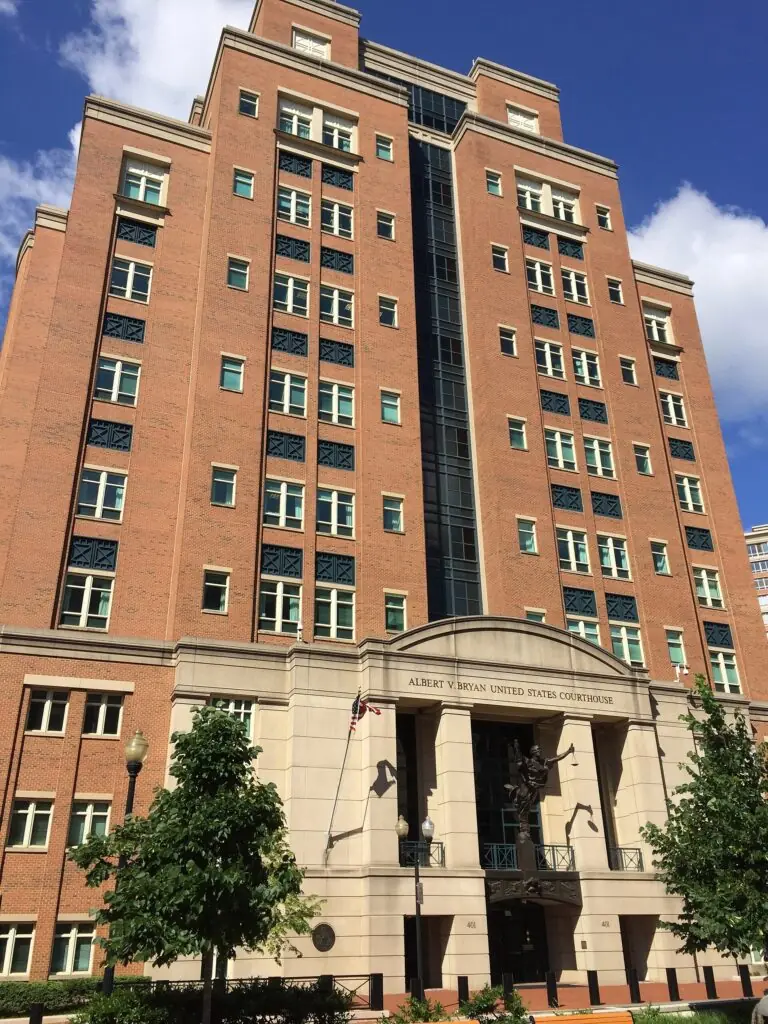
The question fits on an index card: did the Air Force report David Grusch in 2023? Since May there has been paper. The Pentagon handed him forty pages with a November 2023 letter, then posted them in its FOIA reading room, and the journalist D. Dean Johnson showed the letter on X on September 21. What is new is that on October 12 Grusch took those pages to a federal court in Alexandria, Virginia, to force the Pentagon to look for the rest.
The suit is small and slow, the way cases born at a service window are. On Monday, October 26, the Government’s deadline expires to answer Grusch’s latest brief, and on November 20 at ten in the morning the hearing is set before Judge Leonie M. Brinkema. The papers are in the court’s public docket, and they are worth reading before someone boils them down to a headline with the word “espionage” in it.
First, the names of things. FOIA is the United States’ freedom of information law: anyone can request a federal document, and the administration has to search for it and hand it over, except for what the law itself lets it black out. If it does not answer, the requester takes it to court. That is what Grusch has done, the former intelligence officer who in July 2023 told the House of Representatives under oath what he had been told about programs to recover craft of non-human origin.
What can be verified, first: what he asked for and which window he called at
The request is dated September 30, 2024 and is copied word for word in the complaint, in the sworn declaration and in both briefs. In two parts, it asks for any document about an “unauthorized disclosure complaint” filed between April 1 and December 31, 2023 with the office of the Senior Intelligence Oversight Official, “including but not limited to, Mr. Mark Dupont”. The first part covers those that refer to Grusch. The second, those that carry the words “UAP”, “UFO” or their long forms.
Translated to the service window: Grusch wanted to know whether someone had reported him for revealing secrets, and he went to ask at the office that oversees the legality of the Pentagon’s intelligence activities. That office searched its shared folders and reported on October 7, 2024 “that no information was found related to any unauthorized disclosures regarding Mr. David Charles Grusch”. And it added something that is almost a “not processed here” stamp: such disclosures are usually “information security matters”, and its division would not have handled them.
The sworn declaration of Virginia E. Burke, chief of the FOIA division of the Oversight and Compliance Directorate, tells the rest. In October and November 2024 the classified and unclassified emails of Joo Chung, then head of the Privacy, Civil Liberties, and Transparency office, and of Mark Dupont were searched. The search turned up 22 documents, 6,632 pages, which on December 2, 2024 went to “coordination” with other offices and agencies. They stayed there until March 3, 2026.
From the window to the courthouse
In between, Grusch sued. The complaint was filed on March 2, 2026, when, by the complaint’s own count, “over 504 days” had passed since the request. On May 7, 2026, in a joint report, the Government told the court that the classified systems held nothing and the unclassified ones held 39 pages. On May 18 it handed over 40, with redactions under exemptions (b)(5) and (b)(6), and called it a “final response”.
Six thousand six hundred thirty-two candidate pages and forty released: the subtraction gives 6,592. According to Burke, the 22 documents came out because they matched the search terms (“hitting on the key terms”) and the legal counsel’s office looked at what responded to the request. What was in the discarded material no brief says, not even Grusch’s, who confirmed by email on July 31, 2026 that he is not challenging the redactions. What he challenges is something else: that the search was run where it needed to be run.
The Government answers with settled doctrine. Its brief of September 21 recalls that a search is judged “not by the fruits of the search, but by the appropriateness of the methods”, and boasts of having searched the office Grusch chose even though it “was not the normal location for records pertaining to unauthorized disclosures”. It is like filing your petition at the counter of your own choosing and having the clerk process it politely, knowing the file is not there.
Forty pages, the same email six times
Grusch did not file all forty pages, only the ones that matter to him: 34 of the 40, numbered DoW_1:26cv607_001 to _040 with gaps, taken from a second delivery on June 26. In those 34 I counted six copies of the same email from the office of Congressman Tim Burchett, six automated notices from the Pentagon’s tasking system, and four pages blacked out entirely. The same paper forwarded from desk to desk, and each forward counts again as a page.
The six missing pages are in the complete copy in the reading room. They are the same form six times: the privacy authorization from Burchett’s office, in the name of David Charles Grusch and dated October 4, 2023, which allowed the congressman to request information about his case from any federal agency. The personal data, the explanation of the case and the signature are blacked out.
The email is from Tuesday, October 17, 2023, at 8:55, and is signed by a legislative aide to Burchett, a Republican from Tennessee, whose name is blacked out. It recalls the July 26 hearing and a reprisal investigation opened on Grusch’s behalf at the Department of Defense Inspector General. And then it drops the important part:
“Since the hearing, it has come to Rep. Burchett’s (TN-02) attention of the existence of a June 2023 Unauthorized Disclosure Complaint filed with your office, ATSD(IO), by an individual or organization within the United States Air Force (USAF).”
Email from Tim Burchett’s office to the Pentagon, October 17, 2023 (Exhibit 1, page DoW_1:26cv607_003)
A June 2023 complaint, filed from the Air Force. June 2023 is the month Grusch’s story hit the street: on the 5th Leslie Kean and Ralph Blumenthal published it in The Debrief. Burchett was asking to confirm whether that complaint existed, what had become of it, and whether it had been passed to the reprisal investigators.
What the office did with the question
This is the juiciest part of the forty pages. In the court’s copy, a good share of the emails comes out, when the text is copied, as a word-search soup: “DĂƌŬ” for “Mark”. What causes it is an embedded font without its equivalence table, not a redaction. On screen it reads normally, as does the scanned copy in the reading room. With a hand-built glyph table the sentences can be recovered, and I checked each one I quote against the image of its page.
On Friday, October 20, at 10:35, Dupont forwards the assignment to someone in his office with one line: “It’s about a DoD IG referral”. Six minutes later he sends it to Marguerite C. Garrison, whom the Inspector General’s website then listed as deputy inspector general for Administrative Investigations, the branch that handles reprisals against whistleblowers: “Do you have a couple minutes to discuss this?”. That afternoon he shares it with David Kozik, of the office of the Under Secretary for Intelligence and Security.
On Thursday the 26th he writes to Kozik that he wants “a final draft to my boss tomorrow morning”. And at 14:41 that day he sends the proposed response to Kenneth E. Bray, a senior civilian intelligence official at Air Force headquarters, whose official biography, as of December 2022, lists him as “Associate Deputy Chief of Staff for Intelligence, Surveillance, Reconnaissance and Cyber Effects Operations”. The body of the email reads:
Bray replies at 15:08. All of his text is blacked out except the sign-off: “Hope this helps”, and his first name. And that name is the difference that jumps out between the two copies: in the May delivery, the one in the reading room, the sender and the signature were redacted; in the June one they can be read. It fits with the joint report of July 1: Grusch asked to lift a redaction “concerning one employee”, and the Department re-released two pages.
The next day Dupont sends the draft to Joo Chung: “Ma’am, The attached Word document is a draft response to the email Congressional Inquiry”. Each of the four pages blacked out entirely closes an email chain that attaches a draft from October 20, 26 or 27. That these are those drafts I infer from the order; no paper says so.
The November 1 letter
Mark D. Dupont to Congressman Burchett, November 1, 2023
Document · Dkt. 33-2 · DoW_1:26cv607_040
At no point did anyone from the Air Force file a complaint with IOD and IOD took no actions with respect to these conversations.
I translate the essentials. In the summer of 2023 an intelligence oversight officer of the Air Force called the division by telephone: they had “preliminary information” that raised fears of a possible unauthorized disclosure of classified information. The officer asked that nothing be done while the Air Force looked into it. Later the officer got back in touch to say the matter had been “properly coordinated”, that there was no disclosure and that nothing more was needed. No one from the Air Force filed a complaint with the division, which did nothing.
Now, what the letter does not say, which weighs just as much. It carries a digital signature of November 2, at 11:58 and names Grusch in the first line, as the person raising the question, but the paragraph on the call takes him as understood with an “As your email indicates” and never says whom the possible disclosure concerned. It gives no date for the call and no name for the officer, and does not explain what information it was, and it denies a complaint “with IOD”, at that window. About any others it says nothing.
The last paragraph explains the house from the inside. The division often coordinates with intelligence components on possible allegations, and “Many of the allegations turn out to be inaccurate or unsubstantiated, resulting in no follow-on action”. A telephone warning that comes to nothing is, according to the signatory himself, a common thing.
What is claimed: the espionage complaint
Grusch’s version is broader. On May 5, 2026 he spoke for more than an hour with Chris Ferrell on “On Watch”, Judicial Watch’s podcast. I have not seen the interview. I know it from the summary Stranger than Fiction published the next day: according to that text, Grusch said that the Department of the Air Force reported him for unauthorized disclosure, under the Espionage Act, shortly after June 2023, and that the complaint was rejected.
Both versions can be true at once, and that is the uncomfortable part. The letter denies a complaint with the IOD, not a paper somewhere else, in the Air Force itself or in a security office. And a rejected complaint fits with the letter’s “no follow-on action”. What does not fit is the scale: a call that resolves itself is not an espionage complaint. To know which it was, you need the paper nobody has shown.
The April 2023 review, and a lead I crossed out
Grusch maintains, according to that summary, that everything he said in public about UAP and craft recovery went first through the Pentagon’s prepublication review. What is on record is the April 2023 review. The file The Black Vault obtained through FOIA contains two approvals from the review office (DOPSR): a “Speaker/Author Summary” on the 4th and some interview questions on the 6th. Both say that approval “does not imply DoD endorsement or factual accuracy”. Publishable is not the same as true.
There is a detail in that file that made me jot something down. On June 8, 2023, three days after the report, Donald Kluzik, who signed both approvals on behalf of the head of the office, forwards to Paul Jacobsmeyer, the deputy chief, “an email about 23-S-1707”. I noted: “Did anyone ask in June whether it was approved?” Then I read the FOIA letter: the request that produced those pages is dated June 5, and Jacobsmeyer was the one who decided what was redacted. The simplest explanation is that it was routine handling of that FOIA. Crossed out.
Another date does not add up, a minor one but mine. The form with which Grusch requested the review notes “Separation Date : 7 Apr 2023”, which is the one The Debrief gave, while his own complaint says he left the service “on or about May 10th, 2023”. It may be the difference between leaving one agency and the end of service; the papers do not clarify it, and I am not going to fill it in myself.
Grusch requests prepublication review
He sends DOPSR a “Speaker/Author Summary”. The form notes “Separation Date : 7 Apr 2023”.
Source ↗Summary approved
Case 23-S-1405: “APPROVED for public release”, without that implying the Pentagon holds it to be true.
Source ↗Questions approved
Case 23-S-1707: “Vague references to sensitive areas like this are not a problem”.
Source ↗The story appears in The Debrief
Kean and Blumenthal cite the approvals of April 4 and 6. That day The Black Vault files the FOIA request that will produce the review file.
Source ↗A call from the Air Force
An intelligence oversight officer warns of a possible unauthorized disclosure and later says it was “properly coordinated”. No exact date; Burchett's office says June.
Source ↗Appearance before the House
Grusch testifies under oath and speaks of reprisals.
Burchett's office asks
About “a June 2023 Unauthorized Disclosure Complaint” filed from the Air Force.
Source ↗The response goes through the Air Force
Dupont sends the proposal to Kenneth E. Bray; the reply is blacked out except “Hope this helps”.
Source ↗Dupont's letter
“At no point did anyone from the Air Force file a complaint with IOD”. Digitally signed on the 2nd.
Source ↗FOIA request 25-FP-0002
To the Department of Defense, on complaints filed with Dupont's office in 2023.
Source ↗“No information was found”
The division finds nothing in its shared folders.
Source ↗22 documents, 6,632 pages
Taken from two mailboxes, they go to the FOIA center and to coordination until March 3, 2026.
Source ↗Complaint filed in Alexandria
More than 504 days without an answer, according to the complaint.
Source ↗Forty pages
The Government calls it a “final response”. The release ends up in the Pentagon's FOIA reading room.
Source ↗Second release
The Department re-releases two pages; in this copy Bray's name can be read.
Source ↗The Government asks for summary judgment
That day the hearing is set for November 20.
Source ↗Grusch asks for a wider search
“Follow the trail”: the November 2023 letter proves there was something to look for.
Source ↗Government's reply
Last day of the deadline.
Source ↗Hearing before Judge Brinkema
At 10:00, courtroom 700.
Source ↗What is really at issue in Alexandria
On October 12 Grusch’s lawyers asked for judgment in his favor with a simple argument. If in November 2023 the office could describe the Air Force call to Congress in such detail, someone kept something. “How else would he later be able to describe the referral incident to Congress with such specificity?”, they write. And Burke’s declaration does not mention the letter or say that any search was made on the basis of it.
They call it “follow the trail”: if the search itself uncovers a lead, it must be followed even if it leads to another archive. They also point to an oddity in the declaration. The division’s folders do not associate names with reports, so it is unclear how “Grusch” was searched for in a system without names. They ask for another search and a supplemental declaration.
An observation from a file reader, not a jurist. The Government bases its case on Fourth Circuit rulings, the circuit Virginia belongs to, and on rulings of this same court, plus a few from Washington. For the follow-the-trail point Grusch cites only D.C. Circuit rulings, such as Campbell, from 1998, or Truitt, from 1990, which carry great weight in FOIA matters but are not binding in Alexandria. Brinkema will decide, not I.
The question the court will answer is narrow: whether the search was reasonable. It will not decide whether there was a complaint, or whether Grusch is right about the craft. If he wins, what he has asked for is an order to search again and a new declaration explaining how, not a box of documents on the table the next day.
No conspiracies needed
Before anyone smells a cover-up, the everyday explanations, several of which do not exclude one another:
- A courtesy call. The letter itself says the division receives many preliminary warnings and that many come to nothing. A conversation that closes with “no follow-on action” may leave no more trace than a note, or none.
- The wrong window. The office searched said unauthorized disclosures are not usually its business. If papers on that warning survive, the logical place is the Air Force, which processes its own FOIA requests and to which this request was not addressed. That is my reading.
- The word “UFO” in 2023. Two mailboxes of senior Pentagon officials in the year of the hearing, searched with “UAP”, “UFO” and “Grusch”, yield thousands of pages through sheer word matching. The declaration says the documents came out through the search terms; that the 6,592 discarded pages were nothing more than that is my supposition.
- The prepublication review worked. If the Air Force saw something published and asked, the “properly coordinated” fits with the approvals of April 4 and 6. Again, no paper links the two.
None of the four needs Martians, or bad faith either. Bad faith, if there was any, will have to be shown with papers that are not here today.
What remains in the air
It is not known who called, or exactly when, or what “preliminary information” the Air Force had; what Bray answered above his “Hope this helps”; what the 6,592 pages that did not come out were; or whether anyone in the Air Force opened a file that this request could never reach. And the espionage complaint Grusch describes I know secondhand, from a summary.
What is known fits in a few lines. According to the Pentagon itself there was a warning, the office described it to Congress in detail and, a year later, the only thing the search yielded was the processing of that reply. The Government has until Monday the 26th to answer, Grusch until November 9, and the judge will hear them on the 20th. Jon already told here what Grusch said in his interview with Joe Rogan; this is the fine print, which is where the dates tend to be.
OSINT – Source traceability
V1 for the provenance of the documents: filings and exhibits from a court docket and an official FOIA release. The briefs are party filings and are cited as such. Grusch's version on the Espionage Act is known from a summary of his interview (Stranger than Fiction), not from the recording, and is marked as such in the body. Own counts: 6,592 unexplained pages (6,632 minus 40); six copies of Burchett's email, six CATMS notices and four entirely blacked-out pages in the exhibit; six privacy forms in the missing pages. The release is not unpublished: it is in the Pentagon's reading room and D. Dean Johnson published the letter on 09/21/2026. Own readings, marked: that the blacked-out pages are the drafts; that the papers on the warning, if they exist, are in the Air Force; that the 6,592 are word coincidences; the observation on each party's precedents. Discarded and stated in the body: that the 06/08/2023 forward at DOPSR had to do with the Air Force warning (most likely it is processing of The Black Vault's FOIA). No Government reply as of 10/21/2026.