

A mass phenomenon is many people knowing what they are supposed to see. The summer of 1947 in the United States is the textbook example, and it unfolded at a speed that is still startling today.
Six weeks from zero to saturation
On June 24, a private pilot named Kenneth Arnold saw nine objects between two mountains in the state of Washington. On the 25th he told his story to a newspaper in Pendleton, Oregon. By the 26th, headlines across the country were already talking about flying saucers. And from there, the flood.
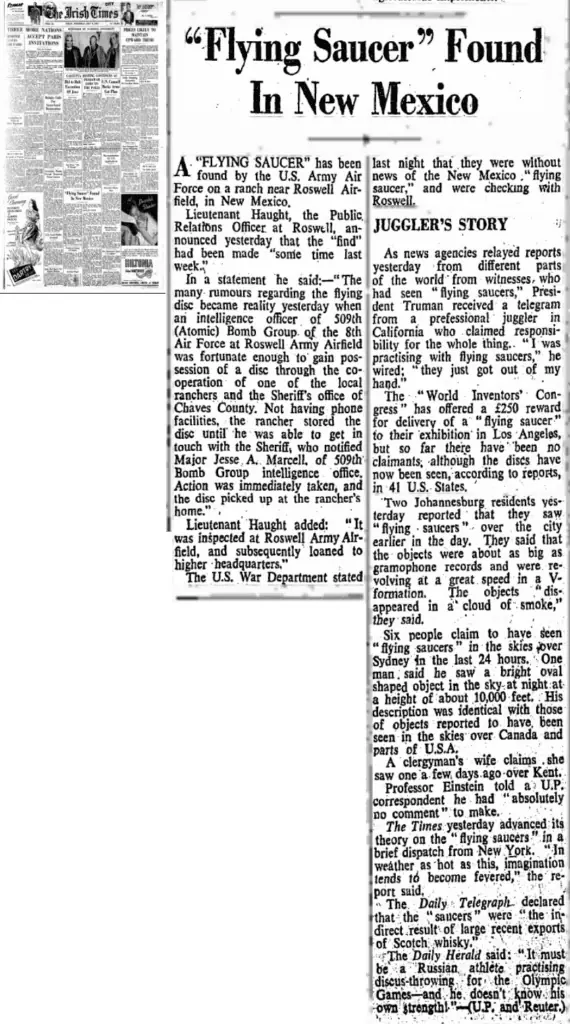
The classic tally of the wave, the work Ted Bloecher published in 1967, gathered more than eight hundred and fifty reports for June and July of that year, spread across forty-eight states, the District of Columbia and Canada. The peak came on July 7, barely thirteen days after the initial sighting. In between fell the Independence Day weekend, with sightings coming one after another, and on July 8 the Roswell base issued the press release about a recovered disc that was denied the following day.
850+
June-July 1947
48states
plus DC and Canada
13
from June 24 to July 7
9/10
adults who knew the term in August
The data point that changes everything: the August poll
In August 1947, barely six weeks later, a Gallup poll found that practically everyone in the United States had heard of flying saucers. Gallup went so far as to point out that the notoriety of the subject exceeded that of any other topic they had measured up to then.
Six weeks. No television, no social media and no machinery beyond the teletype, the radio and bar-room conversation. For anyone who works in communications today, that fact should make their hair stand on end.
Why this is an event and not a sum of cases
Because what spread was the template, not the sightings. A short name, a round image, a postwar context with a freshly minted fear of the Soviets and a press hungry for content. Once the whole country knew what shape those things had (a shape that, incidentally, the original witness never described), people began to see it.
And there was an administrative consequence, which is what turns a social phenomenon into a case file. On September 23, 1947, General Nathan F. Twining signed the memorandum that gave rise to Project Sign and, by inheritance, to Blue Book. In other words: twenty-two years of official U.S. bureaucracy start from that summer.
The summer of 1947 left behind no answer but a vocabulary, an iconography, an official program and a way of looking upward that is still working eighty years later. Not bad for six weeks in July.
OSINT – Source traceability
The number of reports comes from a press tally and measures the scale of the media phenomenon, not necessarily that of the observational phenomenon.