

Some men discover a continent and some men discover a category. Charles Fort found nothing, measured nothing and proved nothing. What he did was far stranger: he invented a filing cabinet.
A filing cabinet for everything the science of his day let drop to the floor without picking it up. Rains of fish. Stones falling from the sky, before the academy admitted that stones fall from the sky. Lights over cities. Disappearances. Objects turning up where they had no business being. He called them “the damned”: the excluded data, the ones that did not fit and so were not kept anywhere.
The work, which was a heroic monotony
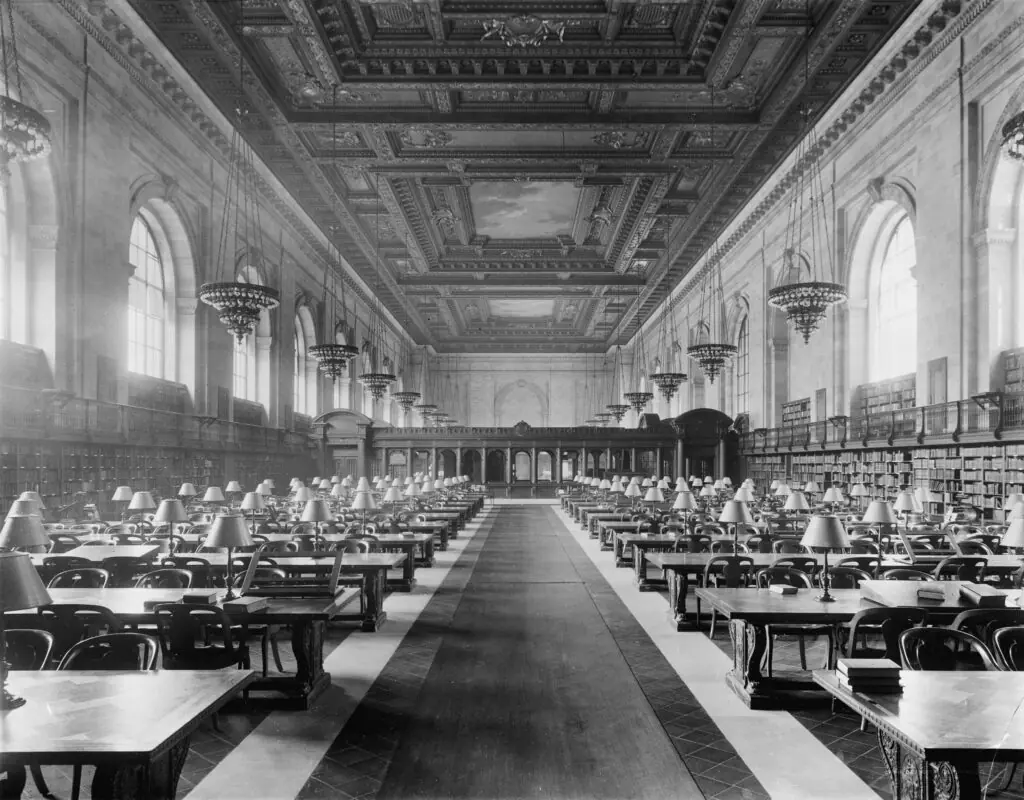
Fort spent years, literally years, sitting in the reading room of the New York Public Library and, for a time, at the British Museum in London. He read old newspapers and scientific journals, one after another, and every time he found a report describing something impossible, he wrote it on a note card.
He ended up with tens of thousands of cards, sorted by a system of his own that only he fully understood. And from time to time he destroyed the entire archive and started over, because the system had become too small for him. A man destroying forty thousand handwritten cards in order to begin again is the most exact picture one can give of him.
Four books came out of it, unlike anything else. They are not essays and they are not novels: they are catalogs with commentary, written in a deliberately mocking prose, full of digressions, verbal inventions and a constant irony aimed at the scientific authority of his day.
His contribution was not an explanation, and he did not seek one. It was an index. And an index, in a field where there is nothing else, is worth considerably more than a theory.
What he got right
Two things, and both still stand a hundred years later.
He spotted a real problem. Science, like any organized human activity, has a wastebasket, and into it go the observations that do not fit the prevailing framework. Most of the time that is the right call: most of those observations are errors. But the mechanism does not distinguish between error and genuine anomaly, and Fort was the first to point at the wastebasket and ask who emptied it.
And he worked from sources. This is always forgotten. Fort did not invent his cases: he took them from dated publications, and he noted the reference. One can argue with his selection, his criteria and certainly his commentary. One cannot accuse him of fabricating the material. For his time, and for the genre he was founding without knowing it, that was remarkable honesty.
And what he got wrong, which also needs saying
Fort’s problem lies not in what he collected but in what he did with it. His commentary swings between brilliant irony and gratuitous quip, and on several occasions he put forward hypotheses (the most famous being that humanity might be someone’s property) with a calculated ambiguity that let him answer for none of them. He maintained that he did not believe anything he wrote, not even his own proposals, and he was probably sincere. But he left a door open through which anyone could later walk.
And there is a flaw of method that has proved very costly. Fort collected anomalies; he did not cross-check them. A newspaper clipping from 1883 about a rain of toads is a data point about what that newspaper printed, not about what fell from the sky. Confusing the two is the original sin of all the literature that followed, and at bottom it is the same one we saw in Aurora: a chronicle does not document an event, it documents a chronicle.
Why it matters
Because all the mystery literature of the twentieth century is his child, whether it knows it or not. The format of the collection of strange cases, the permanent suspicion toward the official explanation, the taste for the absurd yet verifiable detail, even the tone: all of it was invented in four books published between 1919 and 1932 by a man who never left a library.
And because his question is still a good one, even if his answer was not. What do we do with the data that do not fit? Discarding them all is comfortable and sometimes produces blindness. Keeping them all is impossible and produces noise. The right answer lies somewhere in between, and that point has to be negotiated case by case. That, if you press me, is what this whole archive is about.
He died in 1932, at fifty-seven, having convinced no one of anything and leaving behind a heap of index cards. He would have been amused to learn that ninety-four years later we are still arguing over how a filing cabinet should be ordered.