
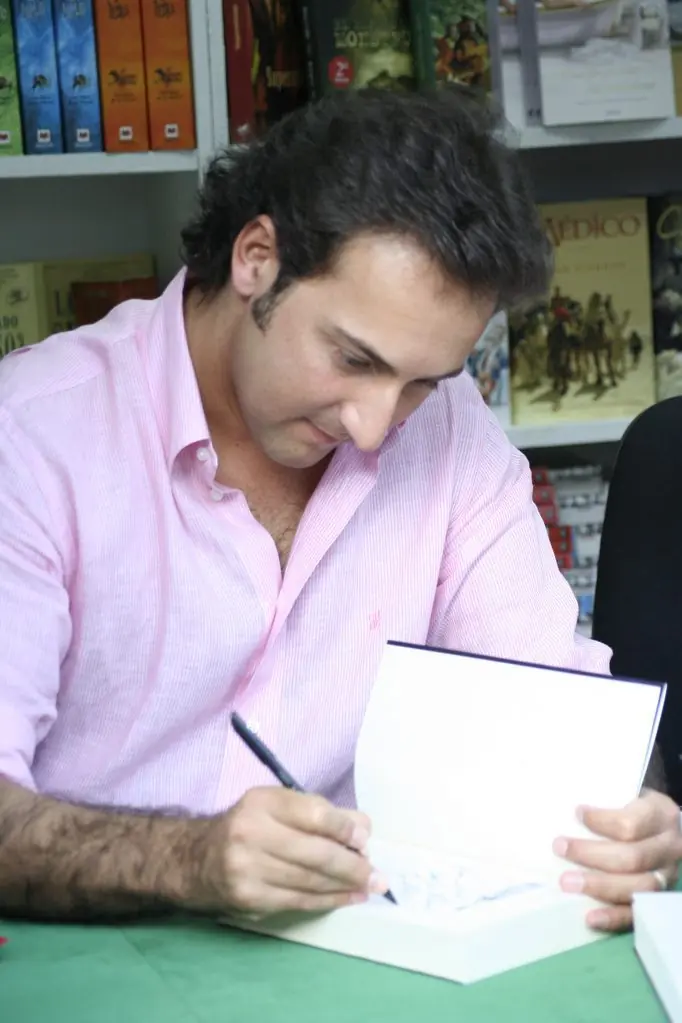


At BUFO we do not treat mystery as faith. We treat it as an archive: who tells it, when they tell it, where they tell it, and why that story sticks to the culture.
Origin and training: a journalist by birth (and by vocation)
Iker Jiménez Elizari was born in Vitoria (Basque Country) on January 10, 1973. He is a journalist and holds a degree in Ciencias de la Información (Information Sciences), with training linked to the Universidad Complutense de Madrid and the Universidad Europea de Madrid. That academic base matters, because it explains something you can notice even when the subject turns slippery: the format, the pace, the reportage tone and the insistence on building a story out of pieces.
BUFO fact: the biographical data given here come from his own professional website and from the public profile page of the network that broadcasts his programs. We do not use IMDb as a source, because it is user-submitted content, and Wikipedia serves only as a bridge to the original data, never as final backing.
Milenio 3: the radio laboratory
Before becoming a television face for millions, his natural territory was radio. With Milenio 3 (Cadena SER), Jiménez directed and hosted a program that for years worked as a narrative laboratory of mystery: cases, interviews, atmosphere, and that “let’s open a folder” that prepares you for a long night.
- What BUFO contributed to the map: it normalized the “case” as a narrative unit (case file), and the witness’s voice as a central piece.
- Why it matters today: many mechanics of true crime and modern mystery journalism were already there, in a radio suit.
Cuarto Milenio: the mystery sits down in the living room
The cultural leap comes with Cuarto Milenio on Cuatro: a television format that mixes reports, a debate table, reconstructions, archive pieces and, above all, a recognizable aesthetic. The set becomes a kind of night library where the case comes in, is laid on the table and is dissected calmly. For the viewer, that feels like “they are telling me a story,” but for BUFO it is something else: a machine for turning questions into case files.
Has it drawn criticism over the years? Of course. It has also drawn awards and professional recognition, according to biographical profiles. And that tension, for a project like BrokenUFO, is not a problem: it is part of the phenomenon. If a figure keeps a conversation going for decades, he has touched a real cultural nerve.
Horizonte and La Estirpe de los Libres: expansion of the universe
Over time, his presence diversified: since 2020 he has driven the podcast/YouTube channel La Estirpe de los Libres and he also hosts Horizonte. In BUFO terms, this fits a simple idea: mystery no longer lives in a single medium. It lives wherever there is an audience, conversation and archives in circulation.
Why Iker Jiménez is relevant to BUFO
Because, whatever one thinks of each specific case, Jiménez has been a catalyst. He has put “frontier” topics into public conversation, popularized the language of mystery investigation and created an ecosystem where people contribute testimonies, documents, clippings and memories. For BrokenUFO, that is archival gold: it lets us trace how stories form and how they evolve.
- Cultural impact: mystery stops being a niche and becomes a television habit.
- Case file format: cases, timelines, witnesses, documents, and context.
- Persistence: decades of continuity amount to a historical footprint of the genre.
BUFO verdict: how we catalog him without getting lost in the fog
In the BUFO archive, Iker Jiménez enters as the central media figure of mystery in Spain. That does not mean “automatic validation” of every story told around him. If you want to understand contemporary mystery in the Spanish-speaking world, his name appears as a main node: programs, formats, audience, debates and collective memory.