
There is a question that is rarely asked and that explains half the history of this subject: who sits at the desk? Not the visionary, not the lecturer. The civil servant. The one with an office, a telephone that rings when a gendarmerie brigade doesn’t know what to write in a report, and an administrative duty to answer something.
For a good twenty years, in France, that desk was Jean-Jacques Velasco’s.
The man from CNES
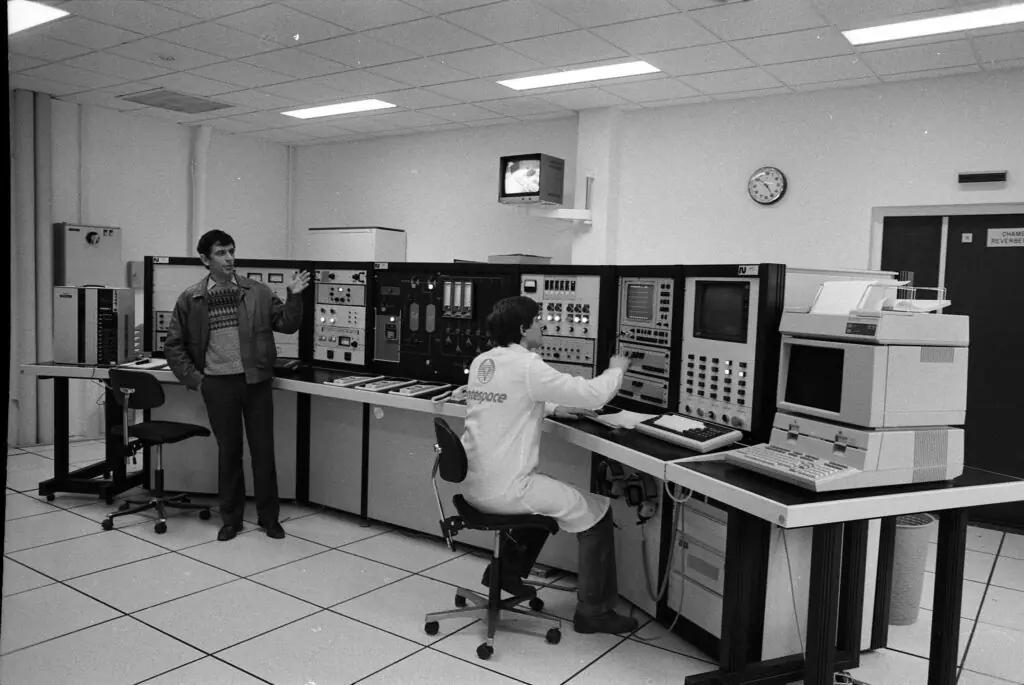
Velasco is an engineer, and he came to the subject through the service entrance: he joined the French national space agency, the Centre National d’Études Spatiales, and ended up posted to GEPAN, the unit created in 1977 within the agency to process reports of unidentified aerospace phenomena that the gendarmerie could not file in any folder. It was no prestigious post; in practice it was the odd-complaints department of a space agency.
He joined the team in the late seventies and took part in the fieldwork on the cases that are now the French canon, beginning with the most cited of all: the trace at Trans-en-Provence, whose analysis was published in 1983 as Technical Note No. 16. When GEPAN was reorganized and renamed SEPRA, with fewer people and a narrower mandate, Velasco was left in charge. And there he stayed, managing the archive, answering the gendarmerie and appearing when called on, until his departure in 2004.
What he contributed, which is more than it seems
Velasco discovered nothing. His contribution is of a different kind and a more lasting one: for two decades he kept open the only public service in the Western world devoted to this, and kept it running as a service and not as a chapel. That means written procedures, forms, sampling protocols and, above all, an archive that could later be opened.
When in March 2007 CNES put its case files online and crashed its own server under the volume of visits, what went online was, to a large extent, the administrative work accumulated at that desk. A searchable archive is the best legacy a civil servant can leave, and the rarest.
Sorting papers for twenty years doesn’t make a documentary. It makes something better: it lets someone, forty years later, check whether you were wrong.
And what must be said about the other side
Here it gets uncomfortable, because this site does not hand out medals.
In 2004, coinciding with the end of his time at the head of the service, Velasco published a book in which he openly argued that the extraterrestrial hypothesis was the most reasonable explanation for part of the phenomenon. A public official in post defending that position is no minor detail: for twenty years he had been the signature guaranteeing the neutrality of the French reports, and those reports are cited all over the world precisely because they come from an official body.
That does not invalidate his work. The protocols of Technical Note 16 are what they are, and they can be audited without asking anyone what they think. But it does require reading with care the whole later defense of the agency’s flagship case by the head of the agency. The objection is not to his beliefs, which are his own: it is that the same man signed the report and then became its leading favorable commentator. An engineer understands perfectly well why that is a problem of method.
Velasco also took part in the 1999 COMETA report, produced by a group of former senior officers and French officials linked to the institute for higher defense studies, which concluded that the phenomenon deserved state attention and did not rule out a non-human origin. The report was widely presented as “an official French report.” It was not: it was a private document signed by people with official résumés. The distinction is exactly the kind of nuance this site exists to point out.
Why it matters
Because his career is the best available example of the tension that runs through this whole field: the same person who builds a rigorous archive ends up as its passionate interpreter, and the two roles get in each other’s way. Velasco left France the best public documentary collection on the subject. And he also left the lesson that an archive has to be readable without its archivist.