

Some biographies read as if a screenwriter with poor taste wrote them. This is one of them.
José Luis Jordán Peña was born in Alicante in 1931 and died in Madrid on September 9, 2014. Between those two dates he did two remarkable things: he built the most elaborate documentary hoax in European ufology and, at the height of that hoax, he headed the commission the Spanish state sent to investigate its other great popular mystery.
Let’s take it step by step, and with the caution due a man whose main proven skill was inflating his credentials.
Who he really was
He presented himself as an engineer, a senior telecommunications technician and an industrial psychologist. Let’s start there, because it is revealing: none of those qualifications is documented. It is the first clue, and it sat in front of everyone for thirty years.
What is documented is more modest and, for our purposes, more useful: he worked as a telecommunications assistant at the construction company Agromán from 1964 to 1987, and he taught physics, mathematics and electronics at a Madrid secondary school. He was also vice president of the Sociedad Española de Parapsicología (Spanish Society of Parapsychology) and in 1982 published a book on haunted houses and poltergeists.
The work: UMMO
The UMMO case deserves its own case file and has one. Here are only the data points that define him.
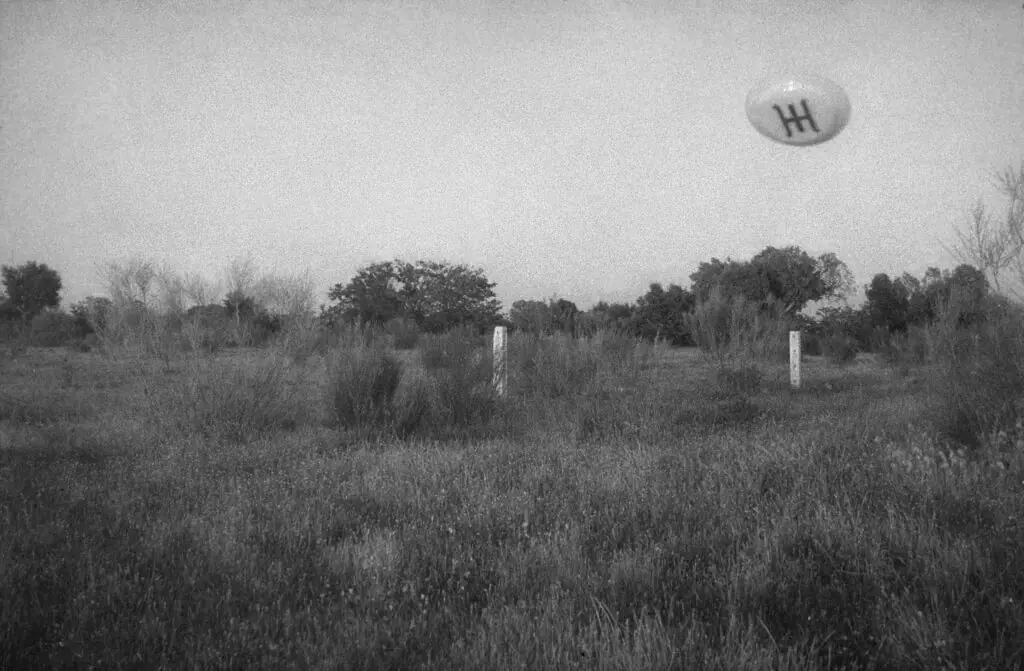
In February 1966 he appeared as one of the two witnesses to the alleged landing at Aluche, on the outskirts of Madrid. The other was Vicente Ortuño. For twenty-two years they were presented as independent witnesses. In 1988 it was discovered that they had been friends before the sighting.
From there came more than two decades of typewritten letters signed by supposed inhabitants of another planet, written in the structure of a technical report, numbered and cross-referenced. He used several typewriters to simulate a plurality of senders, and he had collaborators who dispatched correspondence from abroad, taking advantage of trips.
In 1988 he suffered a stroke and his output stopped. Others carried on.
The confession, and his stated motive
In 1993 he confessed through two simultaneous channels: six private letters to Rafael Farriols, the main custodian of the Ummite archive, between April and May; and an article published that summer in issue 29 of La Alternativa Racional, the bulletin of the skeptical organization that would later become ARP-Sociedad para el Avance del Pensamiento Crítico.
His explanation was that he had wanted to stage a sociometric experiment to test his thesis that a large part of the population suffered from a form of paranoia regarding the paranormal. He added details no fabulist would add: that he chose the star Wolf 424 at random and that the name UMMO deliberately evoked the Spanish word humo (smoke). He left the clue at the door and nobody saw it for three decades.
And he expressed remorse over one specific thing: that the Edelweiss sect, in the 1980s, had used his symbology to harm minors, in a case that grew into one of the largest corruption-of-minors prosecutions in Spain.
He said he wanted to measure other people’s credulity. He ended up measuring, without meaning to, how far a joke can go when it finds someone worse than you.
1971: the expert
And now the data point that turns this profile into something more than the biography of a swindler.
In 1971, when the Bélmez de la Moraleda faces appeared, the Ministerio de la Gobernación (Spain’s Ministry of the Interior at the time) sent a commission to investigate. He headed it. At the height of his own Ummite operation, the Spanish state chose him as its official expert to assess its other great paranormal phenomenon.
What we learn from him
Three things, and all three are still operative today.
- Credentials are almost never verified. They are accepted. And whoever knows this exploits it.
- Format produces authority. His letters did not convince by what they said, but by how they were laid out.
- A confession does not close a case. Thirty years after his, there are still people who defend the case file. Documented truth, when it arrives late, no longer competes with error: it competes with an identity.
He died in 2014, in Madrid, without his name ever leaving specialist circles. Outside them, almost nobody knows him. Inside them, he is probably the Spaniard who has most influenced the mystery culture of the twentieth century. And he did it, let’s not forget, with a borrowed typewriter and a box of stamps.