
There are witnesses who seek the microphone and witnesses who flee from it. Lonnie Zamora belonged to the second category with a constancy that borders on the heroic: forty-five years dodging an affair that had landed on him unasked, in a small town where there is nowhere to hide.
A small-town cop, and that is exactly what matters
Zamora was an officer of the Socorro, New Mexico, municipal police, in a small town in the Rio Grande valley that lives off the technical university, cattle and the traffic of the interstate. He was not an amateur astronomer, nor a reader of hobbyist magazines, nor a member of any association. He was a man with a uniform, an afternoon shift and a radio.
That profile is half the value of the case. In the analysis of testimony, the first thing you look for is not the witness’s eloquence but his lack of motive. A municipal policeman in a town of barely more than four thousand inhabitants has absolutely nothing to gain by claiming he saw an object resting in a gully with two figures beside it. He has, on the other hand, a great deal to lose: credibility with his colleagues, the respect of his neighbors and the peace of his shift.
The afternoon of April 24, 1964
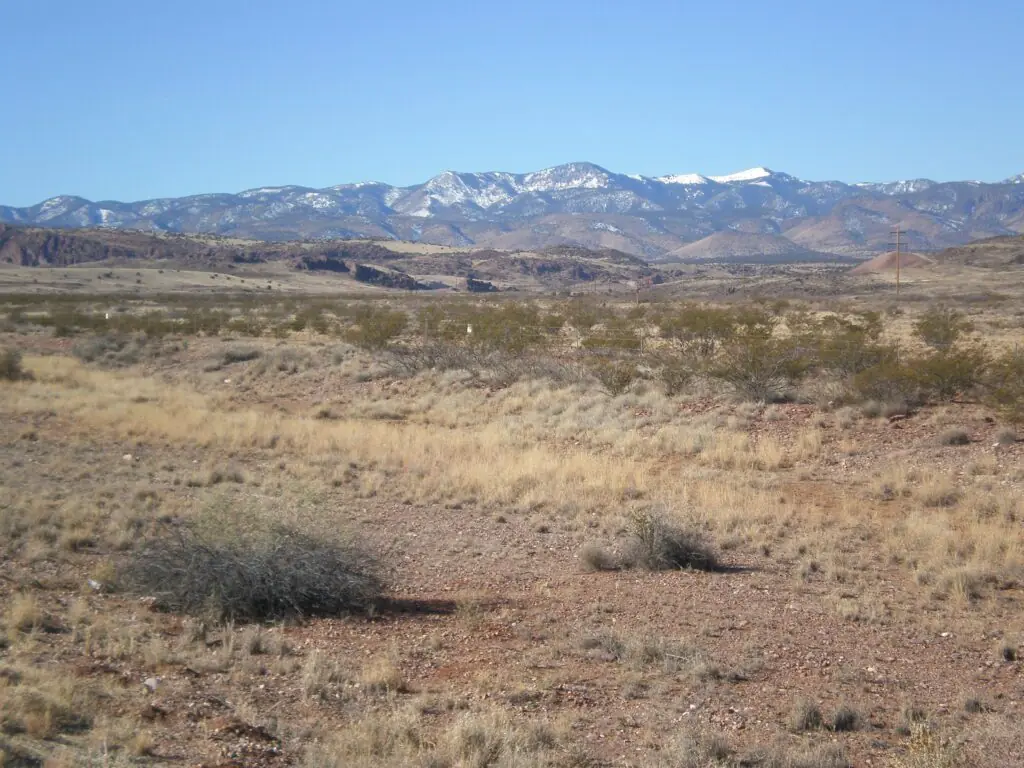
He was chasing a speeding driver when he heard a roar and saw a flame to the southwest. He thought the dynamite shack on the outskirts had exploded. He abandoned the chase (nobody ever saw the offender again) and headed there. What happened next is told in the case file and in his statement to the USAF.
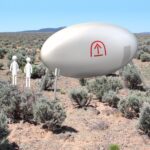
What matters here is how he behaved from that moment on. He radioed in immediately. He let himself be questioned by the State Police, by an Army captain, by an FBI agent and by the Air Force. He drew what he had seen, including the symbol on the side of the object. And when Captain Holder told him not to disclose the authentic design of the emblem (a standard technique for filtering out imitators), he complied.
A man who wants notoriety does not obey that instruction. He breaks it the next day in front of the first reporter who turns up.
The man who impressed Hynek
J. Allen Hynek had been working for more than a decade as an astronomical consultant to the Air Force, with the practical mission of reducing sightings to planets, meteors and balloons. He was good at it and had no initial sympathy for the subject. He returned to Socorro in August 1964 to re-interview the witness.
What impressed him, according to what he left in writing, was not the story but the man: not very eloquent, uncomfortable, unwilling to embellish, able to say he did not know as many times as needed. Socorro ended up being one of the cases that pushed Hynek from the comfortable position of the staff skeptic toward a discomfort that lasted the rest of his career and that ended in the founding of the Center for UFO Studies in 1973.
There is also a detail of context that tends to be overlooked and that complicated Zamora’s life: Socorro is a stone’s throw from the White Sands military installations and is home to an engineering school with a reputation for highly imaginative pranks. That is, the poor man was caught between two simultaneous and contradictory suspicions. For some neighbors, he had seen classified government material and had been told to keep quiet. For others, he had swallowed a student prank and was making a fool of himself in front of the whole country. Living in a small town with both labels on you at once, for forty-five years, is no bargain.
Forty-five years of not talking
After the initial uproar, Zamora did what practically no famous witness does: he disappeared. He wrote no book. He gave no paid lectures. He did not appear in documentaries for a fee. He founded nothing. Over the years he left the police force and worked in other trades in the same town, answering the curious with a terseness that his neighbors described somewhere between discomfort and exasperation.
He died in Socorro on November 2, 2009, at the age of seventy-six. In four and a half decades he never once retracted, nor did he enlarge his account with new memories, which is the other usual way of spoiling a testimony. He told the same story in 1964 as in 2004.
None of that proves he saw a craft. It shows something colder and more useful: that in his personal file the motive that explains the vast majority of false cases appears nowhere. No money, no attention, no importance. Only a man who that afternoon let a driver get away to go look at a gully, and who rather regretted having done so.