Betty and Barney Hill, 1961: The Case File That Invented Abduction
A married couple from New Hampshire, two hours that did not add up, and five months of hypnosis. Out of that came the examination table, the missing time and the black eyes. Before them, none of it existed.
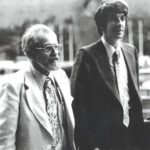
In the early hours of September 20, 1961, the couple Betty and Barney Hill were returning to Portsmouth (New Hampshire) along Route 3 when they observed a light that seemed to follow them. They reported to Pease Air Force Base and the case entered Project Blue Book. Between January and June 1964, the psychiatrist Benjamin Simon conducted hypnosis sessions from which an account of abduction and an examination on board emerged. Simon concluded that it was a psychological aberration and not a real event. The case became known worldwide with John G. Fuller's book (1966) and the NBC film (1975), and fixed the narrative template of abduction.
Executive summary of the case file. Everything essential before you dig deeper.
Fact sheet
OSINT - Traceability
Intelligence Network
Every founding story has a problem: it arrives late to its own importance. When Betty and Barney Hill were driving home along Route 3 in New Hampshire in the early hours of September 20, 1961, they were not inaugurating anything. They were a tired couple in a 1957 Chevrolet Bel Air, coming back from a short vacation, with a dog in the back seat and a wish to get home. Five years later, half the planet would know what the inside of a flying saucer looks like, and would know it from them.
Because that is what happens here, and what makes this case file different from all the others: this is the birth certificate of a genre, not a sighting. The examination table, the short beings with big eyes, the two missing hours, the hypnosis that recovers them, the star map. All of it exists as a template because one Sunday night two people from Portsmouth had a bad time on a mountain road. Before them, the phenomenon was something you looked at. After them, it is something that does things to you.
The verifiable first, which is how you enter other people’s houses: by knocking
Betty and Barney Hill were real, checkable and a good deal more interesting than they are usually made out to be. Eunice Elizabeth Barrett, Betty, born in 1919, a social worker. Barney Hill, born in 1922, a postal worker, who made a considerable round trip every night to reach his shift. They were members of the NAACP, active in their Unitarian congregation, and he went on to sit on a local board of the U.S. Commission on Civil Rights.
And they were an interracial couple in the United States of 1961. It is worth pausing here for a second, because this is operational context, not local color. A couple like that, in that country and that year, lived at a level of constant alertness that is hard to imagine today. They knew perfectly well what it was to be watched from another car, to be followed, to be looked at in a particular way at a gas station. That biography does not explain the case (to say it does is a lazy shortcut), but it does explain why the story has the texture it has: that of a pursuit.
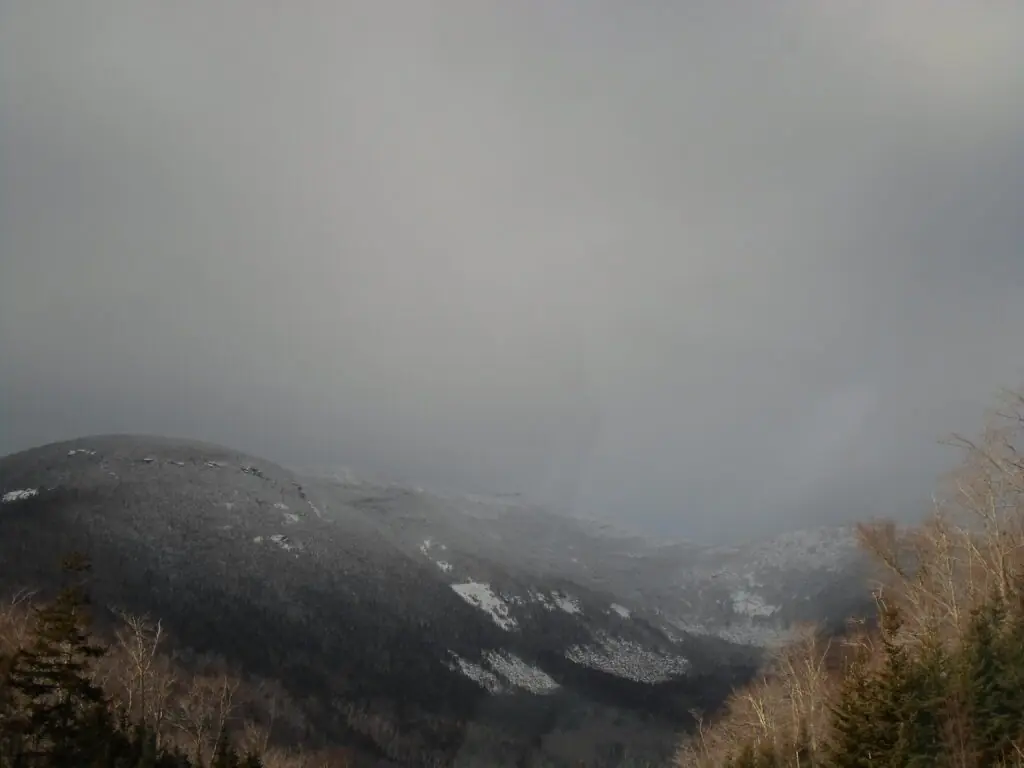
The facts of the trip are simple. They were returning from a short getaway to Montreal and Niagara Falls, heading down Route 3 toward Portsmouth. In the White Mountains they saw a light that seemed to move in a strange way. They stopped. Barney got out of the car with binoculars. He took fright, climbed back in in a hurry, and they kept driving. They reached home later than their own reckoning said they should have. Betty’s wristwatch had stopped. The dress she was wearing was torn. Barney’s shoes were scuffed in a way he could not explain.
A few days later they called Pease Air Force Base. That detail matters: they did not call a magazine, they called the military. The matter entered the Project Blue Book circuit and stayed there, cataloged without fanfare. The couple did not seek publicity. Publicity took five years to find them, and when it did it came through a press leak, not a lecture tour.
Route 3
Betty and Barney Hill return to Portsmouth (New Hampshire) from Montreal in a 1957 Chevrolet Bel Air. In the White Mountains they see a light that seems to follow them. Barney watches it through binoculars and goes back to the car alarmed.
The call to the base
The couple reports to Pease Air Force Base. The case enters the Project Blue Book circuits with no public repercussions.
The dreams
About ten days after the trip, Betty begins to have vivid dreams for five nights in a row: a blocked road, some beings, an examination. In November she starts writing them down.
Hypnosis begins
The psychiatrist Benjamin Simon, a specialist in therapeutic hypnosis trained in treating war trauma, begins the sessions with the couple. He works with each separately and reinduces amnesia at the end of each session.
“The Bellero Shield” airs
The ABC network broadcasts an episode of the series The Outer Limits featuring a being with wraparound eyes who communicates without speaking.
Barney's description
Twelve days after that broadcast, Barney Hill describes under hypnosis eyes that extend toward the sides. It is the first appearance of the feature in the account.
End of the sessions
The sessions conclude. Simon will later publish his assessment in a psychiatric journal: he considers the case a singular psychological aberration, not a real event.
Look and the book
Look magazine serializes John G. Fuller's work in two issues, later published as a book under the title The Interrupted Journey. The case becomes known worldwide.
Marjorie Fish's map
The teacher and amateur astronomer Marjorie Fish begins building three-dimensional models of the stellar neighborhood with thread and beads to test the map drawn by Betty. She will conclude that it points to Zeta Reticuli.
The film
NBC broadcasts The UFO Incident, with James Earl Jones and Estelle Parsons. The abduction template enters popular culture for good.
Hipparcos undoes the map
Data from the European Hipparcos mission show that several stars in Fish's model were much farther away than the catalogs she used indicated. Fish herself publicly withdraws her hypothesis.
The psychiatrist everyone cites and almost no one reads to the end
Benjamin Simon was no charlatan with a pendulum. He was a serious practitioner of clinical hypnosis, seasoned during the Second World War treating military psychiatric disorders at Mason General Hospital. He worked with the Hills for five months, from January 4 to June 6, 1964, with a scrupulous method: individual sessions, with neither spouse hearing the other, and reinduction of amnesia at the end of each so that they would not contaminate one another or what had been said the week before.
All the material came out of those tapes. The examination on board, the beings, the needle in the navel, the map. And here comes the part that half the books on the case mention in a footnote and the other half simply forget: Simon did not believe it had happened. When he finished, he published his assessment in a psychiatric journal and concluded that he was looking at a singular psychological aberration. Not a kidnapping. The man who drew the story out of their heads devoted his professional conclusion to explaining that the story came from their heads.
And not out of militant disbelief: out of professional training. Simon knew what anyone who has worked with hypnosis knows, which in 1964 was already suspected and today is consensus: under hypnosis a subject does not retrieve a file, he constructs a narrative, and does so with very high subjective confidence. Hypnosis is not a registry-office window where you ask for a certified copy of the past. It is a carpentry workshop with very good light.
The material recovered under hypnosis constitutes a singular psychological aberration, not the record of an external event.
The star map: a piece of craftsmanship, five years of work and an honest ending
Of the whole case file, the piece that went furthest was a drawing. Betty said she had seen a map with points and lines on board, and reproduced it from memory. For years it was a mere curiosity, until in late 1966 Marjorie Fish, a schoolteacher and amateur astronomer from Ohio, took it up and decided to do the only thing that could be done: check it.
And she checked it the proper way. She built three-dimensional models of the solar neighborhood with thread and beads, hanging each star at its real distance according to the catalogs then available, and viewed them from every possible angle looking for a perspective that would reproduce Betty’s pattern. Five years. Not a weekend: five years of patience with wire and costume-jewelry beads. In 1969 she announced a match, and the vantage point that produced it was located in the binary system Zeta Reticuli, some thirty-nine light-years away. It was a bombshell. Zeta Reticuli entered popular mythology and has never left.
What happened next is the best part of this story and almost nobody tells it. In the 1990s, the European Hipparcos mission measured stellar distances with a precision that made the catalogs Fish had used obsolete. Several of the stars in her model were much farther away than she had believed. The figure came apart. And Marjorie Fish, who had spent twenty years as the scientific protagonist of the most famous case in the world, did something unheard of: she said so in public and withdrew her own hypothesis.
Five years of work to build a hypothesis and one public note to withdraw it when better data arrived. That, and not the map, is the only thing in this case file that deserves to be called science.
No Martians required: how a template is manufactured
The conventional explanations here are not about what light they saw, which is the least interesting part, but about how a scare became a complete liturgy, furniture included.
- The initial stimulus. It has been proposed that the light was a bright planet and, more specifically, the aircraft warning beacon on Cannon Mountain, on the route they were following. A fixed luminous object, seen from a car tracing mountain curves, seems to chase you with remarkable insistence. The geometry does the rest.
- Sleep deprivation. They were driving back at night, after several days of travel, along a mountain road, after many hours at the wheel. Robert Sheaffer has pointed out that the Hills are, above all, a billboard for why you should not drive exhausted.
- Contamination between spouses. Betty had the dreams in October 1961 and wrote them down in November. The hypnosis sessions began in January 1964. Between the one and the other lie twenty-six months of marriage, of kitchen conversations and of a shared story settling in. Simon separated the subjects in the consulting room; nobody separated them at home.
- And the detail that delivers the final blow. On February 10, 1964, ABC aired “The Bellero Shield,” an episode of The Outer Limits whose alien had eyes that extended toward the temples and who communicated without moving its mouth. On February 22, 1964 (twelve days later), Barney Hill described under hypnosis eyes that extended toward the sides. The researcher Martin Kottmeyer was the one who placed the two dates side by side. Twelve days.
That finding does not prove that Barney consciously copied anything. It shows something more uncomfortable and more interesting: that the material from which the mind builds a memory under hypnosis is close at hand, recent, and usually has been broadcast on television in prime time. The wraparound eye, which today is the canonical feature of the alien all over the planet (T-shirts, key rings, emoticons), enters the UFO story through a science-fiction series and comes out twelve days later through the mouth of a hypnotized witness. From then on, abductees all over the world would see exactly those eyes.
Why this case file matters even if it did not happen
And here is this site’s thesis. The Hill case may be false from beginning to end (probably it is, in its central part) and still be the most important case file of the second half of the century. Because what was manufactured on those tapes was a grammar, not a kidnapping.
Before 1966, when someone reported a close encounter, they told whatever they pleased: hairy little men, blond giants, beings with trunks, humanoids in blue overalls. Read the case reports of the 1950s and you will find a delirious bestiary with no internal coherence. After Look serialized Fuller in October 1966, and above all after NBC aired The UFO Incident in 1975 with James Earl Jones playing Barney, the reports arrange themselves. The table, the needle, the lost time, the eyes appear. The phenomenon did what phenomena do when they find a form: it filled it in.
It is the old story of the service window. As long as there is no printed form, everyone tells their misfortune as best they can. As soon as the form appears, everyone tells it in the boxes of the form, and ten years on nobody remembers there was a time without boxes. Betty and Barney Hill did not see the aliens: they wrote the form.
2and 3 months
from the event to the first session
12
The Outer Limits / Barney's session
Two people driving home in the small hours, a stopped watch and a torn dress. From that, in fifteen years, came a narrative template, an entire publishing industry and black eyes that a five-year-old recognizes today in any country in the world. There need not have been anyone on the road. We are all in the car already.
OSINT – Source traceability
Benjamin Simon's assessment is given in summary and not in quotation marks as a verbatim transcript: it comes from his article in a psychiatric journal, which has not been accessed in the original. No verbatim phrases from the hypnosis sessions are attributed to the Hills. The broadcast date of The UFO Incident is recorded according to the production record; that of The Bellero Shield, February 10, 1964, and that of Barney's session, February 22, 1964, come from Kottmeyer's analysis and are the point on which a good part of the argument rests. The results of the dress analyses are not recorded because no conclusive result has been established in either direction. The coordinates correspond to an approximate point along the route of Route 3 in the White Mountains, not to a specific site.