
Skip to content
Broken UFO Project BROKEN UFO
Archive / Document
SOURCE PUBLIC DOCUMENT DOC-00474 REPORT UNIVERSITY OF COLORADO, COMMISSIONED BY THE AIR FORCE OFFICE OF SCIENTIFIC RESEARCH (USAF)

Scientific Study of Unidentified Flying Objects (Condon Report, 1968-1969)

The brick that closed Project Blue Book. It is online in full, it is free, and almost nobody has read past the introduction. Which is exactly what its director expected.

DOCUMENT SUMMARY

Independent scientific study commissioned by the U.S. Air Force from the University of Colorado in October 1966, after the swamp gas controversy and congressional pressure. Directed by the physicist Edward U. Condon, it was delivered in November 1968 and published in January 1969. It concluded that nothing the study of UFOs had contributed in twenty-one years had added anything to scientific knowledge and that further research could not be justified. The National Academy of Sciences endorsed its conclusions. It served as the basis for the closure of Project Blue Book on December 17, 1969. Its credibility was damaged by an internal memorandum from the project coordinator, dated August 9, 1966, and by the critical review of the AIAA subcommittee, which put the share of cases left unexplained at around 30%.

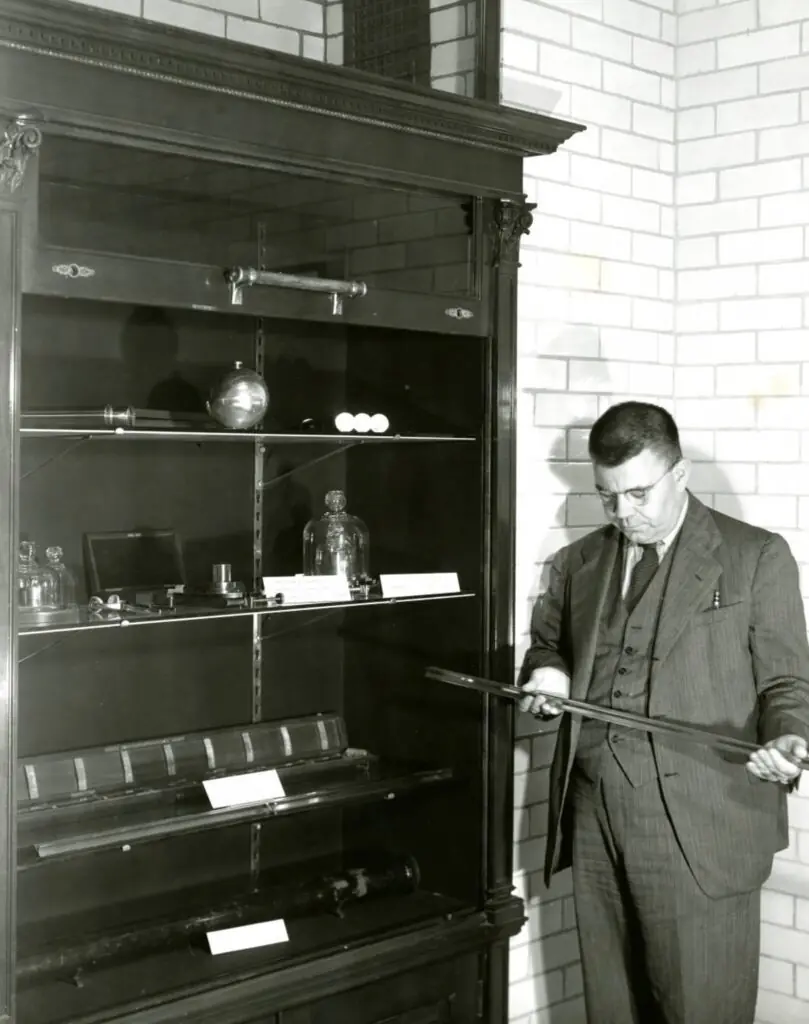
Portrait of Edward U. Condon in 1947.
CLASSIFIED DOC-00474
Type
REPORT
Source material
PUBLIC
Agency
University of Colorado, commissioned by the Air Force Office of Scientific Research (USAF)
Date
01 Jan 1969
Reference
Scientific Study of Unidentified Flying Objects. Edward U. Condon, director; Daniel S. Gillmor, editor. Contract signed on October 6, 1966. Version deposited in the Department of Defense technical repository under call number AD0680975
Log
14.04.2026 · 549 words · 3 min
Start reading
Agency University of Colorado, commissioned by the Air Force Office of Scientific Research (USAF)
Date 01/01/1969
Source material PUBLIC
Words 549

Archive file for the document that officially settled the UFO question in the United States for half a century. The full story of how it was made is in its case file. Here, the hard facts.

PUBLICREF: CONDON REPORT
TitleScientific Study of Unidentified Flying Objects
Project directorEdward U. Condon
EditorDaniel S. Gillmor
Project coordinatorRobert J. Low
InstitutionUniversity of Colorado, Boulder
Contracting partyAir Force Office of Scientific Research (AFOSR)
Contract signedOctober 6, 1966; announced on the 7th
First contract$313,000 for fifteen months (November 1, 1966 to January 31, 1968)
Total project fundingover $500,000
Delivery to the Air ForceNovember 1968
PublicationJanuary 1969
Length, full editionabout 1,485 pages
Length, Bantam paperback edition965 pages
Endorsementeleven-member panel of the National Academy of Sciences, chaired by Gerald M. Clemence

Beware of the two editions

An error that circulates even in serious bibliographies: it is said that Bantam published all 1,485 pages. It did not. There are two distinct editions. The full one runs to about 1,485 pages; the Bantam paperback, which is the one that reached the general public in January 1969, has 965. If you are going to cite the length, say which one.

The detail matters for a practical reason: nobody who buys a book of nine hundred and sixty-five pages reads all of it. They read Section I, which is the director’s conclusions. And that is the trick of the whole affair.

What it concludes

SCIENTIFIC STUDY OF UNIDENTIFIED FLYING OBJECTS — SECTION IREF: Conclusions and recommendations

The sentence that closed the matter

Document · Conclusions and recommendations

The report’s general conclusion is that nothing has come from the study of UFOs in the past twenty-one years that has added to scientific knowledge. It adds that careful consideration of the record as available to the authors leads them to conclude that further extensive study of UFOs probably cannot be justified in the expectation that science will be advanced thereby.

The National Academy of Sciences reviewed the work for six weeks with an eleven-member panel chaired by Yale astronomer Gerald M. Clemence, and endorsed the methodology and conclusions. Its opinion held that, given the knowledge then available, the least likely explanation for UFOs was the hypothesis of visits by intelligent extraterrestrial beings.

On December 17, 1969, with that report in hand, Air Force Secretary Robert C. Seamans, Jr. announced the closure of Project Blue Book.

How it is organized, for anyone who wants to dive in

If you are going into the document, go in knowing where everything is, because it is a labyrinth and it helps no one.

Section I is the conclusions and recommendations signed by the director. It is the part that the press, members of Congress and practically everyone else read, and the one that supported the closure of Blue Book. Section II contains the description of the project: among other things, it gives the detail of the first fifteen-month contract with the Air Force Office of Scientific Research. And from Section IV on come the studies of individual cases, which is where the matter gets complicated and where the famous unexplained residue lives.

Put another way: the report is built so that the reader finds the verdict first and only afterward, if they hold out, the evidence. No decent court orders a case file like that. But a communications office does.

And the internal contradiction

The UFO subcommittee of the American Institute of Aeronautics and Astronautics reviewed the report between 1970 and 1971 and published the result in its journal. It expressly rejected Condon’s conclusions and put the share of examined cases left unexplained at around 30%, speaking of a small residue of well-documented but inexplicable cases that constitutes the hard core of the controversy.

Hynek spoke of more than a quarter. The astrophysicist Peter A. Sturrock later showed that there were substantial and significant differences between what the project’s investigators found and what the director attributed to the project.

ℹ
HOW TO CITE THAT FIGURE WITHOUT SLIPPING UP
The 30% comes from the AIAA subcommittee’s review, published in 1971, not from the report itself. And its denominator varies depending on what is counted as a studied case: the figures circulating for the total number of cases analyzed are not uniform across sources. The honest way to put it is that around a third of the examined cases were left unexplained according to the AIAA review, and to cite that source.

The full text of the report is available online for free, and a version also exists deposited in the Department of Defense technical repository. There is no need to believe anyone: you can read it.

And that is, in the end, the best argument against convenient conspiracies. The document that supposedly covered up the biggest secret of the century has been posted online for decades, whole, with its contradictions inside, waiting for someone to get past page thirty.

OSINT – Source traceability

File completeness67/70
View breakdown
  • +20 Primary source linked
  • +12 Type: archivo
  • +10 Identified entity
  • +10 Source date
  • +5 Editorial notes
  • +5 Verification level assigned
  • +5 Documented corroboration
Source type Archive
Entity / Origin University of Colorado / United States Air Force
Verification level V1 · Verified
Timeline
Published source
Published on BUFO
Primary source files.ncas.org
OSINT editorial notes

Documented medium bias: Robert J. Low's internal memorandum of August 9, 1966 shows that the project coordinator defined his public presentation strategy before the study had received any data. The figure of $313,000 corresponds only to the first fifteen-month contract; the total exceeded $500,000. The length of 1,485 pages corresponds to the full edition: the Bantam paperback of January 1969 has 965.

Channel active
Newsletter
SEC:BUFO
Email newsletter

Get a briefing when something moves in the dark.

New case files, declassified documents, recommended reading and signs of anomalous activity. One email when it matters. Zero noise. Zero spam.

No mass mailings
Unsubscribe anytime
OSINT-friendly
Activate subscription
Alternate channel
Follow via RSS
Unit note

We don't sell your email, we don't run campaigns, we don't chase you with cookies. We only send what deserves a place in your archive.

Stable signal No ads One-click unsubscribe