
February 2023: Four Shootdowns, Three Unidentified Objects and a Radar Filter
The United States shot four things out of the sky in nine days and recovered the wreckage of only one. The explanation is not in the sky: it is in the radar thresholds, which someone had just lowered. And that leaves seventy years of “nothing on record” in a very bad spot.
Between February 4 and 12, 2023, U.S. fighters shot down four objects over domestic and allied territory. The first, a high-altitude balloon of Chinese origin, was shot down over the sea off South Carolina, its wreckage was recovered and it was fully identified as a surveillance platform. The next three (Alaska, Yukon and Lake Huron) were much smaller, their wreckage was not recovered and they lack conclusive identification. The official hypothesis is that they were commercial, scientific or hobbyist balloons. The increase in detections was due to the readjustment of the surveillance radar thresholds, not to a change in the airspace.
Executive summary of the case file. Everything essential before you dig deeper.
Fact sheet
OSINT - Traceability
Intelligence Network
Friends, in February 2023 the United States shot four things out of the sky in nine days. One was a Chinese balloon the size of three buses, and we know exactly what it was. The other three remain officially unidentified, and their remains lie on the sea ice of the Beaufort Sea, in a forest in the Yukon and in Lake Huron.
It made front pages around the planet for a good week. And then, silence. As if it had never happened.
I’m here to tell you what we do know, which is quite a lot, and above all the technical detail that explains almost everything and that was told terribly: what changed in those days was the radar filter, not the sky.
What can be verified: a dry chronology, no embellishments
Everything that follows is in official communications, public appearances and Department of Defense press releases. No leak is needed.
The balloon enters
A high-altitude balloon of Chinese origin enters North American airspace over the Aleutians and crosses the continent for days, in plain view of everyone and with continuous news coverage.
First shootdown
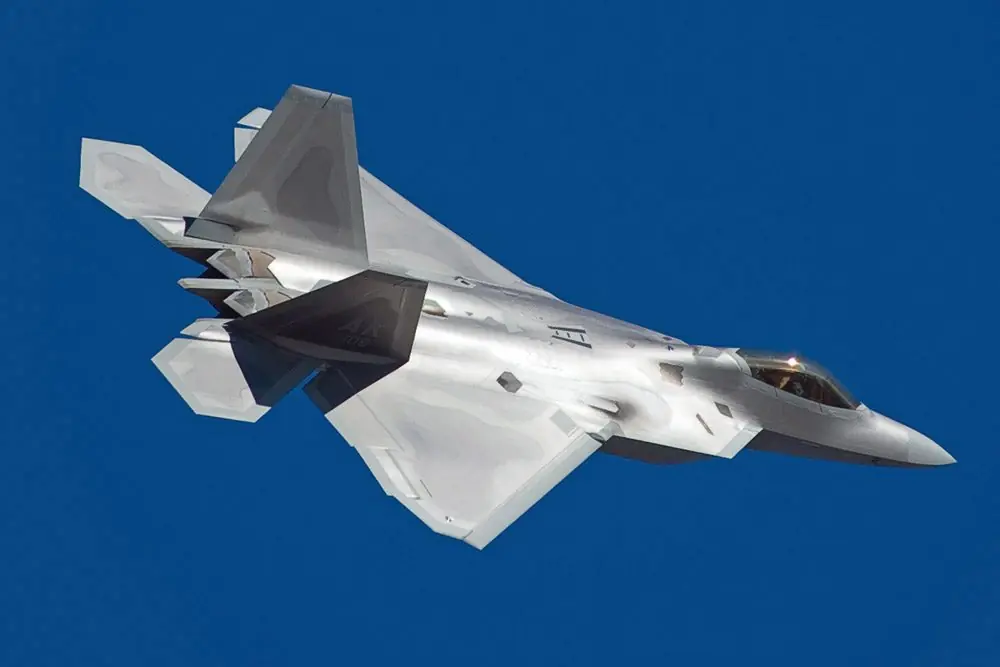
An F-22 fighter shoots down the Chinese balloon off the coast of South Carolina, over water, to allow recovery of the wreckage. The operation is carried out with an infrared-guided air-to-air missile.
Wreckage recovered
The Navy recovers the balloon's material. Later analysis identifies it as a surveillance platform. This object, and only this one, is fully identified.
Alaska
A second object, much smaller, is shot down in northern Alaska at about 40,000 feet. There is no prior identification. The wreckage falls on sea ice and is not recovered.
Yukon
A third object is shot down over Canadian territory in coordination with the joint aerospace defense command. The wreckage, in wooded, snow-covered terrain, is not recovered either.
Lake Huron
A fourth object is shot down over Lake Huron. The first missile fired misses and a second is needed. The wreckage falls into the water and is not recovered.
The sentence
The commander of Northern Command states publicly that he has not ruled out any hypothesis about the nature of the last three objects. The sentence goes around the world.
The nuance
The White House clarifies that the leading hypothesis is that they are commercial, scientific or hobbyist balloons, unrelated to any hostile activity.
The technical explanation
It is made public that the surveillance radars had been readjusted to detect smaller, slower objects, which multiplied the contacts that were previously filtered out as noise.
The radar filter: the explanation nobody wanted to put in a headline
Here is the meat of the matter, and I’m going to explain it calmly because it is one of the most useful things you can learn in this trade.
An air surveillance radar does not show you “what is in the sky.” It shows you what you have decided it should show you. Radar echoes include flocks of birds, insects, atmospheric turbulence, thermal inversions, cars on a highway and balloons of every kind. If the operator saw all of that, he would see nothing useful. So filters are applied: by signal size, by minimum speed, by altitude, by behavior. Everything below the threshold is discarded before it reaches the screen.
For decades, those filters were calibrated for a specific enemy: aircraft and missiles. Big, fast things with a heading. A small object floating along at thirty knots was, by the machine’s definition, garbage.
After the embarrassment of the Chinese balloon, someone gave the obvious order: lower the thresholds. And when they lowered them, things appeared. Many of them. Not because they had arrived that week, but because they had been there for years and the machine had been throwing them in the trash before drawing them.
The sky did not fill with objects. They stopped being erased. It is the difference between an invasion and a new pair of glasses.
This has a consequence that goes far beyond February 2023, and it is the reason this case file seems important to me. When an official report says “nothing on record on radar,” we now know we must also ask what thresholds that radar was configured with. The answer does not always explain the case, and there are cases, like Washington in 1952, in which the radar did register targets. But without that question, the “nothing on record” is worth less than it seemed.
No Martians required: what they were, with near certainty
The official hypothesis, and by far the most reasonable one, is that the three unidentified objects were balloons. And not spy balloons: ordinary balloons.
There is a whole world up there that almost nobody knows anything about. Institutional weather balloons, launched by the hundreds every day. University research balloons. Advertising balloons. And, above all, pico balloons: ham radio contraptions a couple of meters across, with a payload of a few grams, a tiny transmitter and a solar panel, which circle the globe several times floating at ten or twelve thousand meters. Hobbyist clubs launch them. They are legal, they are cheap and they publish their positions online.
And here comes the detail I love: an American ham radio club reported that one of its pico balloons stopped transmitting around those dates while flying over precisely the area where one of the downed objects passed. It is not confirmed that it was the same one. But the geographic and temporal coincidence is notable, and the resulting scene is perfectly absurd: a latest-generation fighter, with a missile that costs more than an apartment, shooting down a twelve-dollar hobbyist balloon over the Yukon.
- The reported size (about that of a small car, or less) fits a balloon, not an aircraft.
- The total absence of a propulsion signature fits a balloon.
- Drifting at wind speed at that altitude fits a balloon.
- That all four shootdowns happened within nine days, right after the filters were readjusted, fits a change in sensitivity and not a change in the sky.
- And that the missile over Lake Huron missed on the first shot fits, sadly, a small, cold target with no engine: an infrared-guided missile seeks heat, and a balloon has none.
4
in nine days
1of 4
only the Chinese balloon
5
one missed over Huron
So where is the problem?
The problem is not what they were. The problem is everything else, and it’s textbook.
First: nothing was recovered. Three objects shot down, zero wreckage. Alaska in February, a snowy Yukon forest and a Great Lakes lake in winter are brutally hard recovery settings, agreed. But the practical result is that the identification of all three rests on an inference, not on a piece of material on a table. When a state says “they were probably balloons” without showing a balloon, it is asking for trust, not providing proof.
Second: the sentence. The commander of Northern Command said at a press conference that he was not ruling out any hypothesis. It was a technically impeccable answer (not ruling out is the correct thing when you don’t have the object) and a catastrophe in communication terms, because half the planet translated it as “the Pentagon doesn’t rule out that they were extraterrestrial.” The next day someone had to be sent out from the White House to smooth things over. That sequence is exactly what feeds distrust: first a military officer tells the uncomfortable truth, then a political official qualifies it, and the public is left with the sense that someone has been corrected.
And third, the one that costs me sleep: the cost of the decision. Air superiority fighters and missiles costing more than four hundred thousand dollars each were used against unidentified objects about which nothing was known. Over domestic territory and over allied territory. Without knowing their nature, their origin or their payload. If those were hobbyist balloons, shots were fired blind. And if they were not, the evidence was destroyed and dropped into the water.
The world of balloons, which is enormous and which nobody watches
I’m going to insist on this because it seems to me the most neglected part and the funniest.
Above our heads, every day, there is so much rubber and polyester floating that if you saw it all at once you would not sleep. The weather services of half the planet release radiosondes twice a day, at the same hours, from hundreds of stations. Each one climbs until it bursts at thirty-some kilometers and comes down by parachute wherever it pleases. Nobody picks them up. Nobody counts them when they land.
Add the stratospheric research balloons, which are stadium-sized beasts carrying telescopes; the balloons of private operators offering connectivity or imaging; those of universities, which launch student projects with GoPro cameras; and the ham radio community, which has built a pastime out of circling the world with a metallized plastic bag and two grams of electronics. Some people are on their balloon’s seventh circumnavigation and share it on a public map.
All of that flies with no flight plan, no transponder and no obligation to notify anyone, because for decades nobody considered it a problem. And now it turns out that an air defense system that takes small, slow objects seriously suddenly finds the sky full of traffic that answers to nothing.
In Astro language: for seventy years we have been told there was nothing strange in the sky, when the truth is that the sky was full of strange and utterly banal things, and nobody counted them because counting them was nobody’s job. The surprise of February 2023 was the military’s, not the public’s.
The question I do find serious
And now, if you’ll allow me, the uncomfortable part, which is not about mystery but about responsibility. Which is where I always end up.
A Chinese balloon the size of three buses entered over the Aleutians and crossed the United States from coast to coast for almost a week. In plain sight. Photographed by neighbors with cell phones from their backyards. Flying over, among other things, a state with missile silo fields.
The question is not only why they shot it down late. This balloon was seen: NORAD tracked it from when it approached the Aleutians on January 28, and the decision was made to wait until it was over the sea. What Northern Command itself admitted, reluctantly, is something else: that similar balloons had crossed before without anyone noticing at the time. A large but slow object with no engine signature fell below the threshold. That blind spot was by design, not a malfunction, and it is the same one that explains the rest of the week.
That is a national security failure, and it interests me far more than the nature of three contraptions at the bottom of a lake. Nobody has been held accountable for it. The filters were corrected, four things were shot down to show reflexes, a week of headlines was endured and the page was turned. It is the usual administrative pattern: the machine is fixed, the criterion is not explained.
And when we talk about responsibilities, everyone gets nervous. You know what I think about nervousness: it beeps where there is iron, gold or fear. Here it beeped quite a lot.
The vocabulary lesson, which is the one to take home
February 2023 did more for the language of this subject than twenty years of conferences.
In those days, a Western government repeated at press conferences, daily and before the whole world, the expression “unidentified object” without irony, without quotation marks and without laughing. Not as a concession to anyone: as an exact operational description of a real situation. An object that has not been identified is, literally, an unidentified object. Period.
And that revealed something we had failed to see for decades: that the term never meant “alien craft.” It meant what it says. It was we (the public, the press, half of ufology) who loaded it with a meaning it did not have, and then complained that institutions did not use it. When they finally did, it turned out to designate balloons.
That is the usual double cage. The cage of “they call it an unidentified object, so they know there are craft.” And the cage of “they call it an unidentified object so as not to say balloon.” Neither listens to what the word says. I have developed this same idea, applied to the language of annual reports, in the case file on the AARO historical report.
A hundred-and-fifty-million-dollar F-22 chasing a ham radio balloon over the Yukon. If that is not a portrait of the 21st century, friends, I no longer know what is.
OSINT – Source traceability
We expressly avoid attributing to the Department of Defense the claim that the objects might be of extraterrestrial origin: what was stated was that no hypothesis was being ruled out. The coincidence with the ham radio pico balloon is presented as an unconfirmed coincidence.