JAL 1628, Alaska 1986: the cargo 747 and the echo the FAA ended up explaining
A Japan Air Lines Boeing 747 reported three objects over Alaska. The U.S. civil aviation authority opened a three-month investigation and then appeared before the press to say something unusually honest: that it accepted the crew's account and could not back it.
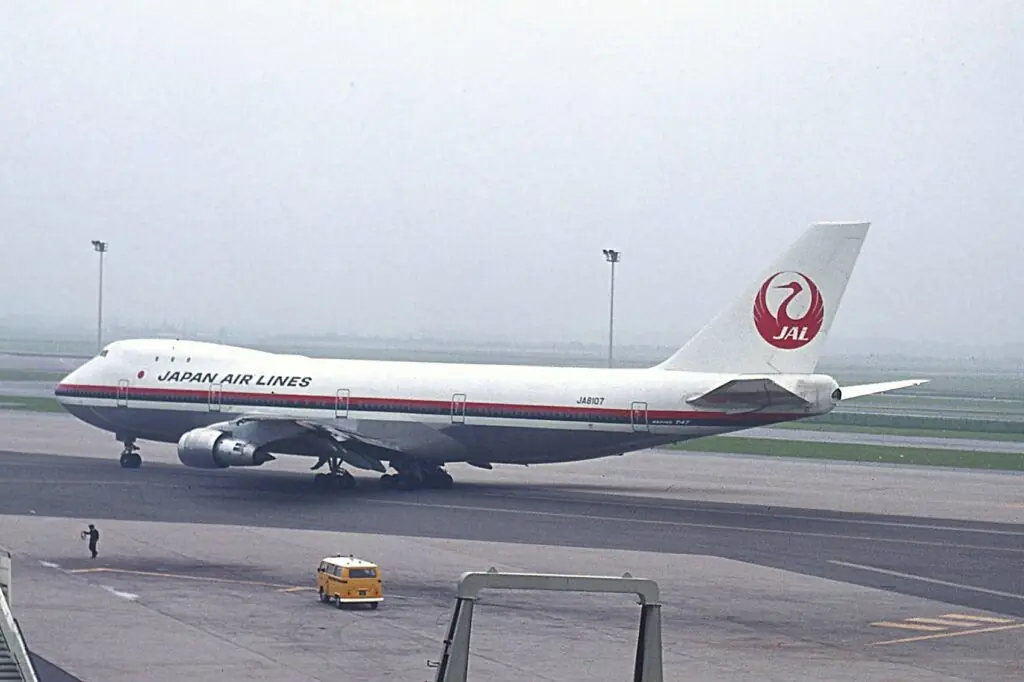
On November 17, 1986, the crew of cargo flight JAL 1628, a Boeing 747-246F flying the Paris-Tokyo route with a stop in Anchorage, reported three unidentified objects over eastern Alaska at 35,000 feet. Civil control logged, at some moments, a second return next to the aircraft. The FAA opened a three-month investigation and on March 5, 1987 concluded at a press conference that the echo corresponded to a split image of the aircraft itself, that it did not have enough material to confirm the presence of an object and that, while accepting the crew's account, it could not back it.
Executive summary of the case file. Everything essential before you dig deeper.
Fact sheet
OSINT - Traceability
Intelligence Network
Today I bring a case I like especially because it is about paperwork, not lights: about a federal agency that said one thing in November, another in January and a third in March, and about a career official who thirty years later set out to tell the public what had happened with the tapes. In other words: it is about my kind of thing.
On November 17, 1986, a Japan Air Lines cargo Boeing 747 was crossing Alaska on its way to Anchorage. The crew reported three objects. Up to there, just one more sighting. The interesting part starts when they land, because from that moment the case file leaves the sky and ends up in a filing cabinet at the Federal Aviation Administration. And filing cabinets, friends, talk a lot more than lights do.
What happened, according to the case file itself
The 747 was coming from Paris, bound for Tokyo with a stop in Anchorage. Around 17:11, at 35,000 feet and already over Alaskan territory, Captain Kenju Terauchi reported lights. He then specified: two small objects and, behind them, one considerably larger. He kept them in sight for quite a while (the distance usually cited is around four hundred kilometers) and at some point asked for permission to maneuver and lose sight of them. They gave it to him. He descended, turned, and that was the end of it.
Now, the administrative machinery, which is where this gets good. Anchorage control had a 747 on the screen and, at some moments, a second return nearby. The military radar was contacted. The tapes were logged. And an FAA investigation was opened that lasted roughly three months.
Note what I just said, because it is stranger than it looks: the civil aviation authority of the United States opened a formal investigation into a UFO sighting and kept it going for a quarter of a year. That almost never happens. It happened because the witness was an airline captain with thousands of hours, because there were tapes, and because the matter leaked to the press in December.
17:11, the sighting
Captain Kenju Terauchi, in command of cargo flight JAL 1628 over eastern Alaska at 35,000 feet, reports two small objects and a larger one. The tracking goes on for about 400 km.
After landing
The captain and his crew are interviewed by FAA personnel in Anchorage. The control center's radar tapes are preserved and the military radar is consulted.
The leak
The case reaches the press. The FAA publicly acknowledges that it has material and is investigating, which is widely read as an official confirmation of a UFO.
Backpedaling
The agency starts to qualify its position. The military returns are reassessed as noise and the second echo on civil radar as an artifact of the 747 itself.
The official conclusion
FAA press conference. Spokesman Paul Steucke withdraws earlier suggestions that controllers had confirmed a UFO and attributes the second echo to a split radar image, a known defect of the system. He states that the agency does not have enough material to confirm that anything was there, that it accepts the crew's description but cannot back what they saw.
Callahan tells it in public
John Callahan, who had been head of the FAA's Accidents, Evaluations and Investigations Division in Washington for six years in the 1980s, presents his version of the episode at the National Press Club.
The FAA sentence you have to read slowly
From the appearance of March 5, 1987, the usual takeaway is the headline: the FAA says it was not a UFO. That is not exactly what was said. What was said, translated and broken down, was this:
- That the agency does not have enough material to confirm that anything was there.
- That it accepts the description given by the crew.
- That, nevertheless, it cannot back what the crew saw.
- That the second radar echo is attributed to a split image of the aircraft itself, a known defect of the equipment.
See the difference? They did not say there was nothing there. They said they could not show that there was something, which is a far more modest and far more honest claim. And they added an important professional courtesy: they did not call the crew liars or incompetent. The investigators put in writing that the crew members were normal, professional and rational, with no involvement of drugs or alcohol.
Saying you cannot back what they saw is not the same as saying they saw nothing. Between those two statements fits half the story of this affair.
The radar split image, explained without mysticism
Since we are here to learn something, let’s go to the technical explanation, which is solid and worth understanding.
A secondary radar interrogates the aircraft’s transponder and draws a symbol where it is. A primary radar bounces energy off the structure and draws an echo. Under certain conditions (anomalous propagation, ground reflections, processing configuration) the system can paint the same aircraft twice, with a small separation. The operator sees a ghost target stuck to the real one. It is a known defect, it has a name and it appears in the manuals.
If the ghost also shows up right when the pilot is describing over the radio an object beside him, the coincidence is crushing. And crushing in both directions: for the one who wants to believe, because the radar “confirms”; and for the one who wants to disbelieve, because the ghost has a perfectly available mundane explanation. The same smudge serves everyone. Welcome to the trade.
Callahan, or why a late testimony is not junk but is not a document either
John Callahan headed the FAA’s Accidents, Evaluations and Investigations Division in Washington for six years, in the eighties. He is no amateur: it is a mid-to-senior post in the agency, exactly the kind of person through whose hands a case file like this passes. In 2007 he told it at the National Press Club and he has repeated his version many times since.
His account adds an uncomfortable layer: that there was more material than was acknowledged, and a briefing with other agencies after which it was preferred that the matter not be on record. Here I am going to do what I always do, which some will find lacking in enthusiasm.
- Callahan did hold that post. That is verifiable and not in dispute.
- His account is firsthand as to his own actions, and that places it above rumor.
- But it is an oral testimony given twenty-one years after the event, with no document accompanying it on the decisive points.
- And there is an asymmetry that should not be hidden: the part of his account that can be checked against the public case file (that there was an investigation, that there were tapes, that there were interviews) is the part that is confirmed. The part that cannot be checked is, precisely, the most serious.
In Astro language: I grant him credibility as a person and I withhold the status of proof. They are two different things, and mixing them up is the most common mistake in this trade.
What this case file did to the pilots who came after
And now the part that really matters to me, because it is the one that connects 1986 with the present.
Let’s put ourselves in the place of an airline captain who reads the newspaper in 1987. He sees a colleague with thousands of hours, an impeccable professional, who reported by radio what he was seeing, following procedure, as you are supposed to. And he sees the result: three months of investigation, his name in media around the world, a federal press conference to explain that his observation cannot be backed, and a string of articles suggesting he mistook Jupiter for a spacecraft.
What does that captain learn? He learns not to report. Nobody needs to threaten him and no internal memo needs to exist: the example is enough. The professional cost of reporting is visible and the benefit is zero.
It is exactly what the ODNI preliminary assessment of June 2021 acknowledges in writing thirty-five years later, when it admits that the stigma attached to reporting has for decades limited the quantity and quality of available data. The agency writing it is describing the mechanism that can be seen working live in the JAL 1628 case file.
No Martians required
- Jupiter and Mars. This is Philip Klass’s hypothesis, and it is no throwaway idea: that night both planets were in the relevant direction, with Jupiter about ten degrees above the horizon, which from a cockpit at 35,000 feet can give the impression of being at the aircraft’s altitude. It explains the two small, persistent lights well.
- Refraction and reflections in the windshield. The glazing of a 747 cockpit has several layers and produces double reflections of bright sources. It is a usual candidate and fits the described geometry.
- The radar split image for the echo. Official explanation, technically solid and sufficient.
- What does not quite close. The size and structure that Terauchi described for the third object do not fit well with a planet or a reflection, and the captain was a professional with a great many hours of polar night behind him. That residue exists. It is small, but it is there, and whoever denies it is cheating from the other side.
A cargo 747, a Japanese captain with many hours, a ghost echo and a federal agency that took three months to say, quite elegantly, that it did not know. If you ask what I take away from this case file, I take Steucke’s sentence, not the lights over Alaska. We accept what you tell us and we cannot back it. I wish it were said more often.
OSINT – Source traceability
Paul Steucke's statements are given translated and by their content, not as a verbatim transcript of the English original. The nature of the cargo carried is not recorded because it is a frequently repeated claim that could not be checked against a primary source. It is not claimed that Captain Terauchi was removed from flying after the episode: this circulates widely and has not been verified. The spelling of his name varies between sources. The coordinates correspond to a reference point in the Alaskan interior and not to the exact position of the sighting, which is not precisely recorded in any accessible source.