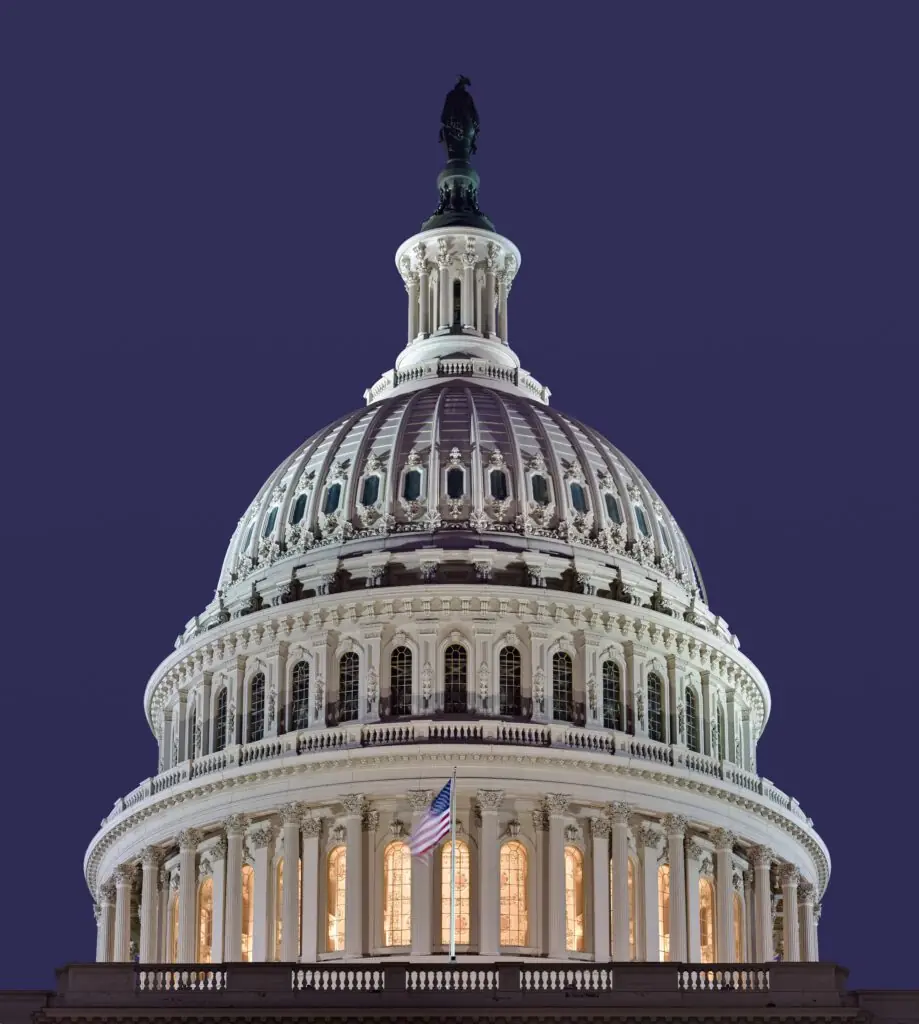
The UAP Disclosure Act: How to Kill a Transparency Law Without Voting Against It
The U.S. Senate passed a mechanism copied from the Kennedy records law: an independent review board, a presumption of disclosure and eminent domain over technology of unknown origin. In December 2023 it went into a conference committee and came out as a cabinet.
In July 2023, Senators Chuck Schumer and Mike Rounds introduced the UAP Disclosure Act as an amendment to the National Defense Authorization Act for Fiscal Year 2024, with a mechanism copied from the 1992 Kennedy assassination records law: an independent nine-member review board, a presumption of disclosure with the burden of proof reversed, a default period of twenty-five years and eminent domain over technology of unknown origin and biological evidence of non-human intelligence in private hands. In the conference committee of December 2023 those pieces disappeared. The law signed on December 22, 2023 keeps the obligation to create a collection of records at the National Archives, without an outside referee.
Executive summary of the case file. Everything essential before you dig deeper.
Fact sheet
OSINT - Traceability
Intelligence Network
Friends, no lights today. Today there is a law. And I promise you it is more exciting, because lights go away, while laws stay written down with the name of whoever struck them out.
In July 2023, the Senate Majority Leader of the United States, Chuck Schumer (hardly a flying-saucer enthusiast), introduced an amendment to the annual defense bill together with Senator Mike Rounds. They called it the UAP Disclosure Act. It was a mechanism rather than a statement of intent, copied almost line by line from a law that had already worked once, the one that in 1992 forced the declassification of the Kennedy assassination files.
Five months later, it reached the president’s desk reduced to a husk. Let’s see who stripped the flesh off it.
Getting to my point: what the original text said
This is where you have to read slowly, because the point of this law was not in what it claimed about the phenomenon (it claimed nothing) but in the machinery it built.
The Schumer and Rounds amendment did four things, and all four are pure administrative plumbing:
- It reversed the burden of proof. It established a presumption of immediate disclosure: every document related to the subject is published, unless the agency justifies, case by case, why not. Today it works the other way around, and that reversal is everything.
- It set a clock. It fixed a period of twenty-five years from the creation of the document as the default threshold for automatic declassification.
- It created an outside referee. A nine-member review board, appointed by the president and confirmed by the Senate, with authority to decide what gets published. In other words: it took the decision out of the hands of the very agency that holds the document.
- And it reached into private property. It provided for eminent domain, in favor of the federal government, over any recovered technology of unknown origin and any biological evidence of non-human intelligence in private hands.
That last point is the one that raised eyebrows around half the world, and rightly so. A legislature does not expropriate unicorns. If the U.S. Senate writes into a legal text the procedure for seizing material of non-human origin from private contractors, either it is putting on very expensive theater, or someone has told it something in a secure room. I don’t know which. But the question is legitimate, and the text is published.
Nobody drafts an expropriation procedure for an asset they consider nonexistent. Either it is theater, or someone has heard something. Both possibilities are news.
The precedent that explains everything
Congress passes the Kennedy assassination records law, which creates an independent review board and a presumption of disclosure. It works: millions of pages come to light. It is the model that will be copied thirty years later.
The trigger
Public statements by a former intelligence officer about alleged material recovery programs put the issue on Congress's agenda.
The amendment
Senators Chuck Schumer and Mike Rounds introduce the UAP Disclosure Act as an amendment to the annual defense bill: a nine-member review board, a presumption of disclosure, a twenty-five-year period and expropriation of material of unknown origin.
The House hearing
A House of Representatives subcommittee holds a public session on the phenomenon with military witnesses. Media pressure peaks.
The conference committee
In the conference between Senate and House to reconcile the two versions of the defense bill, the review board and the expropriation provisions disappear. The obligation to create a collection of records at the National Archives survives.
Signing
The president signs the defense bill for fiscal year 2024 with the text already cut down.
Second attempt
Schumer reintroduces the full mechanism as an amendment to the following year's defense bill. It does not succeed.
The collection exists
The National Archives opens the collection of records on unidentified anomalous phenomena and agencies begin transferring material. Without a review board, the pace and the criteria are still set by each agency.
How to kill a law without voting against it
And now, the part almost nobody talks about and that strikes me as the only one that really matters. Because here there was no open debate, no epic speech, no vote in which everyone was put on the record. There was something far more effective: a conference committee.
It works like this. The Senate passes its version of the defense bill. The House passes its own. Since they are not identical, a small group of legislators from both chambers shuts itself away to reconcile them. A single text comes out, which is then voted on as a block, with no possibility of amendment. And in that closed room, with no detailed public record of the discussions, it is decided which paragraphs survive.
The UAP Disclosure Act went into that room with a review board and came out without one. Nobody voted against transparency. Nobody had to defend in public why they disliked an outside referee. The paragraph simply stopped being there.
Reporting published in those days attributed the main opposition to leaders of the House intelligence and armed services committees, and repeatedly pointed to the then chairman of the Intelligence Committee, Republican Mike Turner. I set it down for what it is: attributed press reporting, not a record. If anyone has the record, show it and I will publish it.
Why the review board was the whole law
I’ll explain it with the 1992 example, which shows this is not theory.
When Congress wanted to declassify the Kennedy assassination files, it did not merely order them published. It knew perfectly well that ordering an agency to publish its own secrets invariably produces two results: endless delays and black pages. So it created an outside body, with members from outside the agencies, with access to the originals and with the power to say “this gets published” over the opinion of the custodian.
And it worked. Millions of pages came out. The agencies had not become generous; they had lost the power to decide.
Removing the board from the UAP Disclosure Act is exactly like taking the referee out of a match and asking the teams to agree among themselves on penalties. What remains (a collection at the National Archives) is a cabinet. A very respectable cabinet, in a very respectable building, whose contents are decided by the same people who decided until now. When the State promises you transparency, first look at who holds the key to the filing cabinet.
A necessary aside: what a defense bill is and why everything ends up inside it
I’m going to explain a mechanism we know little about in Spain and that is the key to why this story ended the way it did.
The annual U.S. defense authorization bill is a hulking, hundreds-of-pages-long document that has been passed every year without fail for more than six decades. It authorizes military spending, promotions, bases, programs. And precisely for that reason (because it has to pass) it has become the favorite vehicle for sneaking in anything that would not clear the process on its own. It is the bus everyone tries to climb aboard.
That has an advantage and a trap. The advantage: an amendment inside the defense bill travels with a cargo nobody is going to sink, because sinking it would mean leaving the Armed Forces unpaid. The trap, the one that caught Schumer: when the amendment travels on a bus that must arrive, anyone who wants to get it off only has to sit on the committee that decides which seats survive. And there you don’t need to win a public vote. You just need not to give way.
In Astro language: the same door that lets you in without knocking is the one that lets them throw you out without explanation. Anyone who puts a serious reform into the defense bill accepts, from the start, that it will be decided in a room that produces no record.
And a comparison that hurts: what France did and what Spain did
Because it is worth stepping out of Washington for a moment, since we have grown used to looking only that way.
France needed no declassification law. It solved it by administrative means: a unit inside the space agency, with the ordinary duty to archive, and a decision to publish the archive online in 2007. No review board, no expropriations, no epic. A department head signing a publication order.
Spain did not need a law either. The declassification by the Ejército del Aire (Spanish Air Force) in the 1990s was done by internal decision of the Ministry itself, file by file, with one officer reviewing them one by one and with civilian researchers pushing from outside. It took years, came out incomplete and worked.
The uncomfortable conclusion is this: the two European cases that did open archives did it without a law and without drama, because the material was in the hands of civilian bodies or of a ministry willing to close the matter. In the United States a law with a review board is needed because the material, if it exists, is not in a ministry: it would be spread among intelligence agencies and private contractors. And a private contractor is not declassified by a service order. It is declassified by a judge or by an expropriation.
That is why the expropriation paragraph was the heart of the text and why it was the first to fall. It was the only one that bit, not the most extravagant.
No Martians required: three boring explanations that are probably true
Because here we have to do the usual exercise, and in legislative matters the exercise is especially healthy.
One: institutional reflex. No intelligence agency in the world willingly accepts an outside body with the power to publish its documents over its own judgment. They don’t need to be hiding spacecraft. It is enough that they hide methods, sources and capabilities, which is literally their job. An archive on unidentified objects is full of data on how they were detected, and that how is the real secret.
Two: the contractor problem. The expropriation clause affected private companies. Private defense-sector companies have very competent government-relations offices and have been funding campaigns for decades. You don’t need a cosmic conspiracy to understand why a paragraph that lets the government seize their material disappears in a committee.
And three: ridicule. This is the most human one. For a legislator with ambitions, being on the record defending a law about non-human biology is a considerable reputational risk if nothing turns up in the end. It is far more comfortable to let the paragraph fall by itself in a room with no stenographer.
None of the three requires that something be stored in a hangar. And all three explain perfectly what happened. Which is, incidentally, the same conclusion I reached reviewing the AARO historical report: secrecy almost never protects a secret, it protects a career.
What to watch from here on
For anyone who wants to follow this seriously and not through headlines, three indicators that do mean something:
- The volume transferred to the National Archives. Not the announcements: the boxes. A body that really transfers generates inventories, and inventories can be requested.
- The exemptions claimed. Every time an agency refuses to transfer something, it has to state on what grounds. The catalog of grounds claimed says more about what exists than any leak.
- Whether the review board comes back. It is the only point that matters. As long as there is no outside referee, everything else is institutional decoration.
I keep one image. A legal text, passed by the U.S. Senate, describing how to seize technology of unknown origin. It went into a room with nine board members and came out with a cabinet at the National Archives. Nobody pressed a button. Black ink covers, and sometimes you don’t even need the marker: it is enough not to write the paragraph again.
OSINT – Source traceability
An express distinction is made between the legislative fact, which is verifiable, and the attribution of responsibility, which comes from press reporting. The common formulation that “the law was not passed” is avoided: it was passed, without its coercive mechanism.