
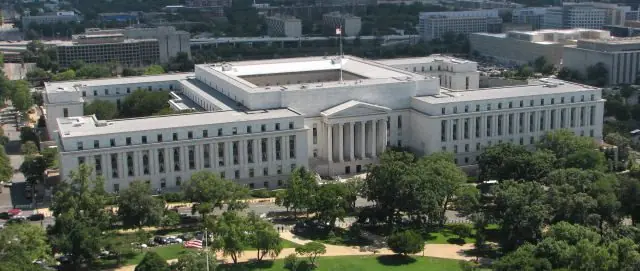
We are going to do something unusual in this trade: read the record. Not the headline, not the tweet, not the twenty-second clip with synthesizer music. The record. Because on July 26, 2023, in room 2154 of the Rayburn building in Washington, a man whose uniform had been hanging in a closet for years sat down in front of a House of Representatives subcommittee, raised his hand and told his story with stenographers taking it down. And that, friends, is a document.
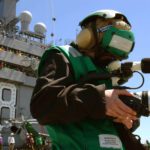
That man is David Fravor, a retired commander of the US Navy. In November 2004 he was the commanding officer of fighter squadron VFA-41, the Black Aces, embarked in the air wing of the USS Nimitz. What follows is what appears in the official transcript from the Government Publishing Office, not my poetic summary.
What he testified, in his own order
Fravor began with the boring part, which is how serious things begin. They were in a two-month training cycle off the California coast. That day they had a 2-versus-2 air-to-air exercise scheduled, with the cruiser USS Princeton acting as control. They take off, and control tells them the training is canceled: they are switching to a real tasking.
Heading west. The controller calls out the range to an object nobody has told them anything about. And then he drops the detail that interests me more than any description of the contraption:
Fravor told the subcommittee that the controller said these objects had been tracked for more than two weeks, dropping from above 80,000 feet, descending rapidly to 20,000, staying there for hours and then climbing back up. For anyone who doesn’t know, he added, above 80,000 feet is space.
Operational translation: the Princeton‘s radar did not see a strange flash one Tuesday. It had been logging it for two weeks. That turns the case into something other than a pilot’s anecdote: it turns it into a time series. And time series leave a paper trail.
They reach the area at about 20,000 feet. The controller calls merge plot: their own return and the contact are already in the same radar resolution cell. Fravor insists on the weather, and rightly so, because it is what holds up the rest of the account: clear sky, light wind, calm sea, no whitecaps. Against that clean blue, he says, a patch of churned water stood out.
And above the patch, the object: white, Tic Tac-shaped, its long axis oriented north-south, moving abruptly over the water, like a ping-pong ball, as he described it. No rotors, no rotor downwash, no visible control surfaces.
Fravor and his systems officer descend to take a look. At 90 degrees of arc, the object rotates on its axis, aligns with the fighter and starts to climb. They keep descending for another 270 degrees, nose down. When they end up face to face, at just under half a mile, the object accelerates and vanishes. The wingman, 8,000 feet above, does not follow it either. They look at the water again: the patch is gone too.
The detail nobody headlines
They land. They are taking off their gear. They cross paths with the crew heading out next, mention it in passing, and those pilots, Fravor says, were lucky enough to record the ninety-second video everyone knows. In other words: the most-cited piece of visual evidence in 21st-century ufology exists because two guys mentioned it to two other guys in a corridor.
The story was preserved by a miracle, in a corridor, among G-suit zippers, not because the system wanted to preserve it.
And now the part that puts me in a bad mood. Congressman Grothman asks him what reporting process followed the incident. His answer, in a single word: none. There was a standard debriefing, the crew members in the back went down to the carrier’s intelligence center to tell it, and there it died. Nobody else spoke to them. And Fravor adds something that in a military apparatus means a great deal: he was among the top twenty people in the carrier strike group. The captain knew and the admiral knew, and nothing was done.
When Representative Nancy Mace asks him whether there was a good reason to keep the material out of legislators’ reach for fifteen years, the answer is worse than a conspiracy, because it is plausible: he believes it was simply ignored when it happened and ended up in some file, never reported.
What he claimed and what he did NOT claim
This matters, because half the internet attributes things to him that he did not say.
- He did say that the object was far superior to anything we had then, anything we have today, or anything we expect to develop in the next ten years.
- He did say, when asked by Mace, that the Tic Tac moved in a way that defied the laws of physics as we understand them. That closing qualifier is his, not mine.
- He did say that they saw no object under the water: something there was causing the churned water, and when they turned around it was gone. No mother submarines. He jokes about that himself in the record.
- He did not say “extraterrestrial.” Not once in his opening statement. His central claim is about oversight: if programs with that technology exist, they must answer to elected representatives.
- He did not say he was pursued. Asked about reprisals, he answered that he has been treated very well.
That the testimony is real and under oath does not make it physical proof of anything exotic. It establishes two things as firm data points: that a commanding officer stands behind that account with his name attached, and that the Navy’s reporting system, in 2004, collected absolutely nothing. The first is testimony. The second is a documented institutional failure.
And to me, as you know, the second is more interesting. The lights go away. The empty case files stay.
Follow the thread in the Nimitz case file, in the profile of David Fravor and in the full record of the hearing.
OSINT – Source traceability
The testimony is V1 as to the EXISTENCE AND CONTENT of the statement (official document). The event narrated within the statement is testimonial and does not reach that level.