
Cash-Landrum, 1980: the only time anyone took a UFO to federal court
Two women and a boy stopped their car on a Texas road to look at a light. All three fell ill. They sued the U.S. government for twenty million dollars and lost, for a reason almost nobody cites correctly.
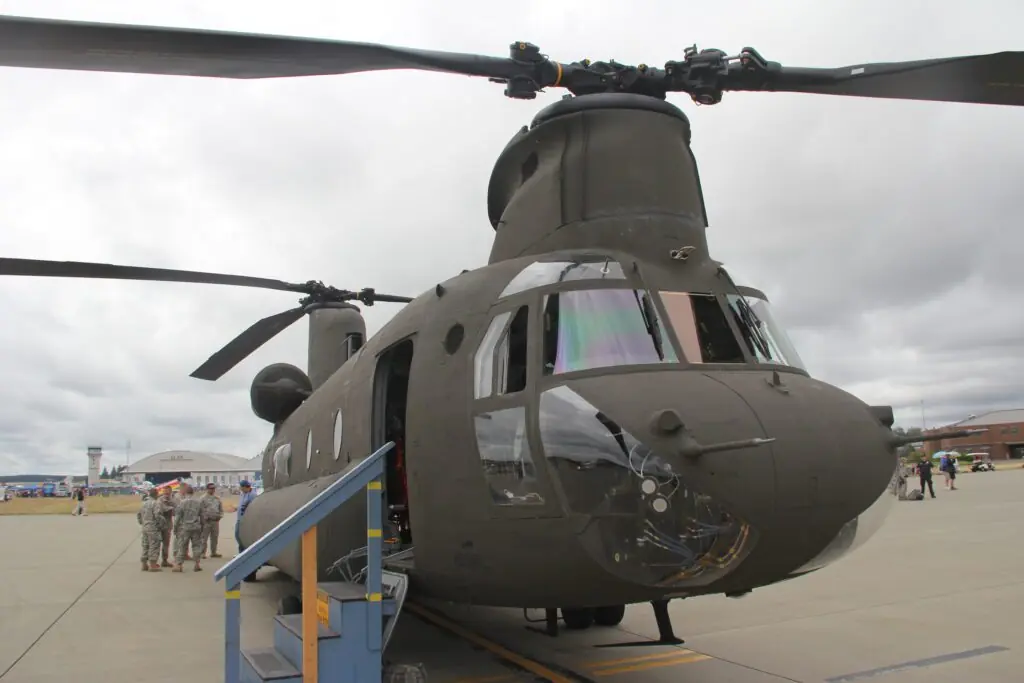
On the night of December 29, 1980, Betty Cash, Vickie Landrum and Colby Landrum stated that they came upon a diamond-shaped object on FM 1485 highway, near Huffman (Texas), that expelled fire toward the ground, and that they then saw a large formation of twin-rotor helicopters. All three fell ill in the following hours and Betty Cash was hospitalized. They sued the United States for twenty million dollars; the suit was dismissed in 1986 because it was not shown that the object belonged to the government. The Army Inspector General investigated the helicopter complaint and found no record of any matching operation.
Executive summary of the case file. Everything essential before you dig deeper.
Fact sheet
OSINT - Traceability
Intelligence Network
Highway FM 1485 runs north out of Huffman into a stretch of pines, wetland and not much else. At night in December it is a black tunnel with two white lines. There are no streetlights. There is hardly a shoulder. There are frogs.
Three people were driving home that way on the night of December 29, 1980, in an Oldsmobile Cutlass: Betty Cash, fifty-one, owner of a small business; Vickie Landrum, fifty-seven, who worked with her; and Colby, Vickie’s seven-year-old grandson. They had gone out to dinner. The place they wanted wasn’t open, and they turned back.
What happened next is, depending on whom you ask, the best case of physical harm in the world corpus or the perfect example of how three sick people build an explanation. What does not depend on anyone is the rest: there are hospital records, a lawsuit against the U.S. government, an investigation by the Army Inspector General and a ruling. That is the material we work with here.
What is said to have happened
According to all three statements, consistent on the essentials from day one, a very bright light appeared over the road on a straight stretch of FM 1485. As they got closer, the object was diamond-shaped, point down, and it expelled fire toward the ground at intervals. Each time it did, it rose a little. Between bursts, it sank.
Betty Cash stopped the car. All three got out. That detail is crucial and we will come back to it. The heat was so intense, they said, that Vickie had to put Colby back in the vehicle, and when Betty tried to get in, the door handle was burning. Vickie claimed she had put her hand on the dashboard and left a print in the vinyl, softened by the heat.
And then comes the part that turns the case into something else. As the object began to move away, they said, helicopters appeared. Many of them. Twin-rotor, the CH-47 Chinook type. They counted them: twenty-three. They flew in formation around the object, as if escorting it or chasing it. Betty drove to a spot from which they kept watching them recede toward the south.
The door handle was so hot I couldn’t take hold of it. When I finally got into the car, the dashboard had softened.
The quotation above is a Spanish-language summary of what Betty Cash stated in interviews documented by the case’s investigators and in the court documentation. It is not a verbatim transcript.
The night on FM 1485
Betty Cash, Vickie Landrum and her grandson Colby state that they came upon a diamond-shaped object over the road that expelled fire toward the ground, and that they then saw a large formation of twin-rotor helicopters.
The first symptoms
All three show nausea, vomiting and eye problems. Betty Cash also develops blisters and redness on exposed skin and begins to lose hair.
Hospital admission
Betty Cash is admitted. Her condition is initially treated as a possible severe skin reaction. She and Vickie Landrum maintain from the start that the cause was what they saw on the road.
The investigator arrives
NASA engineer John F. Schuessler, linked to MUFON, begins documenting the case and over the years gathers medical records, interviews and official correspondence.
The Army investigation
Lieutenant Colonel George Sarran of the U.S. Army Inspector General investigates the complaint about the helicopter formation. He interviews units and witnesses and finds no record of any military operation matching that night.
The lawsuit
Cash and the Landrums demand twenty million dollars from the United States for the damages they suffered, arguing that the object was a government craft.
The dismissal
The U.S. federal court for the Southern District of Texas dismisses the case. The reason is not that the facts are false, but that it was not shown that the object belonged to the government: the State cannot answer for something not shown to be its own.
Betty Cash dies
She dies exactly eighteen years after the event, after a decade of failing health.
Vickie Landrum dies
The second adult witness dies still telling the same account as in 1980.
What can be verified: the paper, which is abundant here
This case has a rare virtue: almost everything important went through a service window.
There is documented illness. All three received medical attention in the following days. Betty Cash was admitted. Records exist, reports from the physicians who treated her, and later correspondence. That the three of them fell ill at the same time, within the same interval, is a matter of record in the papers, not an interpretation.
There is a federal lawsuit. Suing the U.S. government is not writing a letter to the editor. It requires lawyers, it requires fees, it requires holding out for three years and it requires exposing yourself to questioning in which lying is costly. Cash and the Landrums did it. They lost.
And there is an internal military investigation. This is the piece most often cited badly. Lieutenant Colonel George Sarran of the Army Inspector General was not sent to investigate a UFO: he was sent to find out whether the Army had flown twenty-three Chinooks over a Texas road without recording it. He interviewed commanders and units and concluded that no matching operation was on record. Defenders of the case cite Sarran as proof of a cover-up. Skeptics cite him as proof that the helicopters did not exist. The report says two things, and almost always only one is cited: that he found no trace of the aircraft, and that he found the witnesses credible. A military investigator who does not find the helicopters and yet vouches for those who say they saw them is not serving either side. Both readings are an addition.
A federal judge did not say it didn’t happen. He said it hadn’t been shown to him that it belonged to the State. That is an enormous difference, and for forty years we have been citing it backwards.
3
two adults and a minor
23
none ever identified
3
dismissed in 1986
The administrative fact nobody looks at: who Betty Cash was
In this trade there is a lazy habit of sorting witnesses into two drawers: the credible military man and the imaginative civilian. With Cash-Landrum the drawer doesn’t work, which is why the case makes both camps uncomfortable.
Betty Cash ran a small business in Dayton, Texas. Vickie Landrum worked with her. They were two working-class women in their fifties, in a rural county of southeast Texas, with no prior involvement in ufology, no contacts with associations, not the slightest experience dealing with the press. That is not the profile of a headline hunter. Nor is it the profile of a trained witness: nobody had taught them to estimate distances at night, to describe a silhouette against a black sky or to count aircraft in motion.
That “twenty-three” helicopters is, in fact, the number in the entire file that interests me most. It is too precise. A witness who invents says “a bunch” or rounds to twenty. An honest witness counting under stress, at night, with aircraft moving in and out of the field of view, produces exactly this: a concrete figure, stated with confidence, and very probably wrong. Precision signals that they were really counting, not that they were truthful.
There is another administrative detail that gets overlooked and says a lot about how the State works when something like this lands on its desk. Before suing, the two women wrote to official bodies asking that someone come to see them. Nobody came. There was no liaison visit, no sample-taking, no inspection of the vehicle. That void is what always happens when a complaint fits no heading on the form, not proof of a conspiracy. The case falls apart for a far sadder reason than a cover-up. It falls apart because it was nobody’s job.
And a final note on the boy. Colby Landrum was seven in 1980. Accounts by minors in this field have been used with appalling abandon for decades, so it is worth saying plainly: his testimony, taken at that age and repeated throughout an adult life, adds no independent evidentiary value. What it does add is medical context, because he also fell ill, and a seven-year-old does not somatize a story his grandmother told him to the point of vomiting for days.
What it could be, without any Martians
The prototype hypothesis
This is the one the plaintiffs themselves held and the most popular: an experimental military craft, perhaps nuclear-powered, in trouble, escorted by Army helicopters. It fits the shape, the downward-directed fire and the escort.
It has a serious problem, one of operational common sense. A test of a sensitive prototype is not carried out nine hundred meters from a busy county road, at nine at night, with twenty-three helicopters lit up and without closing the traffic. And if it is done and goes wrong, the State does not wait for a lawsuit: it sends someone to that house within forty-eight hours. Here nobody came.
The industrial flare hypothesis
Southeast Texas is refinery and pipeline territory. Flare stacks (those chimneys that throw off an enormous flame when a line is depressurized) produce exactly what was described: a diamond-shaped glow, directed fire, a pulse of heat and a dull roar. Seen from a dark road, with no distance references, they are very deceptive.
The obvious objection is that the witnesses said it was almost on top of them. But it is worth remembering how a distance error arises: in a tunnel of pines with no intermediate lights, a very bright light source is perceived as much closer than it is. It is the same mechanism that makes people swear the Moon follows them down the highway.
And the medical part, which is where the case falls apart
Here we have to be unpleasant, because this is the core. The picture described (vomiting, burns, hair loss) has been presented for decades as radiation poisoning. And there is no confirmation of radiological exposure in any report. There is no dosimetry. There is no compatible blood count publicly documented. There is no contamination measured in the car, which was the obvious physical evidence and was available.
That car is the key nobody wanted to press. If an Oldsmobile receives a dose capable of causing an acute syndrome in three occupants, the vehicle is left with measurable activation and a deformed dashboard. The dashboard was shown. A measurement of the vehicle with protocol and chain of custody never appeared; the ones that were made (the stretch of road and Cash’s bone marrow) came back negative. Forty-five years later, that absence weighs more than all the testimonies put together.
There is also an alternative medical explanation that nobody has been able to rule out: that Betty Cash suffered a severe skin reaction from another cause (there are dozens, and several are fulminant) and that the timing coincidence with a terrifying event organized the account backwards. Memory does that continuously and requires no bad faith.
Why this case won’t die
Because it is the only one in the canon with plaintiffs. There are no abductees, no contactees, no investigator with a book: there are two working-class women who went to a federal courthouse in Houston to say the State had burned them and who endured three years of proceedings. That is a form of credibility the phenomenon almost never has, because it costs money and brings no fame.
And because the detail that holds everything up is the same one that sinks it: they got out of the car. Nobody gets out of a vehicle in front of something that is scorching them unless they are completely bewildered. If it had been a refinery flare a kilometer away, there would have been nothing to get out and look at in the middle of the road. And if it had been a crashed military craft two hundred meters away, getting out would have been the last thing they ever did.
The case lives in that contradiction and has not left it. For the context of the period, this case file sits alongside Rendlesham, which took place three days earlier across the Atlantic, and the American habit of answering such things with administrative silence, already visible in Washington 1952.
Betty Cash died on a December 29. Exactly eighteen years after that night. The coincidence means nothing, and still one writes it down, because we are animals that look for patterns. The case file teaches exactly that: the difference between a pattern and a proof.
OSINT – Source traceability
The quotation attributed to Betty Cash is a Spanish-language summary of what was stated in documented interviews and in the lawsuit documentation; the body text says so. No statement has been attributed to the witnesses that is not on record. The language of “radiological poisoning” has been deliberately avoided outside the section that discusses it as an interpretation.