Rendlesham Forest: the forest between two nuclear bases and the memorandum a lieutenant colonel signed with his own name
December 1980, Suffolk. Between RAF Bentwaters and RAF Woodbridge, two nights of lights, a one-page memorandum signed by the deputy base commander, and a lighthouse that has been at the center of the argument for forty-five years.
In the early hours of December 26, 1980, USAF security personnel stationed at RAF Woodbridge left the perimeter to investigate descending lights over Rendlesham Forest. Two nights later, the deputy base commander, Lieutenant Colonel Charles I. Halt, entered the forest with a team, measured radiation and recorded the incursion. On January 13, 1981 he signed a one-page memorandum titled Unexplained Lights addressed to the British Ministry of Defence, with no security classification. The set of conventional explanations, led by the Orford Ness lighthouse, covers most of the episode.
Executive summary of the case file. Everything essential before you dig deeper.
Fact sheet
OSINT - Traceability
Intelligence Network
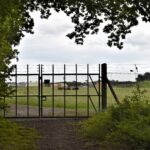
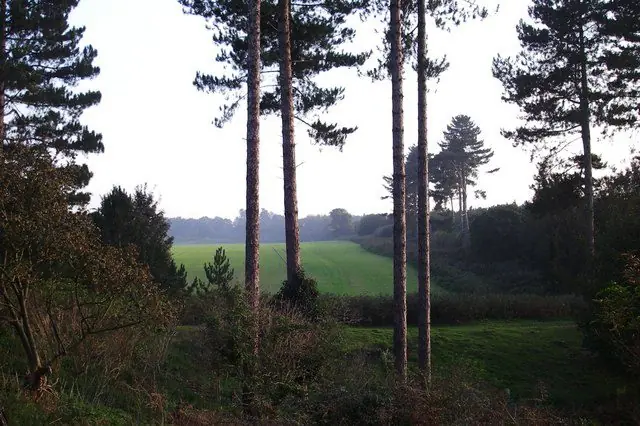
A British Forestry Commission wood on the Suffolk coast, in December, at three in the morning, is one of the least hospitable places in western Europe. Pines planted in rows, sand, a damp that gets into your bones, and the silence of a planted forest, which is not that of the countryside but of a warehouse.
Now add the detail that turns the landscape into a case file: that forest was wedged between two twin air bases, RAF Bentwaters and RAF Woodbridge, operated by the U.S. Air Force on British soil. And in those bases, in 1980, there were tactical nuclear weapons. When the phenomenon chooses to appear right there, you understand why the case has never entirely gone away.
They call it the British Roswell. It is a lazy label. Rendlesham resembles Roswell in almost nothing: there is no wreckage here, no press release, no retraction. What there is here is something Roswell never had: an official document written by a high-ranking officer describing the event, with his name and signature at the bottom.
What can be verified, first
- The memorandum exists. One page, dated January 13, 1981, headed Unexplained Lights, addressed to the British Ministry of Defence, signed CHARLES I. HALT, Lt Col, USAF, Deputy Base Commander. And here is the detail people like most and explain least: it carried no security classification at all. Not confidential, not restricted. Nothing. That is why it came to light through a freedom of information request in the United States in the early eighties.
- The tape exists. Halt carried a microcassette recorder on the second night and narrated what was happening as it happened. The recording has circulated since the eighties and is, by a wide margin, the most interesting material in the case: you hear a lieutenant colonel of the most powerful military in the world saying, in effect, that the thing is there, while his men breathe hard.
- Written statements exist from the servicemen who took part on the first night, collected by the base itself.
- A Suffolk police report exists; police were called to the area in the early hours of December 26. Its conclusion was that the only lights visible were those of the Orford Ness lighthouse.
- The British Ministry of Defence has always maintained that the episode posed no threat to national security and therefore did not investigate it as such.
What is said to have happened
First night, around three in the morning on December 26. Two military police on guard at the rear gate of RAF Woodbridge see lights that appear to descend over the forest. Thinking an aircraft has gone down (which is the reasonable thought when you work next to a runway and see something drop among the trees), they ask permission to leave the perimeter on foot.
Three go in: Sergeant Jim Penniston, John Burroughs and Ed Cabansag. And here the story fans out depending on whom you ask and in which decade. Over the years Penniston has described a metallic triangular object about three meters across at the base, with symbols engraved on its surface, which he says he walked around and touched before it left at great speed. Cabansag stated that all he saw, at a distance, was a beacon-like light. Burroughs spoke of following the light for a couple of kilometers.
Three men, the same night, the same forest, three accounts that do not fit together. That is not a flaw in the case: it is the case.
After dawn, someone finds three small depressions forming a triangle in the ground. The police come back in mid-morning to look at them. Nobody agrees on whether they are landing marks or rabbit diggings, which in a Suffolk forest are abundant to the point of boredom.
Second night. Halt, who is the number two on the base and apparently does not quite believe any of it, decides to go in person with a team, a Geiger counter, an arc lamp (which broke down on them, naturally) and a recorder in his pocket. What he logged that night he wrote up two weeks later in the memorandum.
Lights over the forest
A military police patrol sees lights descending near the rear gate of RAF Woodbridge. They ask permission to leave the perimeter.
Penniston, Burroughs and Cabansag go in on foot
The three servicemen enter Rendlesham Forest. Their later accounts diverge considerably.
Suffolk police respond
The officers report that the only noticeable lights are those of the Orford Ness lighthouse.
Second police visit
Three depressions in the ground, arranged in a triangle, are inspected. Their interpretation has been disputed ever since.
Halt enters the forest
Lieutenant Colonel Charles I. Halt goes in person with a team, measures radiation and records the incursion on a microcassette.
The memorandum
Halt signs the document titled Unexplained Lights and addresses it to the British Ministry of Defence. No security classification.
The memo becomes public
The document comes to light in the United States through a freedom of information request and reaches the British press.
Halt retires from the USAF
He leaves active service with the rank of colonel and begins to speak publicly about the case.
Halt's sworn statement
Halt signs a statement in which he maintains that the objects he saw at close range were of extraterrestrial origin. It is his strongest claim and the most disputed.
The document
It is worth reading, because it is short and because it dismantles half the legend all by itself. Notice the tone: an officer writing up a report, not an excited man. And notice the dates, which Halt recorded one day off from what is now considered correct.
TO: RAF/CC
Document · 13 Jan 81 — SUBJECT: Unexplained Lights
Free translation of the English original; the full document, with its final third paragraph about star-like objects observed to the north and south, has circulated in facsimile reproductions since 1983. We treat it separately in the memorandum’s file.
The tape, which is better than the memo
If only one thing from this case could be kept, I would keep the recording. The memorandum was written two weeks later, in an office, with a cool head and every serviceman’s instinct not to look like a crank in front of a foreign ministry. The tape, by contrast, is real time, and real time does not let you put on makeup.
You hear Halt giving instructions to his men, you hear steps on leaf litter, you hear the frustration of a device that will not work, you hear the counter readings called out loud. And above all you hear how a group of men collectively build an interpretation within minutes. Someone says the light is moving. Another confirms it. A third adds that now there are two. And ten minutes later everyone is sure of something nobody had seen fifteen minutes before.
That accuses nobody of lying; it is the cleanest portrait that exists of how a human witness works in the dark, in a group, with adrenaline high and a superior present. Anyone who has worked with testimony recognizes it at once. And it is the reason a serious investigator values the tape far more than the later statements of the same men: it is less contaminated, even if less spectacular.
A novelistic detail: the measuring device they carried that night was not the right one for what they meant to measure, the arc lamp broke down, and they were advancing through a plantation pine wood in the middle of an English winter. This is the equipment of an improvised expedition, not of a protocol response to an intrusion at a base with nuclear weapons. Which, by the way, has its own uncomfortable reading.
What it could be (no Martians required)
The conventional explanation of Rendlesham is a stacking of ordinary things that happened in the same place within forty-eight hours, and that is precisely why it is so hard to accept emotionally: people prefer one cause to five.
1. The fireball
In the early hours of December 26, 1980, the entry of a fragment of natural material that burned up as a bright fireball was recorded over southern England. It is what best explains the trigger for everything: lights that descend and the immediate impression that an aircraft has gone down.
2. The Orford Ness lighthouse
This is the strong argument, and it was popularized by the astronomy writer Ian Ridpath in the early eighties. The Orford Ness lighthouse was then one of the most powerful in the United Kingdom, stood about eight kilometers east of the edge of the forest, and lay exactly along the same line of sight in which the servicemen were looking.
And then there is the evidence that strikes me as the most uncomfortable of all for the case: on Halt’s tape, the intermittent red light they describe flashes once every five seconds. The Orford Ness lighthouse flashed once every five seconds. It may be a coincidence. It usually is not.
3. The stars
The star-like objects that Halt describes to the north and south, a few degrees above the horizon, are suspiciously similar to bright stars seen near the horizon, where atmospheric refraction makes them twinkle, change color and appear to move. It is the most frequent misidentification there is, and it spares no one, neither a pilot nor a lieutenant colonel.
4. The rabbits and the Geiger counter
The three depressions were identified by foresters and police as rabbit diggings partly covered with leaf litter. Not poetic. As for the radiation readings, 0.1 milliroentgen per hour is within or very close to the natural background range for the area, and the instruments available that night were not suited to measuring such low levels accurately. The text of the memo itself, read coolly, describes a minimal difference between the depressions and their surroundings.
The Penniston problem
It has to be said, even if it bothers people. Jim Penniston’s version has grown over the years, and growing over the years is the worst thing that can happen to a testimony. His immediate written statement was far more restrained than what he told in the nineties, and what he said in the nineties is far more restrained than what he has said since, which includes a regressive hypnosis session and a notebook of binary code supposedly received on touching the craft.
When an account incorporates regressive hypnosis, the chain of custody of the testimony is broken. Not because the witness necessarily lies, but because hypnosis generates memories that are vivid and, to the person himself, indistinguishable from real ones. It is a technique that has destroyed more ufology cases than all the skeptics put together.
With Halt the problem is different and more interesting. For almost thirty years Halt was the perfect witness: high rank, sober prose, a signed document, zero appetite for the spotlight. And in June 2010 he signed a sworn statement affirming that what he saw was of extraterrestrial origin. That sentence earned him headlines and took away from him, for many people, the authority he had precisely because he did not say it. We cover it in his profile and in his documented testimony.
Why this case does not die
Because of the setting. Always the setting. Two bases with tactical nuclear weapons, a forest in the middle, the Cold War at its tensest (December 1980: Poland boiling, the USSR in Afghanistan, the Euromissiles about to be deployed) and a host country, the United Kingdom, that officially did not quite know what was inside those bases.
If a phenomenon wants to be noticed, it does not appear over a pine wood. It appears over a pine wood surrounded by people with security clearances.
And because of the memorandum. That paper is the entire reason we talk about this and not about a thousand other night frights at NATO bases. A man with command responsibility wrote down what he saw, signed it and sent it to the ministry of the host country without stamping it secret. That administrative gesture is the evidence. It does not prove a craft. It proves that something happened that night that a lieutenant colonel considered should be put on record in writing, and in the world of military bureaucracy that is already an event.
1
and not a single classification stamp
5 s
matches Halt's tape
Keep pulling the thread
- The Halt memorandum, document file.
- Charles I. Halt, the man who signed.
- Tehran 1976, the other case held up by an agency paper.
- Talavera la Real, the Spanish version of the uneasy perimeter.
OSINT – Source traceability
The base document is of high verification. The observational content is testimonial and contradictory among the witnesses themselves. Medium bias is flagged because much of the case's bibliography comes from authors with a fixed position and from testimony expanded decades later. The reproduction of the memorandum is a free translation into Spanish of the English text.