
Unlike a testimony gathered over a cup of coffee, this is an administrative document plus an audio recording, both produced by the witness himself while serving as deputy commander of an air base with tactical nuclear weapons. In terms of chain of custody, there are not many like it in the entire worldwide catalog.
That is why it pays to separate carefully the three layers that are almost always cited mixed together: what Halt wrote in January 1981, what he recorded on the night of December 28, 1980, and what he stated in June 2010. All three are real. Only the first two are contemporaneous with the events.
Layer 1: the memorandum (January 13, 1981)
One page, headed Unexplained Lights, addressed to the British Ministry of Defence, three numbered paragraphs, signed at the bottom: CHARLES I. HALT, Lt Col, USAF, Deputy Base Commander. No security classification.
The object was described as metallic in appearance and triangular in shape, approximately two to three meters across the base and about two meters high. It illuminated the entire forest with a white light. It had a pulsing red light on top and a bank of blue lights underneath.
A crucial detail that almost nobody underlines: the first paragraph is not what Halt saw. It is what Halt relays from what the military police told him about the first night. Halt was not there on the 26th. He is drafting a secondhand report, as any officer would.
What is his own observation is in the second and third paragraphs: the three depressions, the radiation readings and the reddish object among the trees.
Later that same night a red sun-like object was seen through the trees. It moved about and pulsed. At one point it appeared to throw off glowing particles and then broke into five separate white objects and disappeared.
Translation by this site from the original English text. We break down the full document on its file page.
Layer 2: the recording (December 28, 1980)
Halt went into the forest with a microcassette recorder in his pocket and narrated as he went. That recording is, to my mind, the most valuable piece of the case, and for a counterintuitive reason: it is the one that gives the skeptics the most arguments.
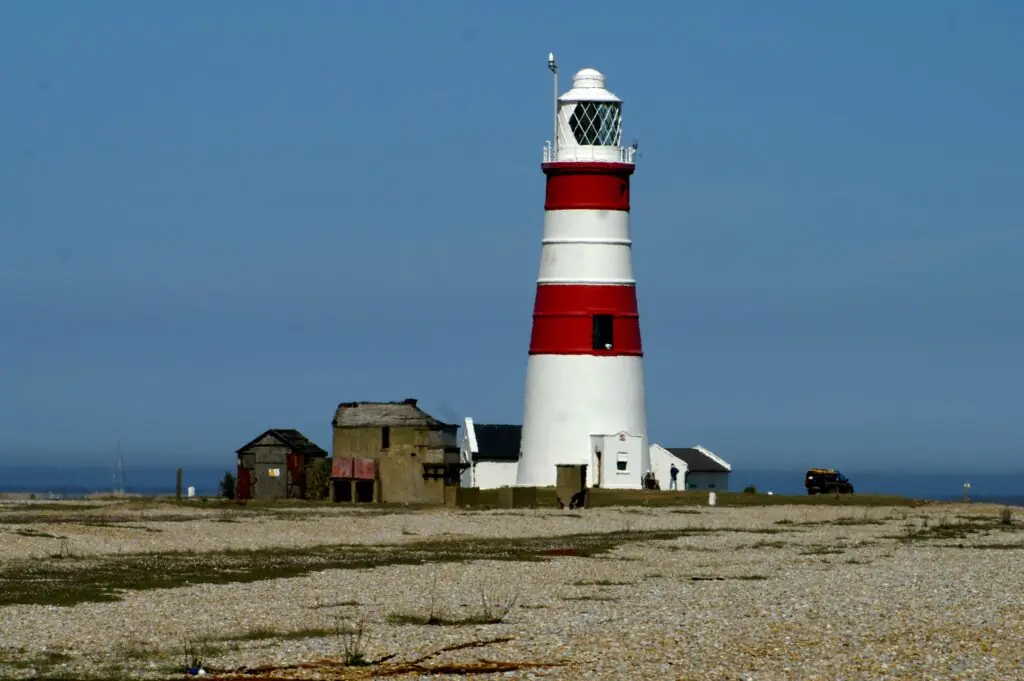
It describes a flashing red light that flashes once every five seconds. The Orford Ness lighthouse, about eight kilometers east of the edge of the forest and on the same line of sight, flashed once every five seconds. It also describes star-like objects a few degrees above the horizon, to the north and to the south, which is exactly where one expects to find bright stars twinkling because of atmospheric refraction.
That the witness kept and circulated material that works against him is, in itself, an indicator of honesty. A fabricator would have lost the tape.
Layer 3: the sworn statement (June 2010)
Almost thirty years later, by then retired, Halt signed a sworn statement in which he summarized the events and concluded that the objects he saw at close range were extraterrestrial in origin.
Precision matters here, because this is where the testimony changes nature. An observation is a data point. An interpretation about the origin of what was observed is a conclusion, and a conclusion that no observation from that night can support: there were no remains, no adequate instrumentation, no photographic record and no radar trace.
How we assess it here
High credibility for layers 1 and 2: contemporaneous documentation, undisputed authorship, internal coherence and a witness with a lot to lose and nothing to gain in January 1981.
Unrated credibility for layer 3, with no suspicion of bad faith behind it: a statement of belief about the origin of a phenomenon is not testimony that can be verified. It is an opinion, and witnesses’ opinions are not scored: they are recorded.
A note on the rest of the patrol
Halt was not the only one who gave a statement. The three servicemen from the first night left written statements collected by the base itself, and there lies one of the most honest and least cited data points of the case: they do not agree with one another. One describes a structured object, another speaks of following a light for a couple of kilometers, and a third states that the only thing noticeable was a beacon-like light in the distance.
Three men, the same night, the same forest. That divergence does not invalidate the episode: it describes it. And it explains why Halt’s memorandum, which sums up the whole in a single orderly paragraph, is at once the best document of the case and a simplification of what really happened in there.
OSINT – Source traceability
The quotations reproduced are a free translation into Spanish of the memorandum's original English text. The English wording shown here is therefore a back-translation, not the verbatim original. The first paragraph of the document relays the account of the initial patrol, not a direct observation by the signatory. The witness's age is inferred from the commonly recorded year of birth (1939) and is approximate.