
Fernando Sesma and the Amigos de los Visitantes del Espacio: The Basement Where It All Began
In a basement on Calle de Alcalá met the only UFO discussion circle in Spain. There, in 1966, the UMMO letters arrived, the best documentary fiction in European ufology.
Fernando Sesma Manzano founded the Sociedad de Amigos de los Visitantes del Espacio in the mid-1950s. It met in the basement of a café on Calle de Alcalá in Madrid and was for years the only organized structure of the Spanish ufological scene. Sesma claimed to receive messages from an intelligence called Saliano, from the planet Auco. From 1966 that circle began to receive the UMMO correspondence by ordinary mail, a corpus of thousands of pages of far superior technical quality whose authorship was publicly claimed in 1993 by José Luis Jordán Peña.
Executive summary of the case file. Everything essential before you dig deeper.
Fact sheet
OSINT - Traceability
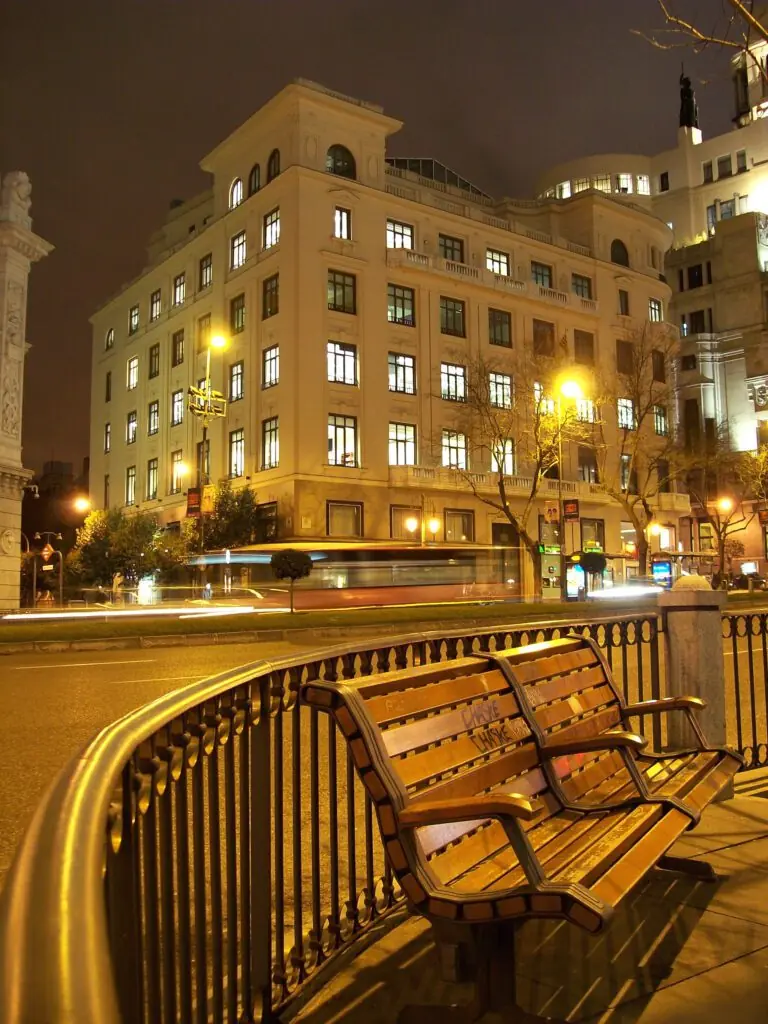
Madrid in the 1950s smelled of coal dust, fried churros and black tobacco. Streetcars climbed Calle de Alcalá with that iron-on-iron screech that nothing makes anymore, and beneath the big cafés around Cibeles there were basements. Real basements: narrow stairs, low vaults, heavy air and a dampness that got into your coat. Down there, tertulias met.
It is important to understand what a basement tertulia (a regular discussion circle) was in that Spain, because it was not a hobbyist club. In a country with no associations, no parties and no free press, it was practically the only place where a group of people could get together to talk about something they had thought up themselves. Censorship watched the print shops and the pulpits. It had no time to go down into basements to see what fourteen gentlemen were discussing around a table with a heater underneath.
In one of those basements, in the middle of the decade, a man named Fernando Sesma gathered a group of people to talk about visitors from space. And from there, fifteen years later, came the most elaborate, most durable and most influential documentary fiction in the history of European ufology. On to the case file.
What can be verified, first
The Sociedad de Amigos de los Visitantes del Espacio existed, met regularly in the basement of a Madrid café, and was presided over by Fernando Sesma Manzano. Over the years a good part of the first generation of Spanish enthusiasts in this field passed through it, people who would later publish, investigate and in some cases build careers. Far from a fringe group within the scene, it was, quite simply, the scene. In the Spain of those years there was nothing else.
Sesma claimed to maintain communication with an extraterrestrial intelligence he called Saliano, from a planet called Auco, and relayed to the tertulia the messages he said he received. He published on the subject. The structure is that of classic contactism of the period, imported almost without adaptation: a single receiver, messages of moral and cosmic content, and an audience that gathers to hear them.
And from 1966 something else began to arrive, very different and far superior in craftsmanship. Typed letters, long and technical, written in correct but slightly strange Spanish, signed by supposed visitors from a planet called UMMO. They carried no spiritual messages: they carried physics, biology, sociology and mathematics, with their own notation and an enormous conceptual apparatus. And they came by ordinary mail, to specific addresses, with stamp and postmark.
It completely outgrew the basement. The correspondence was circulated, copied, translated and ended up passing through half of Europe and Latin America for decades. Serious researchers devoted years of their lives to it. We cover it in its own case file, because it deserves one of its own. What interests us here is the starting point: that basement and that man.
The society is born
Fernando Sesma gathers a group interested in visitors from space in the basement of a café on Calle de Alcalá. For years it will be the only meeting point for the scene in Spain.
Saliano
Sesma relays to the tertulia the messages he says he receives from an intelligence from the planet Auco, following the pattern of American contactism of the period.
The letters arrive
Typed correspondence signed by supposed inhabitants of a planet called UMMO begins to be received. They are not spiritual messages: they are long technical documents with their own notation.
Circulation
The texts are copied, translated and circulated across Europe and Latin America. Leading researchers spend years analyzing them.
Fernando Sesma dies
He dies without the origin of the correspondence having been clarified.
The claim
The psychologist and engineer José Luis Jordán Peña publicly claims authorship of the UMMO plot and explains its purpose as an experiment on credulity.
The discussion that remains open
It is debated whether Jordán Peña did it alone, whether he tells the whole truth, and how much of the later corpus is the work of imitators. Human authorship, however, is no longer in dispute.
What is said to have happened
Sesma’s version is that of the contactee and holds little mystery: he was chosen, he receives, he transmits. What is interesting in this case file is not that version, which is identical to dozens of others and is evaluated like them, but what that basement produced almost by accident.
Because the UMMO plot deserves something that is almost never granted to it: it is a work of extraordinary quality. Whoever wrote it built a planet with its gravity, its star, its history, its social organization and its language; produced thousands of mutually coherent pages over years; and did so by metering out information with remarkable narrative intelligence, always delivering enough to hook and never enough to be checked.
In 1993 the author appeared. José Luis Jordán Peña, an engineer and psychologist, publicly claimed the plot and explained it as an experiment on credulity, designed to observe how far people would go with fabricated material. His claim has been disputed in the details (whether he acted alone, whether he tells the whole truth, how much of the late corpus is by imitators) but the human authorship of the core is no longer in doubt in any serious circle.
The best fiction in European ufology never went through a publishing house. It was mailed, page by page, to a group of gentlemen who met in a basement.
It is worth pausing on why all this reached Spain late, because it explains the form it ended up taking. The worldwide wave begins in 1947, and by the second half of the 1950s the United States, France and the United Kingdom already had associations, magazines and public discussion. Here there was none of that, and not for lack of interest: for lack of vehicles. There were no associations because they could not be freely formed, there were no specialized magazines because paper was under state control, and international information arrived filtered and late.
The result is that when the subject finally took hold in Madrid, it did so in the only format the period allowed (the private tertulia) and with the material that had managed to cross the border, which was above all Californian contactism, translated in whatever way. What did not arrive was the discussion about radar, reports and military files, which was the one being held abroad. What arrived were the messages of the brothers from space.
What it could be, with no need for Martians
A closed group is a laboratory of belief
What was being assembled in that basement has a name in social psychology and has been studied to exhaustion. A small group that meets regularly, with a central figure who supplies the material and members who supply the validation, reliably produces two effects: the group’s positions grow more extreme over time, and dissent leaves of its own accord because it finds nothing to lean on.
Nobody needs to lie for this to work. It is enough that every week the hits are remembered and the misses forgotten, which is what any human group does with anything. After a few years, a set of claims that no member would have accepted separately on the first day has become the ground everyone stands on.
And that group was the perfect target
Here is what seems to me the key to the matter and the reason this case file is worth the effort. If you wanted to design an experiment on credulity, where would you set it up? You would need a stable, identifiable, locatable group, predisposed to the material, with members of some education, so that the response would be elaborate and not simple, and able to spread what it received.
In Spain in 1966 there were two organized circles, and only two: Sesma’s tertulia, in a basement on Calle de Alcalá, and the Centro de Estudios Interplanetarios (CEI) of Barcelona, founded in 1958 by Antonio Ribera, Eduardo Buelta, Marius Lleget and Antoni Pelegrí. Whoever decided to send those letters did not choose at random: between the two possible circles, they chose the more receptive one with the larger audience, and chose well. Shortly afterward the correspondence moved precisely to the other pole, that of Ribera and Rafael Farriols. That fifteen years of tertulia ended up as raw material for someone else’s plot is the most melancholy part of the case, and also the most instructive.
Saliano and the mechanism of received writing
There is little to investigate in Sesma’s communications with Auco, and not out of contempt, but because the structure is transparent. A single receiver, no record, no witness to the act of reception, no checkable data point in the content and no prediction that can be verified. It is textbook contactism, imported from California fifteen years late and adapted into Spanish.
What should be pointed out is that writing messages attributed to an external source is a real psychological phenomenon, common and well documented since the 19th century. Whoever practices it may not be pretending at all: they may experience the text as coming from outside. It is the same family of phenomena as table-turning spiritism and automatic writing. And also, incidentally, the one that produces the best sentences of more than one novelist.
What that basement could not give
From this comes, in my opinion, a peculiarity that has marked Spanish ufology for fifty years: it was born on the mystical side and not the documentary one. In other countries the field organized around people who demanded official reports and fought with ministries; here it organized around a tertulia that listened to messages. Correcting that initial tilt took two generations and the stubborn work of a few amateur archivists with more patience than resources.
That the correction came is the remarkable thing, and it came: the declassification process of the Spanish military files, completed in the 1990s, left this country in a documentary position other countries would envy. But the starting point was a basement with a heated table and a gentleman relaying messages from Auco. It is worth remembering when someone presents that tertulia as the golden age of anything.
Why this case will not die
Because everything else comes out of that basement. Spanish ufology has a birth date and a home address, and these are them. Those who would later do the serious work (the archive, the criticism, the pressure to declassify the military files) many of them began by going down those stairs. Antonio Ribera, the big name of the first generation, and a good share of those who came after, passed through that scene.
Nor does it die because the UMMO plot is still alive, and it is alive for a reason worth understanding: the claim of authorship came twenty-seven years after the first letter. Twenty-seven years is enough for material to take root, be translated, be cited, be incorporated into other works and become part of the common sense of an entire scene. When the author finally appeared, the building was already built and inhabited. Evicting the occupants of an inhabited building is far harder than preventing it from going up.
And it does not die because it is the cleanest demonstration we have in Spanish of a rule this site repeats constantly: material fabricated with talent and metered out with patience can withstand decades of analysis by intelligent people acting in good faith. Those who believed it were not naive. They were recipients of a very well-made product, exactly like the Albuquerque engineer for whom U.S. counterintelligence fabricated tailor-made documents fourteen years later. The Madrid basement and the Kirtland fence are the same case file told in two languages.
What remains is the basement, which today is no longer a basement of anything recognizable, and the narrow stairs down which fourteen gentlemen in overcoats went once a week to talk about other worlds in a Spain where one could hardly talk about this one. That it ended up as the mailbox for the best fiction in the genre takes nothing away from it. It adds, if backwards: to deceive someone you first have to find them, and in all of Spain there was only one place to find them.
OSINT – Source traceability
No specific titles of the works published by Sesma are given, as they could not be verified with certainty; their content is described instead. The café and the basement are not named by their popular designation, as there is no direct documentary confirmation; they are identified by street and city. The society's founding date is given approximately. The UMMO case is treated here only insofar as it affects the origin, and readers are referred to its own case file.