
Richard Doty and the Bennewitz Case: Disinformation With a Name, a Rank and a Posting
An Albuquerque engineer filmed lights over a nuclear weapons storage area. Air Force counterintelligence decided to agree with him until his mind broke. And they told it themselves.
Between 1980 and 1984 the U.S. Air Force Office of Special Investigations directed counterintelligence attention at Paul Bennewitz, an Albuquerque engineer who was recording lights and emissions next to the Manzano weapons storage area at Kirtland base. He was fed fabricated material that confirmed and expanded his extraterrestrial interpretation. Bennewitz collapsed psychologically and was hospitalized in 1988. The operation was publicly acknowledged by researcher William L. Moore in 1989 and, decades later, by agent Richard C. Doty himself.
Executive summary of the case file. Everything essential before you dig deeper.
Fact sheet
OSINT - Traceability
Today I’m not here to talk to you about lights. I’m here to talk to you about a man with an instrumentation business, a camera, a computer of the kind they had then, and a house with a prime view of a nuclear weapons storage area. His name was Paul Bennewitz. He was an engineer, he had money, he had curiosity, and he was right about the most uncomfortable part of the whole story: something was happening up there.
What happened to him afterward is, in my opinion, the most important case file in this entire sector and the one least cited. Because here there is no need to argue whether state disinformation took place. It did. It is acknowledged by those who took part in it, with name, rank and posting. What needs discussing is what happens when a counterintelligence apparatus decides that the cheapest way to neutralize a citizen is to feed him his own theory until it breaks.
I’ll get to my own ground: papers, dates, agencies and acronyms. And a warning up front, because this case is cited a lot by ear: nothing that follows proves there were craft. It proves something considerably harder to swallow, which is that someone with a badge set about manufacturing the material that half a decade of folklore fed on.
What can be verified, first
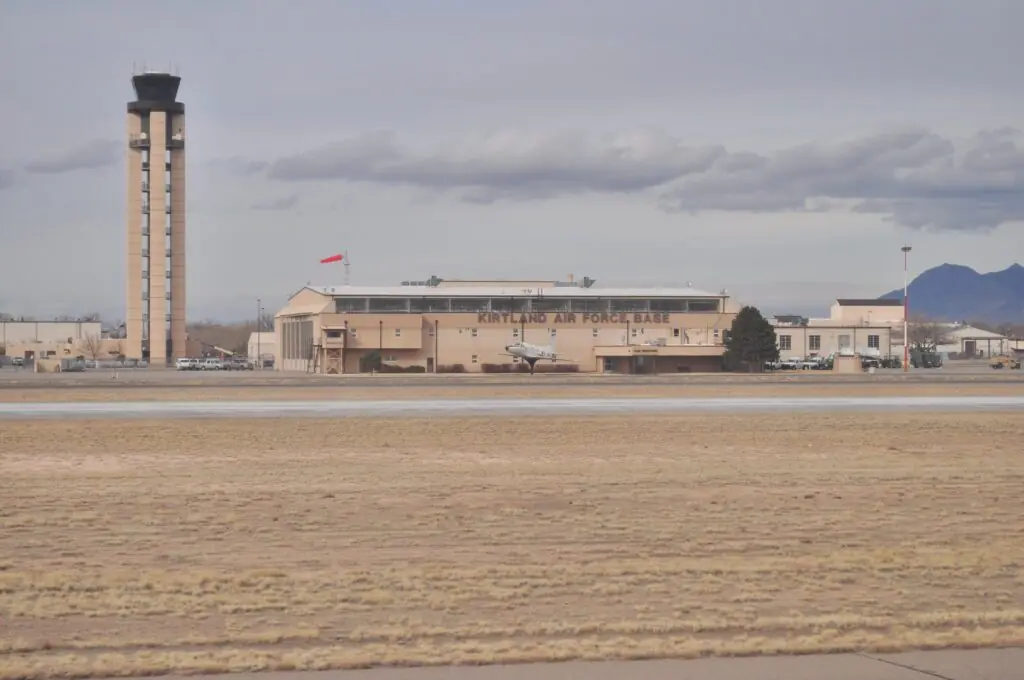
Bennewitz ran Thunder Scientific Corporation, a company that made humidity calibration instruments and counted the Air Force among its customers. His facility sat against the perimeter of Kirtland Air Force Base, in Albuquerque, and from there the Manzano weapons storage area was visible. He was not an amateur who had wandered up to look: he was a supplier with his own instrumentation, living literally at the fence.
From 1979 he began to observe and film lights over that area. And he did not stop there: he set up receivers to pick up electromagnetic emissions in the band that interested him and started recording signals. Anyone who has worked near a military installation will see the problem. A civilian recording emissions next to a nuclear weapons storage area is, for a counterintelligence officer, a matter that has to be opened one way or another, regardless of what the civilian believes he is recording.
And here comes the fact almost nobody mentions and that strikes me as crucial: AFOSI itself documented, in reports later released under the freedom of information law, that unidentified aerial objects had been observed over the Manzano area, and that those observations included base personnel. In other words: Bennewitz’s starting point was not a hallucination. There was anomalous activity on record, logged by the institution itself.
What Bennewitz built on top of that starting point is another matter. Convinced that the signals he was picking up were communications, he wrote a computer program to “translate” them and, piece by piece, put up a colossal interpretive edifice: an underground base beneath the town of Dulce, in northern New Mexico; extraterrestrials operating with the Government’s consent; implants in citizens; cattle mutilations; an imminent threat. He drafted a document of his own making, with a proposed course of action included, and sent it to military and political authorities.
It is worth pausing on that document, because it explains why the matter stopped being a neighborhood problem and became a security problem. Bennewitz did not write a letter to the editor of a newspaper: he drafted a report structured like an intelligence assessment, with a threat evaluation and a proposed response, and got it to military commanders and political officeholders. A civilian outside the chain of command sending threat assessments about a nuclear installation is, in the language of the trade, a matter that can no longer be filed away. From there, someone had to decide what to do about him. And someone did.
Bennewitz begins to observe
From his company, next to the Kirtland perimeter, he films lights over the Manzano storage area and sets up receiving equipment to record emissions.
AFOSI opens a matter
The USAF counterintelligence office documents the observations over Manzano and makes contact with Bennewitz. The reports would later be released under freedom of information.
Bennewitz's own document
He draws up his complete interpretation (underground base, translated communications, threat) and sends it to military and political authorities.
The feeding
According to what the participants themselves later acknowledged, he is given fabricated material that confirms and extends his theory.
The meeting with Linda Moulton Howe
Richard Doty shows the documentary maker, at Kirtland, a document on extraterrestrial contact and promises her audiovisual material that never arrives. Howe's television project collapses.
Bill Moore's confession
At the MUFON symposium in Las Vegas, researcher William L. Moore admits to the room that he collaborated with intelligence agents in passing false material to Bennewitz.
The collapse
Bennewitz is hospitalized after a serious deterioration of his mental health. He abandons the investigation.
Paul Bennewitz dies
He dies without any institution having formally acknowledged what was done to him.
Doty on camera
Doty himself publicly admits his participation in disinformation operations in the book and the documentary “Mirage Men”.
What is said to have happened, and who says it
Here is the difference from ninety percent of what is published on this subject. This is not an outside researcher denouncing a conspiracy. These are participants telling it themselves.
The first was William L. Moore, coauthor of one of the foundational books on Roswell and a highly respected figure in the 1980s scene. In July 1989, at the annual MUFON symposium held in Las Vegas, Moore took the stand and explained to his own community that he had spent years collaborating with intelligence personnel, that he had served as a channel for getting fabricated material to Bennewitz, and that he had done so in exchange for access. The room reacted as you would expect. The disclosure came as a public confession before the people who had been harmed, not as a leak or an accusation by third parties.
The second was Richard Doty himself, an AFOSI special agent stationed at Kirtland. Decades later, in Mark Pilkington’s book and in the documentary built on it, Doty spoke on camera about his role in spreading false material within the ufology community. With nuances, with shifting versions and with that characteristic way of acknowledging one thing while hinting at another (the trade leaves its mark), but he spoke.
When the State promises you a secret, first look at who wrote the paper. Sometimes the secret is real. Sometimes the paper was written for you, made to measure, with your own obsessions as the template.
And there is a third testimony, different and very valuable, because its protagonist was not part of the operation but its unwitting instrument. Linda Moulton Howe was a documentary maker with an established television career who was preparing a piece on the phenomenon. In April 1983 she was summoned to Kirtland Air Force Base, where Doty showed her a document about contact with non-human intelligences and promised her access to audiovisual evidence. The material never appeared. The television project fell through. What remained was a researcher with the personal certainty of having seen something extraordinary and absolutely nothing to show for it.
That is the full design of the maneuver, and it has a remarkable, dirty elegance. There is no need to contradict anyone. There is no need to threaten anyone. It is enough to show without handing over, and to promise without signing.
What it may have been, without needing Martians
What Bennewitz was really picking up
The conventional hypothesis is boring and solid: an engineer with homemade instrumentation pointed at an active military complex picks up exactly what an active military complex contains. Telemetry, data links, tests, radio traffic. Manzano and its surroundings housed activity from the Air Force’s own research facilities. That a receiver picked up emissions incomprehensible to its owner requires no exotic explanation: it only requires not having the keys to which system they belong to.
The lights are a similar story. Restricted airspace over a nuclear weapons storage area is, by definition, a place where things fly that the neighborhood is not told about. That includes everything from security helicopters to tests. And it also includes, according to AFOSI’s own reports, objects that base personnel could not identify. Both things can be true at once.
Why feeding a bothersome neighbor comes cheap
Put yourself in the counterintelligence officer’s office. You have a civilian recording emissions next to a nuclear installation. Arresting him is impossible: he has committed no crime. Searching him is scandalous. Explaining to him what is really there is unthinkable. Ignoring him won’t do, because he is sending reports to congressmen and military commanders.
A fifth door remains, and it is the one that was used: agree with him. If the man is convinced he is picking up alien communications, the most efficient thing is to confirm it. All the energy he spent asking what was at Manzano gets redirected toward an imaginary underground base three hundred kilometers away. His credibility with any serious interlocutor is ruined by his own hand. And as a bonus, the fabricated material leaks into the community and contaminates a whole body of researchers for years. One office, one typewriter and no corpse.
A specific person paid the bill
And this is where my irony runs out. Bennewitz was not a character: he was a man with a family, a business and a mind that kept breaking along the way. According to Greg Bishop’s reconstruction, in his last years he lived in a state of permanent alert, convinced he was the target of operations against him (which, and this is the chilling part, was literally true). In 1988 he was hospitalized. He never returned to research. He died in 2003.
No institution has ever formally acknowledged what was done. There is no public disciplinary file, no compensation, not one line of apology. The operation worked so well that its victim was turned, for posterity, into the perfect textbook paranoid. That was part of the product too.
And one more thing needs saying, however uncomfortable. None of this requires assuming personal malice. A counterintelligence officer who neutralizes a vulnerability without arresting anyone, without searching a house and without spending a cent is, from the standpoint of his service record, doing his job well. The fault lies with the procedure, which did not contemplate, at any point, what happens to a human being whose worst suspicion is methodically fed for four years running. Nobody was in charge of calculating that bill, because that bill did not appear on any form.
Why this case doesn’t die
Because it is the case for the prosecution. Every time someone says that government disinformation in this field is a conspiracy theorist’s fantasy, this case file answers with a name, an agency, dates and the participants’ own confessions. We no longer have to suppose it. It happened, in Albuquerque, and we know roughly how.
But beware the easy reading, which is the trap everyone falls into. Proving a disinformation operation does not validate the theories the operation spread: it invalidates them. If the material on underground bases and secret treaties entered circulation through a fabricated channel, then that material is exactly what it looks like, and not a secret that slipped out. It is the reverse of how it is usually told on the forums.
There is also a consequence we carry to this day and that is worth keeping in mind when reading any modern case file. A good part of the imagery we take as “classic” (the Gray, the underground base, the pact with the Government, the taxonomy of species) consolidated in the 1980s, in the same period and partly through the same channel. When elements of that repertoire appear in the Lazar case file, or when they reappear in the genealogy of the men in black, you must always ask where the piece came from before taking it as ancient.
And a note of intellectual fairness. Jacques Vallée published a book in 1979, before this case broke, arguing that part of the phenomenon was deliberate manipulation for purposes of social control and that the intermediaries had to be examined as much as the lights. He was battered by his own community. A year later, in Albuquerque, someone was doing exactly that. It is worth remembering when the next uncomfortable person says something we would rather not hear.
I keep one image that won’t leave me. A middle-aged engineer, in his office in Albuquerque, looking at a screen where his own program translates noise into messages, while on the other side of the fence someone reads his reports and decides what it would be convenient for him to find tomorrow. For years he was convinced he was spying on another world. In reality they were writing his script from the building across the way.
OSINT – Source traceability
Moore's words in 1989 are not quoted verbatim because no verified transcript is available; the content of his talk is described. No specific statements are attributed to Doty beyond the generic acknowledgment of his participation, given the contradictory nature of his versions. AFOSI report numbers are avoided because they cannot be identified with certainty.