Maury Island, 1947: the fraud that arrived three days before the phenomenon
A bucket of foundry slag, an invented story and two intelligence officers dead in a plane crash. Out of it came the man in black, the template of the recovered material and the modern business of mystery. All in the same summer.
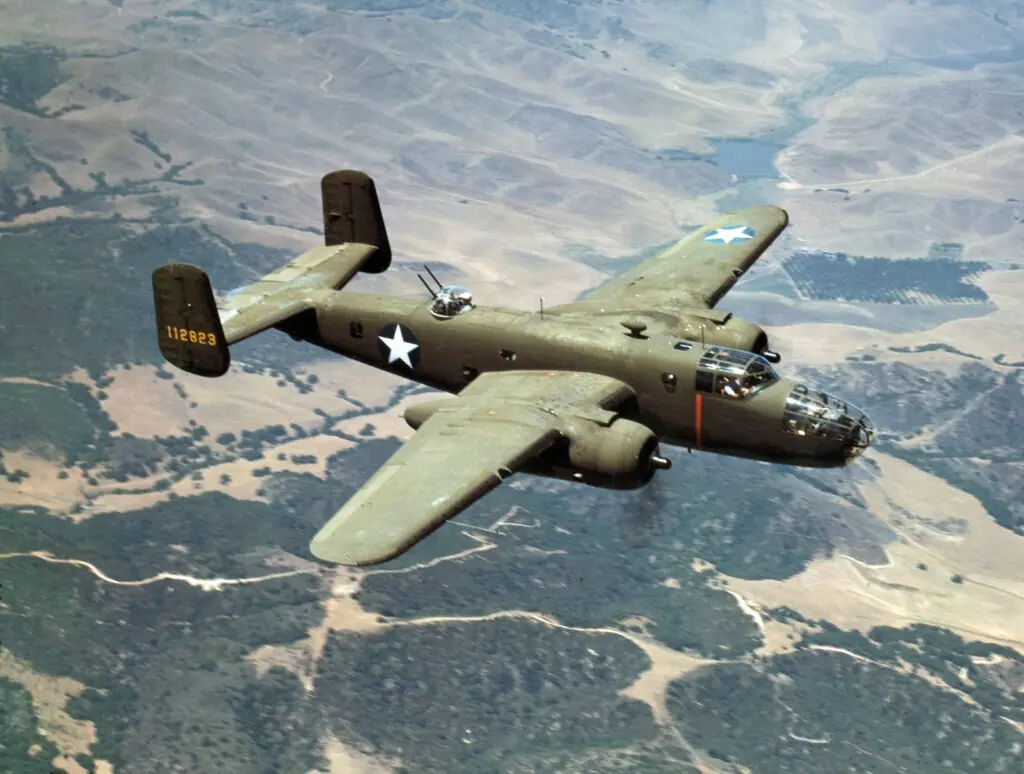
In the summer of 1947, Harold Dahl and Fred Crisman claimed to have collected material that had fallen from aircraft over Maury Island, in Puget Sound. The editor Ray Palmer hired Kenneth Arnold to investigate it, and Arnold turned to Air Force intelligence. The officers Frank Brown and William Davidson collected samples and died on August 1, 1947 when the B-25 in which they were returning crashed, with two survivors. The material turned out to be ordinary foundry slag and the protagonists themselves admitted that the story was invented. Dahl's account contains the first recognizable testimony of the figure of the man in black.
Executive summary of the case file. Everything essential before you dig deeper.
Fact sheet
OSINT - Traceability
Intelligence Network
Some frauds remain anecdotes and some leave corpses. This one left two, a bomber torn apart against a hillside in the state of Washington, an entire myth (the man in black) and a character so improbable that thirty years later he turns up again, like a counterfeit coin, in the investigation into the assassination of a president.
And it all begins three days before Kenneth Arnold came up with the word that changed everything. That too must be kept in mind: Maury Island comes first. It is the fraud that reached the appointment before the phenomenon did.
The verifiable first, which is how one should walk along a pier in the dark
What nobody disputes, not even those who defended the case at the time, is this:
- That in the summer of 1947, two men from the Tacoma area, Harold Dahl and his superior Fred Crisman, claimed to have collected material that had fallen from aircraft over Maury Island, in Puget Sound.
- That the editor Ray Palmer, who ran a magazine of fantastic tales and had a keen commercial nose, took an interest in the matter and hired Kenneth Arnold, by then the man of the moment, to go and investigate it.
- That Arnold, out of his depth, asked Air Force intelligence for help, and it sent two officers from Hamilton Field: Lieutenant Frank Brown and Captain William Davidson.
- That the two officers collected samples of the material and set off on the return flight on August 1, 1947 in a B-25 bomber.
- That the aircraft caught fire in flight and crashed near Kelso, in the state of Washington. Two crew members bailed out by parachute and survived. Brown and Davidson died.
Five facts, all dated, all named, all documented. And from here on, everything else falls apart.
What was told
Dahl’s account, which changed over time, held that he was patrolling the sound in a boat, accompanied by his son and a dog, when six ring-shaped craft appeared. One of them, he said, began to drop incandescent material that fell on the deck, wounded the boy and killed the animal.
The next day, according to his story, a stranger dressed in black turned up at his house, arriving in a dark, late-model car. The man invited him to breakfast, described in detail what had happened to him (without Dahl having told him) and warned him, in a courteous tone that was exactly the opposite of courteous, that it would be best not to talk about the matter if he valued his family.
There it is. That paragraph is the birth certificate of one of the most productive figures of twentieth-century popular culture. The man in black was not born on a film set or in a novel: he was born in the statement of a Tacoma man who was putting together a hoax, and we have followed his later development in his own case file.
Dahl's account
Harold Dahl claims that six ring-shaped craft flew over Puget Sound and that one of them dropped incandescent material on his boat, wounding his son and killing his dog. Three days before Kenneth Arnold's sighting.
The man in black
Dahl says he was visited by a stranger dressed in black, who arrived in a dark car, described what had happened and warned him not to talk. It is the first recognizable account of the figure.
The editor steps in
Ray Palmer, editor of a magazine of fantastic tales, takes an interest in the case and hires Kenneth Arnold to travel and investigate it.
The officers
Arnold, overwhelmed, turns to Air Force intelligence. Lieutenant Frank Brown and Captain William Davidson travel from Hamilton Field, interview the protagonists and collect samples of the material.
The crash
The B-25 in which Brown and Davidson are returning catches fire in flight and crashes near Kelso, Washington. Two crew members bail out by parachute and survive. The two officers die.
The analysis
The material turns out to be ordinary industrial slag, the kind that piles up by the ton at any foundry in the country. The military investigation concludes that the episode was an invention.
The retraction
The protagonists themselves admit to the investigators that the story was not true. The retraction never reaches the circulation the story had.
The improbable return
Fred Crisman is called to testify in the investigation opened in New Orleans into the assassination of President Kennedy. He is not linked to the crime, but his reappearance twenty years later turns the character into a magnet for all kinds of theories.
The slag, which was exactly slag
The material that so impressed everyone was foundry slag. That is, the vitrified residue left when metal is separated from ore: black, porous, heavy, streaked with colors, tremendously decorative if you don’t know what it is and utterly banal if you do.
In 1947 Washington state there was slag in industrial quantities, pardon the redundancy. It was used as road base. It was piled in dumps beside the foundries. Taking a bucket of the stuff and saying it had fallen from the sky required no special talent: it required a bucket.
And here a cold observation is in order, one of the most useful kind. Slag has been, for eighty years, the fraudulent material par excellence of this whole subject, and for a very specific perceptual reason: it looks exotic. It is dense, it has bubbles, it has metallic sheens, it doesn’t look like a stone. A layman looks at it and thinks it isn’t from here. A metallurgist looks at it and thinks of the night shift.
Everything that doesn’t look like a stone looks as if it came from another planet. It is astonishing how much mileage the residue of a foundry has got out of that confusion.
The two dead men, and why they must be discussed with care
Frank Brown and William Davidson had names, families and service records. They died when the aircraft they were flying in caught fire and fell. Their two crewmates managed to jump. They did not.
For eighty years, that crash has been used as the decisive argument in the case: that they were killed to silence them, that the plane was sabotaged, that they were carrying material someone didn’t want to see arrive. And it has to be said bluntly: there is absolutely nothing to support that reading. What exists is an investigated air crash, two survivors who gave statements, and a type of aircraft with a reliability record typical of its era, which was that of the end of a war and the use of worn-out equipment.
This is where the trade gets ugly. Using two real dead men as proof of someone else’s fraud is, at the very least, in poor taste. And it is also a perfect circular argument: the fraud holds up because people died, and people died because they were investigating the fraud. The loop bites its own tail with an elegance that is maddening.
Kenneth Arnold in the middle of all this, which is the saddest part of the case file
It is worth pausing on Kenneth Arnold’s impossible position, because it explains much of what happened to him afterward and because it is a lesson in what happens to an honest witness when he is dropped into machinery he doesn’t understand.
Arnold was a private pilot and businessman. In June 1947 he saw some objects over the Cascades, described them with an unfortunate comparison and found himself, within days, the most quoted man in the country. We told it in his case file: he did not say they were saucers, he said how they moved, and a headline did the rest.
Weeks later, a magazine editor offers him money to go and investigate a case. Arnold accepts. He is not an investigator, he has no method, he cannot tell foundry slag from anomalous material and he has no idea how to question someone who is lying. He arrives, gets overwhelmed, and does the only reasonable thing a citizen in his position can do: he calls the military.
And the military men who answer his call die on the way home.
It takes little imagination to understand what that did to him. Arnold was marked by that summer in a way that never left him, and his later relationship with the whole subject (wary, evasive, at times bitter) is explained much better from Maury Island than from Mount Rainier. He began as a witness and ended as a character. Nobody asked him whether he wanted to.
Why such a bad fraud worked so well
Because it arrived at the exact moment, and the moment is everything.
The summer of 1947 was, in the American press, a season of fever. Within a few weeks hundreds of sightings piled up, and the country’s entire news machinery was geared to print anything that carried the new word in the headline. A case presented in March would have died in a reporter’s wastebasket. In July there was no wastebasket: there was space every day.
And there was a second circumstance, a deeper one. The country had just discovered, two years earlier, that weapons existed that could wipe out a city, and that they had been developed in secret, with a hidden budget, without anyone outside the program knowing. That changed something irreversible in the relationship between citizen and government: from that moment on, the phrase “there is a program you don’t know about” stopped being paranoia and became a recent historical fact.
On that ground, a hoax as crude as Maury Island’s didn’t need to be good. It only needed to be timely. And it was.
What this case left the twentieth century
And here lies, for me, the real interest of the case file, which has nothing to do with what happened and everything to do with what stayed.
It left the man in black. The figure who would later fill books, series and films is entire in Dahl’s statement: the dark suit, the expensive car, the menacing courtesy, the impossible knowledge of what had happened. A 1947 fraud gave popular culture one of its most profitable archetypes.
It left the template of the recovered material. Someone has fragments. The fragments are strange. Experts examine them. The experts die or disappear. That scheme, which appears here complete for the first time, has been repeated since with an almost liturgical fidelity.
And it left an editorial lesson. Ray Palmer, who ran a fiction magazine, hired a famous witness to investigate a case that he himself was going to publish. All the elements of the modern business of mystery were already assembled in the summer of ’47: the witness turned into a brand, the editor turned into a promoter and the case turned into a product. Eighty years later, we are still in the same room, with better lighting.
And in case an ornament were missing: in 1968, Fred Crisman was called to testify in the New Orleans investigation into the Kennedy assassination. He was not linked to the crime and his appearance yielded nothing. But from that day on, the man who invented the Maury Island material remained sewn forever into American conspiratorial mythology. Some people have no biography: they have connective tissue.
Three days before the words “flying saucer” existed, someone was already lying about one. The phenomenon was not late to its own birth: it arrived right behind its forgery. That explains almost everything.
OSINT – Source traceability
We expressly warn against using the deaths of Brown and Davidson as evidentiary argument, a common practice in the spread of the case and one that amounts to circular reasoning. The insinuation of sabotage is not attributed to any body, because it appears in no document.