
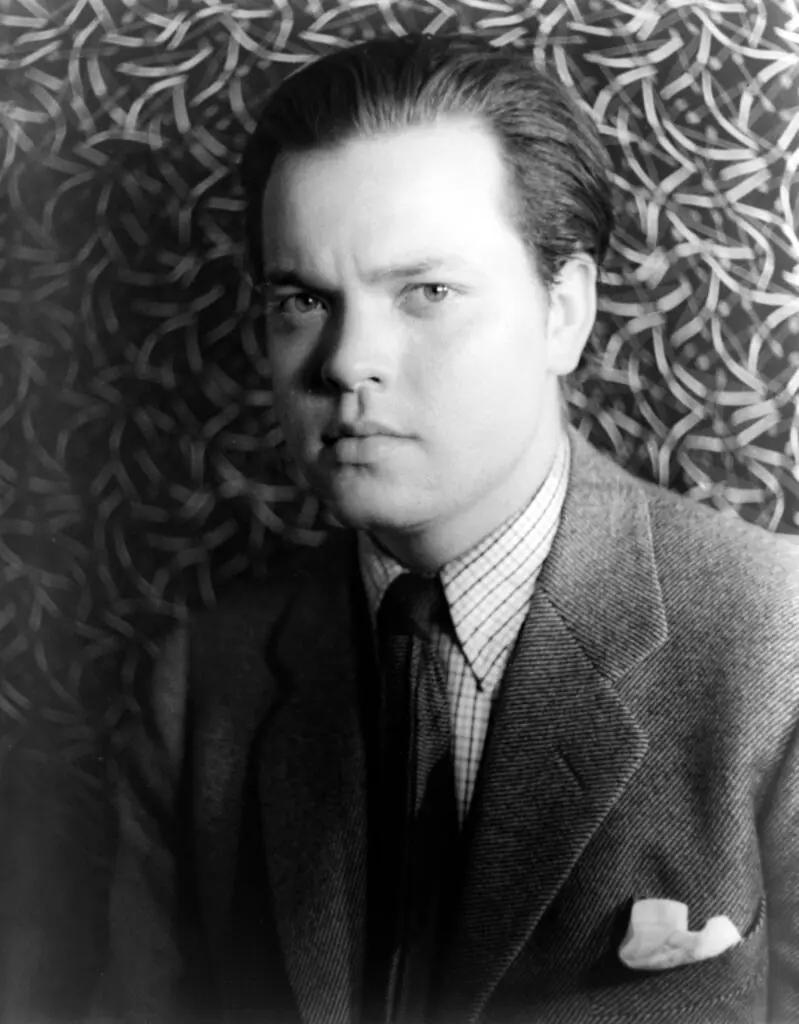
The War of the Worlds, 1938: The Panic That Barely Existed
Orson Welles read a Martian invasion over the radio and, according to everyone, an entire country fled down the highways. The broadcast happened. The panic, for the most part, did not. And whoever invented it had scores to settle.
On October 30, 1938, CBS aired a radio adaptation of H. G. Wells's novel written by Howard Koch and directed and performed by Orson Welles, built as a musical program interrupted by simulated news bulletins. The broadcast warned four times of its fictional nature and competed in its time slot with the most listened-to variety show in the country, with a modest audience. The print press, which had spent a decade losing advertising revenue to radio, published thousands of pieces the next day and for weeks afterward describing a national panic of which no trace is on record in civil or service records. A 1940 academic study fixed the canonical figures, relying largely on that same coverage, and was critically revised decades later.
Executive summary of the case file. Everything essential before you dig deeper.
Fact sheet
OSINT - Traceability
Some stories are so good they refuse to be debunked. You arrive with the papers, the audience figures, the newspaper archive under your arm, and the story just stares back at you from the sofa, not moving, like the relative who moved in during August and is still there in November.
This is one of those. It says that on the night of October 30, 1938, a twenty-three-year-old named Orson Welles read an adaptation of a novel about a Martian invasion over the radio, and that the United States panicked: people fleeing down the highways, churches full, police stations overwhelmed, suicides.
The broadcast happened. The panic, for the most part, did not. And the truly interesting part of all this is who had an interest in making us believe otherwise.
What can be verified, first
On the night of October 30, 1938, the CBS network aired an episode of the dramatic series that Welles directed with his company. The adaptation, written by Howard Koch, moved H. G. Wells’s novel from Victorian England to contemporary New Jersey, and above all it changed the form: instead of a narrator, a dance music program interrupted by increasingly alarming news bulletins.
That formal discovery is the reason we still talk about it today. It was an extraordinary insight into the medium, not a cheap trick. Welles had understood that in 1938 radio was an appliance of urgency more than of entertainment. That same year, the European crises had been followed live, with connections that interrupted regular programming. The average listener had learned to associate the sound of a bulletin with grave news. Welles took that reflex and used it.
It is also on the record, because it is on the recording itself, that during the broadcast listeners were told four times that it was a work of fiction: at the beginning, before and after the central break, and at the end.
The arithmetic, which is merciless
Let’s go to the numbers, which in this case do all the work.
First: the audience. Welles’s program was not a hit. It competed in its time slot with the most popular variety show in the country, aired on another network, which took the overwhelming majority of listeners. The telephone surveys conducted that same night (audience measurement already existed, rudimentary but real) put the CBS program’s listenership at a very small fraction of the total.
Second: of those who were listening, not all took it for real. The pollsters themselves collected responses that night from listeners who identified what they were hearing as a play. That is what you would expect: the program was announced in the listings published in the newspapers, with its title and its company.
Third, and decisive: there are no dead. The legend speaks of suicides, of people run over, of heart attacks. For decades they have been looked for in the records, and not a single one attributable to the broadcast has turned up. A national panic that leaves not one death certificate is a story about a national panic, not the panic itself.
A terrified country leaves a trace in the civil registries. This one left a trace only in the pages of the newspapers, which is a very different place and much cheaper to fill.
The novel
H. G. Wells publishes his account of a Martian invasion of England. The work has been in circulation for forty years when someone decides to take it to radio.
The year of the bulletins
That year's European crises accustom the American listener to programming being interrupted by live news of grave events. The reflex is created.
The broadcast
CBS airs Howard Koch's adaptation, directed and performed by Orson Welles, built as a musical program interrupted by bulletins. Listeners are told four times that it is fiction.
The front pages
The next day the country's print press publishes accounts of mass panic, flight and telephone collapse. This is the beginning of the legend, and it arrives before any verification.
Thousands of pieces
Over the following weeks the newspapers devote a disproportionate amount of space to the matter. Radio had been taking advertising revenue from them for years, and the episode offered the chance to portray it as an irresponsible medium.
No sanction
The federal communications regulator examines the case and imposes no punishment. The network undertakes not to use simulated news bulletins in that way again.
The study that fixed the figure
An academic study of the episode is published that estimates the listeners at several million and the frightened at more than a million. Those figures become canon and are repeated for eighty years.
The revision
Media history researchers re-examine the methodology of that study and the 1938 press coverage, and conclude that the panic was far smaller than reported and that its magnitude was constructed by the print press.
So where does the panic come from?
From the competition. As prosaic as that, and as instructive.
In 1938, the American print press had spent a decade losing ground to radio. Not symbolic ground: hard cash, in the form of advertising revenue going to the networks’ sponsors. The newspapers had tried everything, including persuading the public that radio was a frivolous, irresponsible and dangerous medium.
And then this lands in their lap: a national network broadcasting false bulletins and a handful of alarmed citizens calling police stations and newsrooms. There was no need to invent anything. It was enough to collect the real calls, publish them on the front page, devote editorials to them, and not bother to check whether those scenes of mass flight had happened anywhere.
Which is exactly what was done. Thousands of pieces in the following weeks. And here is the nice part of the whole business, in a very bitter sense: the episode remembered as the definitive example of radio’s irresponsibility is, in reality, a considerably better example of the print press’s irresponsibility.
And then came the study, which is the most uncomfortable part
Two years later, an academic study of the episode fixed the figures we have all repeated: several million listeners, more than a million frightened people. That gave the legend something it had lacked until then: a white coat.
The problem, pointed out by media history researchers who reviewed the work decades later, is the starting material. The estimates rested largely on the press coverage itself (the same coverage we are putting in quarantine) and on surveys carried out weeks afterward, when the respondents had already read in the newspaper that the country had panicked. Asking someone whether they were frightened, after telling them that everyone was frightened, does not measure their fear: it measures their contaminated memory.
This accuses nobody of bad faith; it is a reminder that an academic study does not sanctify its sources. If the sources are newspaper clippings, the result will have the quality of a newspaper clipping, no matter how many decimal places are added to it.
Grover’s Mill, or the advantage of landing somewhere that exists
There is one scripting decision in that adaptation that deserves a paragraph of its own, because it explains better than anything else why the program worked.
The original novel takes place on the outskirts of London. Koch moved it to New Jersey and, to choose the exact landing point, did what anyone in a hurry would do: he unfolded a road map and stuck a pin in it. It came up Grover’s Mill, a hamlet in West Windsor township with no particular merit except having a name and being printed.
And there is the whole mechanism. An invented place discards itself: the listener does not recognize it and the spell breaks. A real place (modest, verifiable, with a county road someone has driven) does the opposite: it anchors the fiction to the world. Anyone who knew New Jersey could trace in their mind the route from their house to the spot. No sound effect achieves that.
It is exactly the same device that holds up the good stories in this archive. The sergeant’s name. The make of the car. The case file number. The exact hour. Verifiable details are not put there to prove anything: they are put there so the rest gets in without a toll. A mediocre liar invents the detail. A good one copies it from the map.
And there is a coda that I find delightful. Grover’s Mill, which in 1938 was nothing, today has a commemorative plaque for the episode and receives visitors. A village put on the map by a finger on a map. Fiction returns the favor.
Why this is in an archive about mystery
Because it is the pattern. Whole, clean, with all its pieces visible, and with the advantage that here we can check everything.
Look at the sequence. A real, modest fact. Disproportionate coverage driven by interests that have nothing to do with the fact. A later academic work that consolidates the enlarged version and gives it respectability. Decades of repetition. And, at the end, a revision that arrives eighty years late and that no one pays attention to anymore, because by then the enlarged version is what everybody knows.
Now replace “radio broadcast” with whichever case in this archive you prefer. It works with almost all of them. With the New Mexico one, certainly. With the Texas town without a railroad, too. The difference is that in 1938 we have program listings, audience measurements, civil registries and a complete newspaper archive. We can perform the autopsy. In the other cases, almost never.
There is also a far-reaching consequence that is rarely mentioned. During the Cold War, the panic legend became a textbook argument about the credulity of the masses and the need to manage information carefully. It was cited in discussions about whether it was advisable to inform the public of sensitive matters. That is: a journalistic exaggeration from 1938 ended up serving as a basis for justifying administrative silence. False stories do not sit still; they do things.
Eighty-eight years later, the legend remains installed in the mental living room of half the planet, in a robe of “everybody knows this” and slippers of “I saw it in a documentary.” There is no getting rid of it now. At least we now know who opened the door for it, and it was not the Martians.
OSINT – Source traceability
We expressly caution against the symmetrical error of denying that there was any alarm at all: there were real calls and frightened people. What is refuted is the scale. The figures from the 1940 study are not reproduced as data, but as estimates whose methodology has been questioned.