Zugarramurdi and the Logroño Auto de Fe: Eleven People Burned and One Inquisitor Who Said Enough
In November 1610, eleven people from a Navarrese valley burned. Two years later, one of their own judges wrote the report that ended the witch hunt in Spain. And in doing so he showed that the word akelarre had been invented by the persecutors themselves.
Between 1609 and 1610, the Inquisition tribunal of Logroño conducted a mass witchcraft trial in the Zugarramurdi and Urdax district in northern Navarre, spread by the persecution that Pierre de Lancre was leading across the border. The auto de fe of November 7 and 8, 1610 tried 53 defendants, 31 of them for witchcraft, and relaxed eleven people to the secular arm: six were burned in person and five in effigy because they had already died in prison. One of the three inquisitors, Alonso de Salazar y Frías, later toured the district under the 1611 Edict of Grace and submitted memorials in 1612 and 1613 concluding that there was no proof whatsoever of the acts tried. The Instructions of 1614 adopted his theses and put an end to inquisitorial executions for witchcraft in Spain.
Executive summary of the case file. Everything essential before you dig deeper.
Fact sheet
OSINT - Traceability
Intelligence Network
I am writing this case file differently. There is no room for irony here, because here the dead have names.
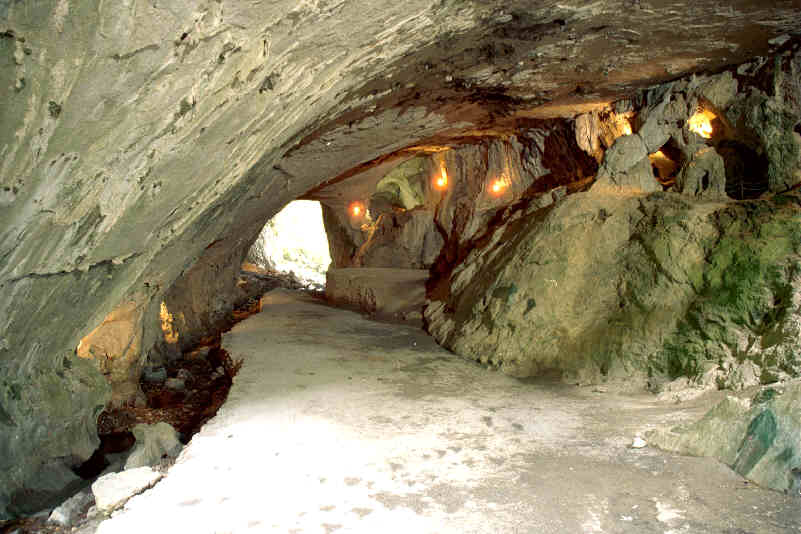
Zugarramurdi is a small village in northern Navarre, right on the border, with an enormous cave crossed by a stream. It is a beautiful place and, for four centuries, the setting of a story that most people in this country know poorly. Let’s go through it with papers, which is the only thing I know how to do, and with the respect owed to a place that still holds the memory of what happened.
How it begins: a girl returning from service
In late 1608, a young woman named María de Ximildegui, about twenty years old, returns to Zugarramurdi after eighteen months in service in Ciboure, across the border in the French Labourd. And she brings something with her.
She brings panic. Because in the Labourd, that same year of 1609, the Bordeaux Parliament councilor Pierre de Lancre had received a commission from Henry IV to cleanse the region of witchcraft. De Lancre was a convinced, meticulous man with a high opinion of his own work; he would later tell it all in two books. The number of victims he left behind has been debated by historians for centuries, and the figures in circulation come in large part from his own propaganda. But the effect on the neighboring region is not in dispute: fear crossed the border before anyone else did.
María de Ximildegui states that she took part in witchcraft. She names neighbor women. And this is where the machine starts up, and where it pays to look slowly, because the mechanism is identical to that of any modern case of testimony contagion.
Timeline of the trial
María de Ximildegui returns
She returns to Zugarramurdi after eighteen months of service in Ciboure and confesses to having taken part in witchcraft.
The report reaches Logroño
The Inquisition tribunal receives its commissioner's report and orders the first four arrests.
They go themselves
Graciana de Barrenechea and her two daughters present themselves in Logroño demanding justice against the accusations. They end up imprisoned.
The questionnaire
The Suprema answers the tribunal with a questionnaire of fourteen questions. The bureaucratic machinery begins to manufacture the mold for the answers.
The word is born
First documented appearance of the term aquelarre, in a letter from the Logroño tribunal to the Suprema. It did not come from the village: it came out of an office.
Salazar arrives
Alonso de Salazar y Frías joins the Logroño tribunal as its third inquisitor. He arrives late, and that will change everything.
Inquisitor Valle's visitation
Juan del Valle Alvarado tours the area and returns with denunciations against some three hundred people. He transfers about forty.
The sentence
The inquisitors vote guilty for twenty-nine of the accused. Salazar votes against at least one death sentence for lack of proof.
The procession
Eve of the auto de fe.
The auto de fe
On the 7th and 8th the sentences are read in Logroño before a crowd that sources estimate at tens of thousands of people. Eleven relaxed to the secular arm: six burned in person and five in effigy, already dead in the prisons.
The Edict of Grace
The Suprema orders an inspection visitation with an edict inviting repentance without punishment.
Salazar takes to the road
He begins his solo visitation through northern Navarre, Gipuzkoa and Bizkaia. It will last about eight months.
The first memorial
Salazar delivers to the Suprema the report that dismantles the entire trial.
The second memorial
He insists, calls the accusations ridiculous and denounces the coercive methods of his own colleagues.
The Instructions
The Suprema sends Logroño the Instrucción en materia de brujos, which adopts almost all of Salazar's theses. It marks the end of inquisitorial executions for witchcraft in Spain.
The numbers of the auto de fe
The primary source here is the printed account of the auto de fe edited by Juan de Mongastón in Logroño in 1611. It is what we have, and it is good. These numbers come from it:
53
31 of them for witchcraft
11
6 burned in person, 5 in effigy
It is necessary to explain what “burned in effigy” means, because it sounds like a formality and it is not. It means the person had already died in the secret prisons before the auto, and that even so their remains were burned along with a figure representing them. Five of the eleven people relaxed to the secular arm did not reach the day of their execution alive. They died waiting in prison.
On the breakdown by sex, the account gives five men and six women among the eleven. On the number of reconciled there is a discrepancy between sources (Mongastón’s account gives twenty-one; other references give eighteen) and I am not going to settle it here on faith: it is between eighteen and twenty-one, and whoever wants to close it will have to go to the legajo.
A few names, because figures alone are an elegant way of forgetting: María de Zozaya, burned in person despite having confessed, because the tribunal considered her a teacher and dogmatizer. Graciana de Barrenechea, the woman who had gone to Logroño of her own accord to demand justice, dead in prison and burned in effigy. Estevanía de Petrisancena, also dead in prison. María de Arburu, burned, and whose death sentence Salazar is recorded as having voted against for lack of proof.
The word they invented
Here comes the finding that, to me, as a Basque and as a stickler for papers, seems the most important of the whole case file. And we owe it to the Danish historian Gustav Henningsen.
The word “aquelarre” is not ancestral Basque folklore. It is a learned construction of the early seventeenth century.
Etymologically it is composed of aker, he-goat, and larre, meadow: the he-goat’s meadow. It sounds ancient. It sounds like the oral memory of generations. And yet its first known documentation is a letter from the Logroño tribunal to the Suprema dated May 22, 1609, in which the inquisitors speak of gathering reports on juntas and aquelarres. Henningsen narrows its creation to a window of about three months, between February and May 1609, and points to the inquisitor Juan del Valle Alvarado as the probable person responsible.
In other words: what probably began as a specific place name (a meadow, in a particular spot) became, by the grace of an official who needed an administrative category, the generic name of a diabolical ceremony that has since filled paintings, novels, films and T-shirts.
There is also an alternative etymological hypothesis, a minority one but an interesting one, proposed in the mid-twentieth century: that the original was alkelarre, from alka, the local name of a plant, plus larre. The meadow where alka grows. A place to take livestock, not to worship anyone. If that path were the right one, the goat etymology would already be an inquisitorial reinterpretation. It is not settled. But it deserves a mention.
A good part of the Basque witch folklore that is sold today as ancestral was written, literally, by its persecutors.
Alonso de Salazar y Frías, and why arriving late saved his neck
The Logroño tribunal consisted of three men. Alonso Becerra Holguín, of the Order of Alcántara, who presided. The licentiate Juan del Valle Alvarado, the one of the visitation and probably of the word. And the licentiate Alonso de Salazar y Frías, a jurist trained in canon law at Salamanca and Sigüenza, who joined in June 1609.
That chronological detail, which looks administrative, is the key to the whole story. Salazar arrived when the interrogations of the principal accused had already been done. He took no part in them. He did not sign those records. He had nothing to defend. And that is why he could do what his two colleagues no longer could: read the file as an outsider.
When the Edict of Grace came in 1611 (an invitation to repentance without punishment), he took to the road alone. May 1611. About eight months traveling through northern Navarre, Gipuzkoa and Bizkaia, without his colleagues, taking statements from anyone who wanted to speak.
He came back with this:
- 1,802 confessions of witchcraft collected.
- Of these, 1,384 came from children. Children of roughly seven to fourteen years, according to the range the sources give.
- More than 5,000 names of people denounced who never appeared before the Holy Office.
- Hearing records filling more than 11,000 pages.
- And 81 retractions: people who took back what they had confessed before.
Look at what he did with that, because it is a beautiful intellectual move. Instead of arguing theology, he argued statistics. Eleven thousand pages of confessions allow an analysis that no single confession permits: checking whether the accounts vary, whether they depend on who is asking, whether they appear before or after someone has talked about the matter in the village. Salazar turned the volume of the file into his own argument.
First memorial of Alonso de Salazar y Frías
Document · March 24, 1612
One sentence of Salazar’s is always quoted, and it has to be quoted carefully because it circulates in two variants that do not match. In the version Henningsen gives, it says that there were no witches or bewitched in the place until they began to deal with and talk about them. In the version most widespread in the press, the final verb is “write” instead of “talk,” and the witches appear in the feminine. I have not been able to check the original manuscript, so I give it as what it is: the wording transmitted by his main modern editor, not a certified transcription from the legajo.
Whether it says “talk” or “write,” the idea is the same and it is devastating for his time and for ours: discourse creates the crime. First the category is installed, then the culprits who fill it appear.
What he achieved, and what he did not
On August 29, 1614, the Suprema sent the Logroño tribunal an Instrucción en materia de brujos that incorporated almost all of Salazar’s theses: strict evidentiary requirements that in practice made witchcraft impossible to prove, the order that sambenitos not be left on display in churches (which avoided perpetual stigma on families), and reparation measures for the victims of the 1610 auto.
The historical result is enormous: the end of inquisitorial executions for witchcraft in Spain, decades earlier than in a good part of Europe.
This last point is important and should not be sweetened. The institution that stopped the killing is the same one that had organized it. And it stopped because one of its own showed, with its own procedure, that the file did not hold up. That does not redeem the Inquisition. It makes Salazar a very rare case: the official who audits his own house and wins.
Zugarramurdi today
Since July 20, 2007 the village has had a Witches’ Museum, installed in the old hospital, a building the Dutaria family founded in 1788. And it is important to say how it is conceived: not as a house of horror, but as a memorial to the victims of a persecution. The local community has been critical, and rightly so, of folklorizing treatments that turn eleven executed people into props.
The documented traditional celebration in the caves is the zikiro-jate, the popular meal of roast lamb held every August 18. Food, fire and people. Nothing esoteric. Nothing that needs explaining.
And the stream that crosses the cave is called Infernuko Erreka, the stream of Hell. The name is old and beautiful, and probably has nothing to do with what the Logroño tribunal wanted to read into it. Place names are like that: they have been there for centuries, and now and then someone comes from outside and decides they mean something else.
More in the profile of Alonso de Salazar y Frías. And if you are interested in how an institution closes a case file that its own material does not support, do not miss the Condon Report: the same problem, three and a half centuries later, and that time the auditor lost.
OSINT – Source traceability
Marked v1 because the procedural facts appear in archival documentation and in a contemporary printed account. The figures from Salazar's visitation correspond to confessions collected, not to people reconciled: they are 1,802 confessions, of which 1,384 from minors, and 290 reconciled. The number of kilometers traveled on the visitation is not given because it appears in no source consulted. No figure for Pierre de Lancre's victims is given because it is disputed in the historiography.