
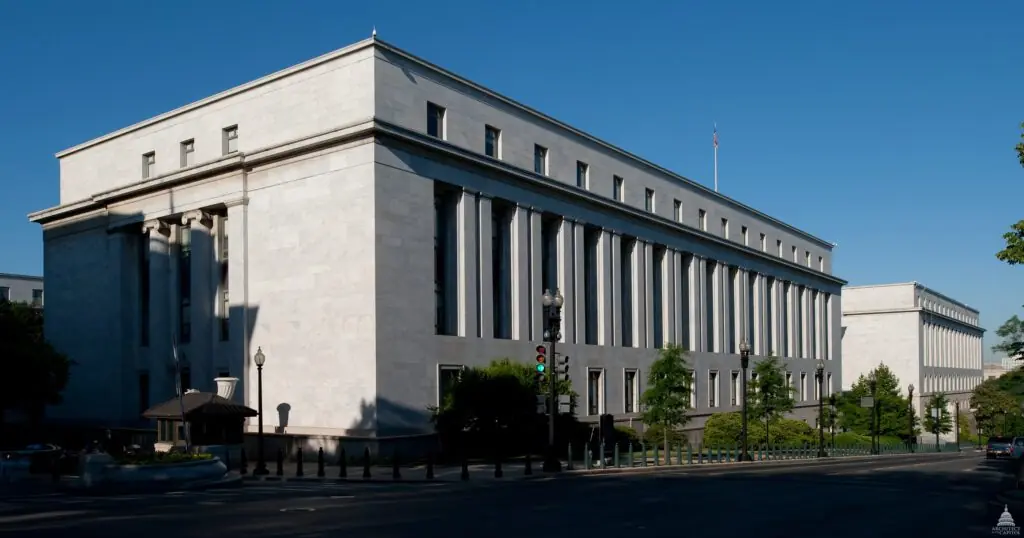
On July 29, 1968, the Committee on Science and Astronautics of the U.S. House of Representatives did something it had never done before and would not do again for more than half a century: it sat a group of scientists down in a room of Congress to talk, for an entire day, about unidentified flying objects.
It was not an investigative hearing with witnesses and oaths. It was a symposium: an academic session held on parliamentary premises, with papers, with debate and with published proceedings. And the most telling detail is this: it happened while the university study that would be used to close the official program was already practically written.
What was said there
The session brought together half a dozen scientists from different disciplines, with positions ranging from active interest to skeptical caution. The atmospheric physicist James E. McDonald delivered a long, thoroughly documented statement arguing that the subject deserved serious scientific attention and sharply criticizing the way it had been handled until then. J. Allen Hynek, who had spent twenty years as astronomical adviser to the official program, argued in favor of a systematic study and better data-collection procedures.
Carl Sagan, for his part, held the position he would maintain all his life: that the search for life elsewhere in the universe is a scientific question of the first order, and that sightings of unidentified objects provide no useful evidence for that search. Both things at once, without contradiction.
The material result was a volume of proceedings. That is: the only document of the classic period in which several active scientists discuss the subject among themselves, in writing, by name and on official premises.
Why it served no purpose, and why it matters anyway
It served no purpose for a reason of timing. When those scientists spoke, the decision had already been made elsewhere. The study commissioned from the University of Colorado was about to be published, its conclusion would be that twenty years of work had added nothing to scientific knowledge, and that conclusion would be enough to close the official program the following year. We have covered this in the corresponding case file and in the report’s entry.
It is the administrative scene we all know, and anyone who has worked in an institution will recognize it at once: the meeting is called when the file has already been signed. Not out of malice. Out of scheduling.
And it matters anyway, for two reasons. The first is documentary: the proceedings exist, are published, and let us read what several serious scientists thought in 1968, with their arguments and their reservations, without the filter of later popularization. It is a primary source of the first order and it is underused.
The second goes deeper. That day showed that this could be discussed in an institutional setting without the roof falling in. That there were active scientists willing to put their names to it. And that the obstacle was never a formal ban, but something more diffuse and more effective: the absence of a procedure, a budget and someone whose written responsibility it was to take the matter on.
Fifty-five years passed before anything comparable was held again in that same house. Fifty-five years is a long time for a conversation that had already taken place, and that was, moreover, published.
OSINT – Source traceability
The text expressly distinguishes between a symposium and an investigative hearing, a distinction that is often omitted when the event is cited. Carl Sagan's position is summarized without distorting it in either of the two usual directions.