
Jacques Vallée’s Turn: From Ships From Another Planet to the Folklore of Magonia
In 1969 he stopped asking what UFOs were and started asking why they looked so much like fairies. His critique remains the best there is. His alternative cannot be tested.
Jacques Vallée, an astrophysicist and doctor of computer science with a technical career unrelated to the subject, argued in 1965 and 1966 for conventional scientific study of the UFO phenomenon. In 1969 he published the work that systematically compared modern accounts with European folklore of supernatural abductions and shifted the question from the object to the observer. He later formulated the hypothesis of the phenomenon as a control system for human beliefs, and in 1979 he argued that part of the material in circulation was deliberate disinformation of terrestrial origin, something that would be confirmed a year later in New Mexico.
Executive summary of the case file. Everything essential before you dig deeper.
Fact sheet
OSINT - Traceability
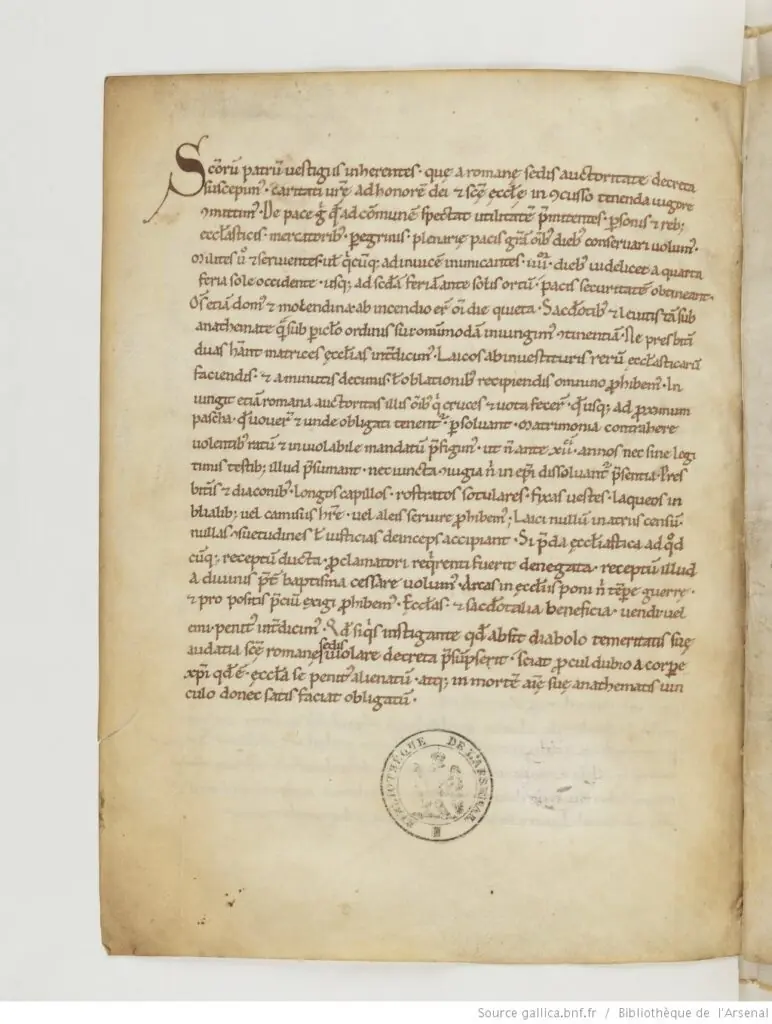
In the ninth century, the Archbishop of Lyon wrote a furious pamphlet against a superstition that drove him to distraction. His parishioners were convinced that there was a land called Magonia, located in the clouds, from which ships crewed by people descended to steal crops and carry them back up there. And it was no drawing-room belief: the archbishop reports that he intervened to stop a crowd from stoning four people whom they took to be captured crew members.
Eleven hundred years later, a thirty-year-old French astronomer, with a degree in astrophysics and working on a doctorate in computer science at an Illinois university, read that text and decided to use it as the title of the book that would split his career, and a good part of the field, in two. It is a gesture of considerable elegance: take the most futuristic discipline available in 1969 and drag it, by the ear, back to a Carolingian codex.
What Jacques Vallée did that year was rarer and harder than changing his mind: he went on accepting the same data and completely changed the question he put to it. This case file is about that turn, about why his argument against extraterrestrials is the best there is, and about why what he put in its place has a problem he has not managed to escape in fifty years.
The verifiable first
It is worth establishing the credentials, because they are real and because this man is constantly cited in company that does not suit him. Vallée trained as an astrophysicist in France and worked in the early sixties at the Paris observatory, on the satellite-tracking program. He later moved to the United States, took part in producing the first computerized map of Mars for the U.S. space agency, and earned a doctorate in computer science at the end of the decade.
His later professional career has nothing to do with UFOs, and it is the one that put food on his table: he worked on the development of the first large American data networks, at the information center of the network that would become the internet, and then spent decades in technology venture capital. In other words, we are dealing with someone with solid scientific training and a successful technical career entirely independent of the subject at hand. In this field, that combination is extremely rare.
His relationship with J. Allen Hynek is also verifiable. He met Hynek at the University of Illinois, where both worked, and collaborated with him for years. And it is verifiable, even if it sounds like a dinner-party anecdote, that he served as the model for the French scientist in the film that in 1977 put the subject in cinemas around the world. That gives the measure of his standing in the field in the mid-seventies.
And his books are verifiable, which is what matters here. His intellectual trajectory is published and dated, and can be followed volume by volume: in 1965 and 1966, two works defending serious scientific investigation of the phenomenon within a conventional framework; in 1969, the break; in 1975, the formulation of his own hypothesis; in 1979, the further turn of the screw toward human manipulation. Nobody has to interpret anything: it is in print.
Magonia
Archbishop Agobard of Lyon denounces in writing the popular belief in ships that descend from a land in the clouds to steal crops, and describes how he prevented the lynching of four alleged crew members.
The observatory
Vallée works in Paris on satellite tracking. His account of an anomalous recording destroyed by a superior dates from this period, an episode that only he has told.
United States
He moves and takes part in the first computerized mapping of Mars for the U.S. space agency.
The orthodox books
He publishes two works calling for scientific study of the phenomenon within a conventional framework, without ruling out an extraterrestrial origin.
The turn
He publishes the book that systematically compares modern accounts with the folklore of fairies, abductions and religious apparitions. He changes the question: not what they are, but why they resemble so closely what we were already telling before.
The control system
He formulates the hypothesis that the phenomenon acts as a mechanism regulating human beliefs over the very long term.
The cinema
A character inspired by him appears in the film that turns the subject into a worldwide mass phenomenon.
Human manipulation
He publishes the work arguing that part of the phenomenon is deliberate disinformation of terrestrial origin for purposes of social control. Criticism rains down on him from his own field.
New Mexico
A real counterintelligence operation against a U.S. citizen reproduces, point by point, what he had described a year earlier.
What is said to have happened
The 1969 turn consists of an observation that, once formulated, is hard to shake off. Vallée gathered hundreds of accounts of modern landings and encounters and set them beside European folklore about fairies, goblins and supernatural abductions. And what he found was a systematic structural coincidence, far beyond a vague resemblance.
The beings are small. They take people away. Time runs differently inside their territory: one spends a short while there and at home years have gone by. They offer food that must not be accepted. They leave circular marks in the grass. They swap babies for others. Witnesses are left dazed and sometimes ill. And when someone tries to prove the experience, the proof falls apart in their hands.
Swap the fairy costume for silver coveralls and the ring of mushrooms for a landing trace, and you have the UFO catalog of the 1960s. That is the whole thesis, and it is devastating for the naive reading of the phenomenon.
When what is seen in the twentieth century matches point for point what was seen in the twelfth, the most economical explanation lies in the observer rather than in the sky.
From there, Vallée added a second argument, this one arithmetical and, to my taste, even more effective. If one takes seriously the number of landings reported around the world each year and extrapolates to the surface of the planet and the decades elapsed, the result is an absurd number of visits. No conceivable exploration mission, human or anyone else’s, requires millions of landings to collect samples. Either the reports do not describe what they claim to describe, or whoever comes does not come to explore. Either conclusion sinks the simple version.
And then came the constructive part, which is where I wince. Vallée proposed that the phenomenon works as a control system: a mechanism that adjusts humanity’s collective beliefs over the centuries, appearing in whatever form each age can digest, not to inform but to condition. A cultural thermostat. And ten years later he added that, in addition, human agencies are deliberately exploiting and amplifying that material.
What it may be, without any need for Martians
The boring explanation for the resemblance
There is a reading of the 1969 finding that Vallée has never wanted to adopt and that is, by a wide margin, the most economical. If accounts from every era resemble each other so closely, perhaps what the accounts share is their producer, a human brain, with its limited repertoire of perceptual failures, its dream states, its need to narrate and its habit of borrowing whatever imagery is at hand, and no common visitor.
The beings are small in every culture because the human brain processes small humanoid figures in a particular way. Time distorts because time perception goes haywire in altered states of consciousness. Circular marks in the grass are made by fungi, which grow radially, something known for a century. And witnesses are left dazed because they were dazed beforehand, which is often the cause and not the consequence. The coincidence across eras is real and is an excellent finding; what is not clear is that it points up rather than inward.
The problem of a theory that cannot lose
And here is the central objection, which must be put with respect but without softness. A scientific hypothesis is judged by what it forbids. If a theory is compatible with any imaginable result, it says nothing testable.
The control system has exactly that problem. If the phenomenon manifests, it confirms the hypothesis. If it disappears for twenty years, it confirms the hypothesis, because the thermostat is on pause. If witnesses see ships, it confirms. If they see fairies, it confirms. If physical proof appears, it confirms; if the proof falls apart, it confirms even more, because the deception is part of the design. No conceivable observation puts it in difficulty, and a theory that cannot lose cannot win either. It stays off the field of play, which is a very comfortable place and completely sterile.
Where he was entirely right, and it must be said
All of the above said, there is one chapter in which Vallée was right before anyone else and it cost him dearly. In 1979 he published that part of the material circulating in the ufological milieu was disinformation deliberately fabricated by human agencies, and that the intermediaries had to be studied as carefully as the lights. The reaction of his own community was open hostility: he was accused of betraying the field and of giving ammunition to the skeptics.
A year later, in New Mexico, a U.S. Air Force counterintelligence office began to do exactly that to one specific citizen: fabricate documents for him, feed him the theory and watch him break. We tell it in its own case file, and the participants themselves later acknowledged it. Vallée described the mechanism twelve months ahead of time and without access to anything classified, simply by looking at the structure of the milieu. That was analysis, not a lucky hunch.
Why this case does not die
Because it split the field in two and the fracture remains open. Since 1969 there have been two incompatible ways of investigating this: the one that looks for objects and the one that looks for cultural patterns. The first asks for radar, samples and chain of custody; the second asks for archives, newspaper libraries and anthropology. Both are legitimate, both have produced results, and they practically never talk to each other. Almost everything published today belongs to one of the two schools without knowing that it belongs to a school.
Nor does it die because the same idea reached a New York journalist, on his own and from a completely different place, as he traveled in those years through a town in West Virginia. John Keel called ultraterrestrials what Vallée called a control system, and he reached the conclusion through fieldwork while the Frenchman reached it from the archive. When two people who resemble each other in nothing, working with opposite methods, land in the same place, that place deserves a visit even if one does not buy the return ticket.
And it does not die because his method remains the most useful one available. Asking where a piece of the story comes from before assuming it is ancient is exactly what we have had to do with the cover that fixed the face of the gray, with the bell-shaped silhouette of the fifties and with the UMMO plot, which Vallée himself investigated and classified as a hoax. The 1969 turn did not solve the phenomenon. It solved something more modest and more lasting: how to read it.
What remains is the image from the beginning, which he chose and which is no accident. A ninth-century archbishop planting himself in front of a mob to stop the killing of four people accused of coming down from a ship. Eleven hundred years later, a doctor of computer science who helped build the internet read that paragraph and understood that the story was about the mob, and the ships were incidental.
OSINT – Source traceability
Living person: the case file is limited to published work and verifiable biographical data. No literal passages from his books are quoted, as collated editions were not available. No exact figures are given for the 1969 landing catalog or for the quantitative extrapolation, which are described qualitatively. His time at the Paris observatory is recorded as a biographical data point; the episode of the erased tape that he recounts in his memoirs is not treated as established in this case file.