
John Callahan and the JAL 1628 Case File: the Best Witness in the Field, and It Still Isn’t Enough
A division chief at the U.S. Federal Aviation Administration kept a copy of the radar tapes from an encounter over Alaska. The event is documented. The meeting at which everything was taken away is told only by him.
On November 17, 1986, the crew of cargo flight JAL 1628 reported a large object over eastern Alaska. The communications and radar data from the Anchorage control center were recorded and led to a Federal Aviation Administration case file, later released and analyzed by civilian investigators. John Callahan, a division chief at the agency's headquarters, has stated since 2001 that he presented that material at a meeting in Washington to representatives of federal agencies, that they took it away, and that they told him the encounter had never taken place. He kept a copy.
Executive summary of the case file. Everything essential before you dig deeper.
Fact sheet
OSINT - Traceability
Of all the witnesses who have ever sat in front of a microphone to talk about this subject, John Callahan is the one who interests me least as a witness. I don’t mean that as a criticism, quite the opposite: he interests me little because there is no need to believe him. What he describes happened, and it happened on paper, with a flight number, a time, voice transcripts and radar tapes that were in the hands of a federal agency. The case file exists. It is one of the few times you can afford to ignore the narrator and read the record directly.
What does depend exclusively on his word is something else, much smaller and a good deal more uncomfortable: what happened to that material when it reached Washington. And there, friends, we enter the usual terrain. A man describes a meeting. At the meeting, according to him, there were people from two agencies. And at the end, according to him, someone said the line that gives its title to half the literature of this genre: that this meeting never took place.
Let’s separate the two things surgically, because almost everyone cites them mixed together, and that gets us nowhere.
What can be verified, first
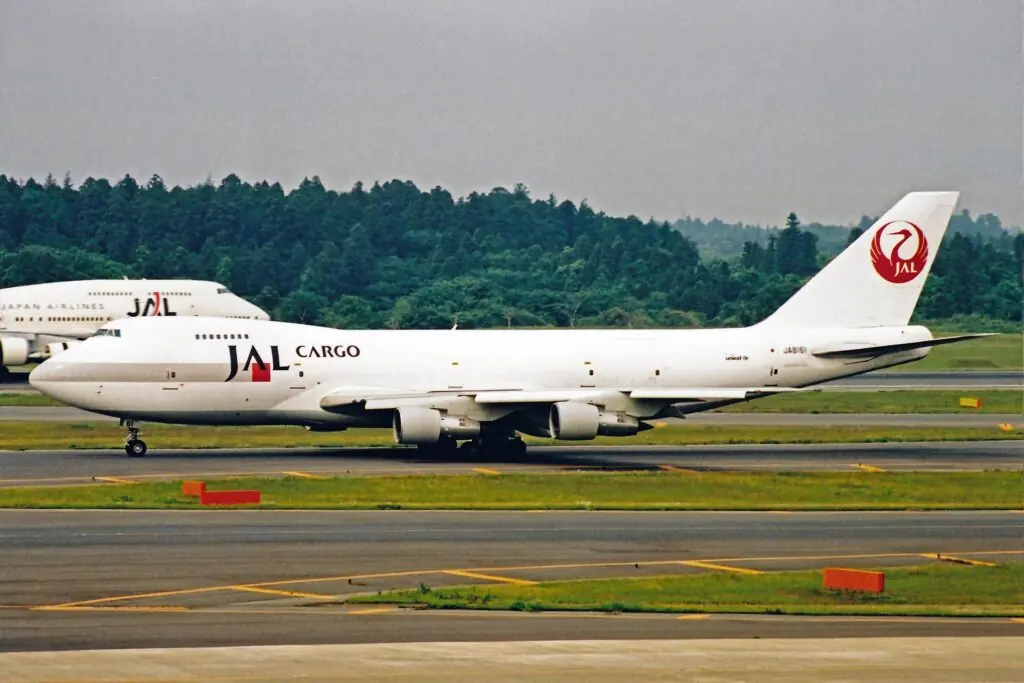
On November 17, 1986, a Japan Air Lines Boeing 747 cargo plane was flying toward Anchorage carrying, among other things, French wine. Captain Kenju Terauchi was in command, with Takanori Tamefuji as first officer and Yoshio Tsukuba as flight engineer. Over eastern Alaska, near Fort Yukon, the crew reported lights accompanying the aircraft and, later, a large object. The conversation with the Anchorage air traffic control center was recorded, as it always is. The radar data was logged, as it always is.
This is what makes the case an absolute rarity in the genre. We do not depend on anyone’s memory of what was said over the radio: there is a tape. We do not depend on a controller’s impression: there is a record. The Federal Aviation Administration opened an investigation, and the resulting case file, voluminous, with transcripts, data and internal correspondence, was eventually released and studied by civilian investigators, among them a physicist who devoted a detailed piece of work to analyzing the radar echoes. All of this can be consulted. We cover the event itself in detail in the JAL 1628 case file.
And it is worth being precise about what “case file” means here, because the word is used very loosely. We are not talking about a two-page report with a conclusion. We are talking about raw material: the transcript of what the crew said over the radio and what the controller answered, with time stamps; the raw radar data from the control center; the agency’s internal correspondence on how to handle the matter; and the public statement it ended up issuing. That is exactly what an investigator wants and almost never has: not someone’s assessment, but the record on which that assessment was made. In this case it exists, and that is why JAL 1628 is one of the few aerial incidents in the catalog that can be re-examined without asking anyone’s permission.
Callahan’s position is also verifiable. He was not a technician on shift or a contractor: he held a division chief post at FAA headquarters, in the accidents and investigations area. In other words, he was exactly the level a matter like this reaches once it stops being local. That the material from the Alaska incident ended up on his desk requires no hypothesis: it is procedure.
And finally, the public position the agency adopted when it had to speak, in March 1987, is verifiable. It was cautious to the point of discomfort: it confirmed that the crew had reported an object, it confirmed that there had been echoes on the screen, and it held that those echoes could be attributed to artifacts of the radar system itself (split echoes, spurious returns) and not to a solid object. Official conclusion: the presence of anything cannot be confirmed. It is the kind of answer that satisfies no one and that, precisely for that reason, tends to be sincere.
The flight
A Japan Air Lines Boeing 747 cargo plane bound for Anchorage reports lights and a large object over eastern Alaska. The communications and radar data are recorded.
The matter moves up
The material from the Anchorage control center is sent to the headquarters of the Federal Aviation Administration in Washington, where John Callahan heads an investigations division.
The meeting he describes
According to Callahan, he presents the material to representatives of federal agencies and of the presidential scientific circle; at the end he is told the meeting never took place, and the material is taken away. He keeps a copy.
The official position
The agency announces publicly that it cannot confirm the presence of an object and attributes the radar echoes to artifacts of the system.
Consequences for the captain
Terauchi is removed from flying and assigned to ground duty after speaking to the press. He would later return to flight status.
The case file comes to light
The documentation of the case is released and analyzed by civilian investigators, including a detailed study of the radar records.
Callahan speaks in public
He recounts the Washington meeting for the first time at the Disclosure Project press conference.
Second appearance
He repeats his account at an event with pilots and former officials at the National Press Club in Washington.
In writing
His testimony is included in a journalistic book on statements by pilots and senior officials, under his name and title.
What is said to have happened in Washington
Callahan’s version, held without significant variation since 2001, is this. The material from the incident reached his division. It struck him as serious enough to call a working session in which the radar data was projected synchronized with the voice recordings, so that one could follow minute by minute what the crew was saying and what appeared on the screen. Attending that session, according to him, were representatives of federal intelligence agencies and someone from the presidential scientific advisory circle.
At the end, still according to his account, the attendees took the material away and made it clear that this had not happened: there would be no minutes, no record, and the agency’s public position would be that there was nothing to confirm. Callahan adds the detail that turns the anecdote into a case file: he kept a copy of the data and the tapes, held for years, and that copy is what he has since been showing.
The line that the meeting never took place has a structural problem: it is the only line from a meeting that, by definition, can never be checked.
It is a clean account, consistent with his post, and compatible with everything we know about the event. It is also, in its essential part, unverifiable. There is no attendee list, no summons, no minutes, no internal memorandum that mentions it. And there cannot be, because the account itself states that its existence was deliberately prevented. We are once again facing a story that explains in advance why there is no proof of it, a construction that here at Broken UFO makes us raise an eyebrow as a matter of course.
What it could be, no Martians required
A perfectly ordinary meeting, told thirty years later
Let’s start with the most boring hypothesis, which is almost never raised. In 1986 a commercial airliner reports an anomalous encounter over Alaska, in the middle of the Cold War, not far from routes of strategic interest. That representatives of intelligence agencies wanted to see that material is their job, nothing sinister, and so is taking a copy: it is the normal procedure of a body that gathers information on unidentified aerial activity in U.S. airspace.
And someone saying that the meeting was not on the record can mean things very different from a conspiracy. It can mean it was an informal session without the standing of an official meeting. It can mean the material was passing into a classified channel and the civil aviation agency was no longer competent. Or it can mean, quite simply, that an official from another body said a curt sentence in a hallway, and that thirty years and many repetitions later that sentence has acquired a dramatic weight it did not have when it was spoken. Memory does that constantly, and does it with particular enthusiasm when the recollection has already been told fifty times in public.
What really explains the radar echoes
Here the agency had a technical argument that is not an excuse, even if it looked like one. The secondary and primary radar systems of the period fairly often generated spurious returns: split echoes, reflections, low-quality responses. A controller who sees an intermittent echo next to a known aircraft is not necessarily seeing an object: he may be seeing the aircraft itself, doubled by a system anomaly.
The later civilian analysis of the record qualified that conclusion and argued that at least some of the returns were hard to explain that way. The weight of that qualification is limited, though: it is an analysis of 1986 data, at 1986 resolution, done on copies. It proves nothing extraordinary; it is an unresolved technical discrepancy over a poor-quality record, a much smaller and much more common thing.
And a question of incentives
It is worth asking what each party gains. Callahan first spoke in public when he was already retired and had nothing to lose, which lowers the risk but also lowers the cost of exaggerating. He did not build an organization, did not sell a product and did not become a permanent media figure. His account has been, over two decades, remarkably stable and remarkably modest: he has never said it was a craft, nor proposed an explanation. He has limited himself to saying that there was data and that someone took it away.
That, in an environment where inflation of the story is the norm, counts in his favor. It does not make it proof. It makes him a witness worth listening to while still asking him for papers.
Why this case won’t die
Because he is the best witness in the field and it still isn’t enough. That is the uncomfortable lesson. If an investigator were allowed to design the ideal whistleblower in a lab (senior post, legitimate access, documented event, stable account, no profit motive), John Callahan is what would come out. And even with that, the part that only he tells cannot be considered established. It serves to calibrate how much a testimony is really worth in the best of all possible cases: it is worth enough to guide an investigation, not to close it.
It doesn’t die, moreover, because it raises the question that runs through this whole sector, which is not about objects but about custody. Who keeps the data. What happens when a civilian body compiles a record and another body takes it away. Where it ends up filed and under what label. It is exactly the same problem that resurfaces thirty years later with the Navy videos: material generated by official sensors whose later administrative path is more opaque than the content itself.
And it doesn’t die because it marked the path that others would follow. Callahan appeared at the 2001 press conference alongside witnesses whose accounts do not withstand even half the scrutiny his does, and he came out hurt by the company he kept. Six years later he repeated his statement in a different format, more sober, alongside commercial and military pilots, and that time the message landed better. The content did not change; what changed was that a documented case file was no longer mixed with twenty unchecked stories.
There is a final note worth keeping in view, because it is the human side of the matter. Captain Terauchi, who limited himself to reporting what he saw through the window and to answering the press’s questions, was removed from flying and sent to ground duty. A pilot with thousands of hours ended up at a desk for doing exactly what a pilot should do: report an anomaly. That is the real cost of stigma, and it explains better than any theory why for decades almost no one reported anything.
A retired official with a box of 1986 tapes in his closet. He doesn’t ask to be believed about what was in the Alaska sky; on that he offers no opinion. He only says who walked into an office in Washington and what they took with them on the way out. And of all the things one can demand of a state, the most modest and the most difficult is still this: that it say where it has put the material.
OSINT – Source traceability
Callahan's statements are not quoted verbatim because no verified transcript is available; their content is described. No specific names of meeting attendees are attributed because the witness himself has not accredited them. The January 1987 date for the meeting is the one that emerges from his account and is presented as such, not as a documented fact.