
Area 51 According to the CIA Papers: What Was Declassified in 2013 Was a Name
The document was written in 1992 and had been public since 1998. In 2013 only the redactions disappeared. And inside, it says the UFOs of the era were us.
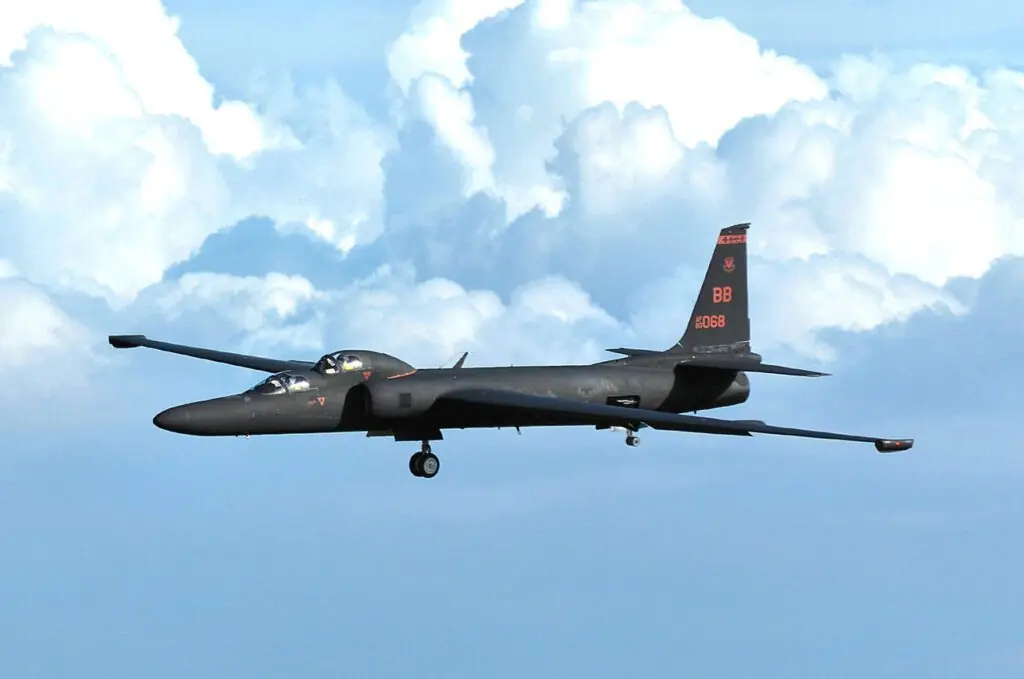
In August 2013 the National Security Archive at George Washington University published, obtained through a Freedom of Information request, an unredacted version of the CIA's internal history of the U-2 and OXCART programs, written in 1992 and already released with redactions in 1998. What was new was the appearance of the name of the site and its location on a map. The document describes the selection of the site in 1955 and the reconnaissance aircraft programs, and maintains that high-altitude flights would explain more than half of the sightings of the era, a proportion that does not fit well with the Air Force's public tallies.
Executive summary of the case file. Everything essential before you dig deeper.
Fact sheet
OSINT - Traceability
Friends, on August 16, 2013, the press around the world ran the same story under the same headline: the CIA admits Area 51 exists. And that morning, in hundreds of forums, a lot of people felt vindicated after thirty years. I’m here to spoil the party with my usual move: reading the document.
Because the document exists, it is public and it is free. You don’t have to believe anyone. It was obtained by the National Security Archive at George Washington University (Jeffrey Richelson’s team) through a Freedom of Information request filed years earlier, and they posted the whole thing on their website with an explanatory note. It is titled, in that gray prose good papers have, “The Central Intelligence Agency and Overhead Reconnaissance: The U-2 and OXCART Programs, 1954-1974.”
I stick to my own territory: papers, dates, agencies. And this paper has an internal history worth more than the headline, because what’s interesting is that it had already said it before, and nobody noticed.
What can be verified, first
The CIA itself commissioned the history in the 1980s and it was finished in 1992. It is an internal document, written by in-house historians for the house, with access to the program’s files. In 1998 a redacted version was published. In 2013 another one was published with fewer redactions. And that is the whole news: between one version and the other, the black rectangles covering the name of the site and the point on the map disappeared.
It is worth pausing on what that means, because it is a lesson in how classification works. The site had been an open secret for decades: there were commercial satellite photographs, there were airliner flights that skirted it, there was an unnamed airline leaving Las Vegas airport with employees on board, and the state itself had expropriated land around it through published procedures. What was classified was the word, not the existence of the site.
The content of the document, on the other hand, is a Cold War engineering and logistics manual, and it is fascinating for reasons that have nothing to do with Martians. It tells how in the spring of 1955 a team went out looking for a place to test an aircraft that was not supposed to exist, how they found a dry lake bed next to the Atomic Energy Commission’s nuclear test site, and how they chose it precisely because the neighboring airspace was already closed for another reason.
It also tells a detail that says a lot about human nature: that to persuade engineers to go live in a barren stretch of desert with nothing around, the Lockheed project chief christened the site with a marketing name, something like “the paradise ranch.” You read that and understand at once that the most mythologized place on the planet began as a human resources problem.
The first U-2 flights from there date from the summer of 1955. Then came the OXCART program, the A-12 one (the SR-71 was a parallel U.S. Air Force development, not the same aircraft), with its first flights in the early sixties. That is the content: two generations of spy planes, their engine problems, their accidents, their pilots and their bureaucracy.
And there is an administrative data point that strikes me as the best of the whole file, because it sums up the entire paradox. Since the mid-1990s, following a lawsuit over dumping and burning of hazardous waste filed by former workers, the White House signs a waiver every year exempting the operating facility near Groom Lake from environmental disclosure obligations. That waiver is published. Every year. In the U.S. official gazette.
In other words: the United States government annually publishes an official document that says, in practice, “there is a site there and we are not going to tell you what we do with its waste.” It had been doing so for years while the word was still blacked out in a 1992 report. Classification runs on inertia with a signature rather than on logic.
The search for the site
A U-2 program team locates a dry lake bed in Nevada, next to the nuclear test site. The adjacent airspace was already closed.
First flights
The U-2 begins flying from the site, at altitudes far above the commercial aviation of the time.
OXCART
Flights begin for the program that would lead to the SR-71.
The history is written
The CIA finishes an internal history of both programs, written by its own historians.
Redacted publication
A version is released with the name of the site and its location blacked out.
Unredacted publication
The National Security Archive obtains and publishes the version without those redactions. The name and the map appear.
Source ↗What the document says about UFOs
And now the part that concerns us, which is in the text itself and which almost nobody read in full. The CIA history maintains that high-altitude reconnaissance flights were responsible for a very high proportion of the sightings of unidentified objects in the late fifties and the sixties, and it even gives a figure: more than half.
The mechanism it describes is plausible and neat. The U-2 flew above twenty kilometers. Commercial aviation of the time cruised at six or seven, and military fighters did not go beyond twelve or thirteen. At dawn and dusk, when it was already night below, the sun still struck the silver wings of an aircraft invisible from the ground. Result: a bright point, very high, silent, moving very fast and very high. Exactly what airline pilots were reporting.
The document adds what really matters: that the Air Force project in charge of investigating sightings checked the reports against the program’s flight logs, confirmed that they matched, and then gave the witness a vague explanation about natural phenomena. It could not tell the truth. The truth was classified.
There is a real revelation there, and it is the one least discussed in 2013. For years, a public body gave explanations it knew to be incomplete to citizens who had seen something real, in order to protect a different program. That is documented: the responsible agency says so in its own internal history. And it is, by a wide margin, the most uncomfortable finding in the document.
That said, the figure has to be taken with a grain of salt, and this site is not going to repeat it as if it were a hard fact. The Air Force project’s own tallies, which are public, do not fit well with that proportion: most reports from those years were filed with explanations that have nothing to do with high-altitude aircraft, and many came from areas and hours where no U-2 was passing. It is a history written by the party with an interest in underlining the effectiveness of its own secrecy. It is cited, and it is cited with the caveat attached.
What is not in the papers
Not a line about anything non-human
It should be said bluntly, because it is the reason this case file is here. The document has hundreds of pages on engines, altimeters, pressure suits, negotiations with allied governments, fatal accidents and budgets. It does not contain a single mention of recovered material, reverse engineering or anything similar. It does not deny it: the subject simply does not appear.
And silence does not prove the opposite
The predictable argument is that this too will be classified, in another document, in another compartment. It is a possibility that cannot be refuted and cannot be used either. If any document that doesn’t say what you expected is explained away because the good part is somewhere else, then no document can ever tell you anything, and declassification stops being a method and becomes a ritual.
What the mythology does rest on
The modern story of the site does not come from any paper: it comes from some televised interviews in 1989 and from what was built on top of them. Nothing published in 2013 supports it, and the element that underpinned that story was synthesized years later and turned out to last less than the blink of an eye.
Why this case won’t die
Because the secret is real, and that is the part lazy skepticism tends to overlook. The base is real: it is a site with prohibited airspace, private guards authorized to use force, administrative expropriations to keep away onlookers, and an annual waiver signed by the Presidency so as not to explain what it burns. All of that is true and all of it is documented.
What happens is that the secret has a known content: aircraft. Aircraft that at the time were radically different from anything else in the air, and that, had you seen them in 1958 from the cockpit of an airliner, you would have described exactly the way a UFO is described. The history of the site is the history of an industry that manufactures unidentified objects by design.
And it doesn’t die because in 2013 a lot of people learned the opposite of what the document said. The headline “it exists” was read as “they were right,” when the paper says, among other things, that the explanation for a considerable share of those sightings was us. It is the same mechanism as with the Avro flying saucer: an authentic document read by its headline and not by its index.
One methodological lesson stays with me. This is, probably, the best available example that declassification works: someone filed a request, waited years, insisted, and ended up getting the entire document published for anyone to read. That is what we should ask for. Not a witness with a distorted voice: a file number and a response date.
How you get a paper like this
And while we’re at it, it’s worth explaining the mechanism, because this case file is above all a lesson in procedure and because in Spain people ask a lot how this is done.
U.S. freedom of information law allows anyone in the world, not just its citizens, to ask a federal agency for a copy of its records. You don’t have to justify your interest. The agency has a deadline to respond and may deny the request in whole or in part under an exhaustive list of exemptions: national security, personal data, internal deliberation, law enforcement. Each redaction in a released document carries in the margin the number of the exemption that justifies it, which makes it possible to challenge them one by one.
That detail is what makes the system more than a mailbox. If you get back a page with half of it in black and the number of the exemption invoked, you can appeal administratively and then before a court, and argue that this exemption does not cover that paragraph. That is exactly how the redaction of the site’s name was dismantled: not all at once, but through persistence over a specific document that had already been released before.
There is also a figure worth knowing about, as cynical as it is useful to understand: the response that neither confirms nor denies the existence of the requested records. It is used when the mere act of acknowledging that a file exists on something would already reveal what is meant to be protected. When someone receives that answer, they are not receiving a no: they are receiving very specific information about the nature of what they asked.
The practical conclusion for anyone who wants to work on this seriously is that good requests are boring and specific. You don’t ask for “everything relating to unidentified objects”: that gets you a denial for excessive burden and that’s the end of it. You ask for a specific document, by its title or its reference, from the unit that holds it, with a limited period. The 2013 declassification came from a well-drafted request and years of administrative patience, not from a gift.
A dry lake bed chosen because the neighboring airspace was already closed because of the bombs. Almost everything that has happened there since is explained by that sentence.
OSINT – Source traceability
The document's claim about the proportion of sightings attributable to reconnaissance flights is reproduced as the agency's claim and accompanied by the corresponding objection, rather than cited as a fact. Exact flight dates and figures for the area expropriated are not reproduced because they do not come from a single document that can be consulted.