
Larry Warren and the Rendlesham Infighting: When Witnesses Contradict Each Other
The most spectacular account from Suffolk's forest rests on one man. The three documented servicemen deny it, and his own co-author distanced himself from it in December 2016.
Larry Warren, a U.S. Air Force security policeman posted at the Suffolk bases in December 1980, spread from 1983 a version of the Rendlesham events on a far larger scale than that of any other witness, with an event in a forest clearing, the presence of numerous personnel and the descent of beings. No official document records anything of the kind. The servicemen whose presence is established in writing deny it, and in December 2016 his co-author Peter Robbins publicly distanced himself from the version after almost twenty years of defending it.
Executive summary of the case file. Everything essential before you dig deeper.
Fact sheet
OSINT - Traceability
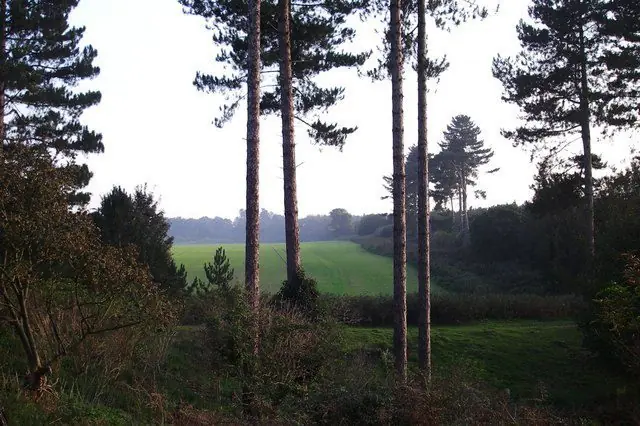
Rendlesham Forest, in the county of Suffolk, smells of resin and wet earth eleven months of the year. It is a plantation, not an ancient forest: pines in lines, planted by a British forestry commission that decided in the 1940s that this coastal sand could produce timber, and straight rows that vanish into the fog with an almost unpleasant regularity. In December it gets dark at four in the afternoon, and the North Sea air comes in through the mouth of the Deben at just the right temperature to get the damp into your boots.
Among the trees, at Christmas 1980, there were two air bases separated by about three kilometers of pinewood. On paper they were British; in practice they were occupied by a U.S. fighter wing, with its chain of command, its security police, its perimeters and its role in the Allied defense setup. And in that pinewood, between December 26 and 28, something happened that has generated more contradictory literature than any other European case.
This case file leaves the lights aside for a far more uncomfortable and much more poorly documented problem: the witnesses in that forest contradict one another, and the most famous of them has ended up disowned even by the man who wrote the book with him.
What can be verified, first
Let us put on the table what has a letterhead, which in this case is more than usual. There is a memorandum signed on January 13, 1981 by Lieutenant Colonel Charles I. Halt, then deputy base commander, addressed to the British Ministry of Defence and titled with a sobriety many reports would envy: Unexplained Lights. That paper exists, it was released years later, and it is the founding document of the whole affair. We have it cataloged separately, in the memorandum’s entry.
There are also written statements taken from U.S. servicemen in January 1981, among them Sergeant Jim Penniston, Airman First Class John Burroughs and Airman Ed Cabansag. There is an audio recording made by Halt himself while he walked through the pinewood with a patrol on the second night, with readings from a radiation meter and live commentary. And there is the file the British Ministry of Defence opened on the matter, released in the declassification of its archives.
In other words: for a UFO case, there is an unusual amount of official paper. What that paper describes, however, is far more modest than what the legend has built on top of it. Lights in the forest, marks on the ground, radiation readings whose interpretation is disputed, and several bewildered servicemen. No landed craft with symbols, no beings, no generals witnessing the event. That came later, and it came mostly from one mouth.
In December 1980, Larry Warren was a U.S. Air Force security policeman, nineteen years old and newly arrived in the United Kingdom. That is also verifiable: he served there. His posting is not in dispute; what he did during those nights and what he saw is.
First night
Security personnel at Woodbridge's east gate detect lights in the pinewood and go out to investigate. The written statements of January 1981 come from this outing.
Second night
Lieutenant Colonel Charles Halt enters the forest with a patrol and records the walk on tape, with readings from a radiation meter. It is the best-documented episode of the case.
The memorandum
Halt signs for the British Ministry of Defence the document on unexplained lights that will become the founding piece of the case file.
The case reaches the press
The memorandum, released in the United States, jumps to the British press and turns the incident into a popular phenomenon.
Larry Warren appears
He contacts investigators, initially under an assumed name, and offers a version on a far larger scale than that of any other witness.
The book
He publishes, together with Peter Robbins, a volume that fixes his version and spreads it internationally.
The break
Peter Robbins makes public a statement distancing himself from the version of his own co-author and detailing the documentation problems he had been finding.
The other witnesses speak
Penniston, Burroughs and Halt himself publicly deny that Warren was present at the episodes he describes.
What is said to have happened
Warren’s version describes a different event altogether. In his account, on the third night an event of enormous scale took place in a clearing in the pinewood, with numerous military personnel present, senior officers, recording equipment and an object from which beings descended. He speaks of a subsequent cover-up operation, of interrogations, of threats and of a forced transfer.
It is by far the most cinematic version of the case, and it is also the one that has reached the general public. If you have seen a documentary about Rendlesham in the last thirty years, the scene you remember most likely comes from here and not from Halt’s memorandum.
An event with dozens of participants cannot have a single narrator. That is the elementary arithmetic that sinks the account.
And there lies the problem, put plainly. If what Warren describes happened in that clearing, there would not be one witness: there would be thirty. Forty years later, none of the servicemen whose presence in the forest is documented in writing has backed that scene. Quite the opposite. Penniston and Burroughs, who signed statements in January 1981, have publicly maintained that Warren was not with them. Halt, the highest-ranking officer involved and the man who put the matter in writing, has said the same.
One might think this is the typical ego squabble between witnesses, of which there are many. But in December 2016 something happened that changes the weight of the matter: Peter Robbins, co-author of the book and for almost twenty years Warren’s main champion and guarantor, published a long, detailed statement distancing himself from his version and setting out the documentation problems he had been finding. He was not an outside critic: he was the man who had put his name and his credibility on the cover.
The sequence is worth fixing carefully, because it explains a good deal. Halt’s memorandum was released in the United States and reached the British press in October 1983, almost three years after the events. That is: by the time Warren began to speak, the story was already public, already had a shape, and it was already known which elements worked on an audience. That order proves nothing by itself (there are perfectly legitimate reasons to stay silent for three years, starting with fear), but it is the order an investigator is obliged to note. Testimony that arrives after the public account cannot corroborate it. At most, it repeats it.
What it could be, without needing Martians
A nineteen-year-old kid on his first posting
It is worth keeping the human scale of the matter in view. Warren arrived in Suffolk as practically a teenager, on an overseas posting, in winter, on night guard duty. Under those conditions rumors travel at extraordinary speed: shifts overlap, people talk in the mess hall, and what on the first night was a strange light becomes, within forty-eight hours, a story with a lot more content.
A perfectly reasonable hypothesis is that Warren was on duty those days, heard the commotion firsthand, took part in some peripheral outing, and that over the years memory did what memory does: it incorporated as lived what was heard. It is a well-described phenomenon and requires no bad faith. It requires time, repetition and a story one tells many times.
The market rewards the big version
And then there is the economic mechanism, which in this field is best named without squeamishness. In 1983 the case reached the British press and became a mass phenomenon. From that moment there was a demand: lectures, interviews, books, documentaries. And that demand is not satisfied equally by “I saw some strange lights from a distance” as by “I was in the clearing and they came down from the craft.”
There is no need to suppose a fraud calculated from the first minute. The usual mechanism is enough: every time a story is told to an audience that reacts, the story adjusts a little. What works is kept, what bores is pruned. Thirty years on the lecture circuit are thirty years of natural selection applied to an account. In the end what is left is the version that worked best on stage rather than the memory.
And the forest lights have candidates
For the underlying incident, the documented one, there are conventional explanations that have been worked on seriously. About eight kilometers from the pinewood, on the coast, stands the Orford Ness lighthouse, whose beam sweeps the horizon at a regular interval and is perfectly visible from the forest through the trunks. Critical investigators have maintained for decades that a good part of the intermittent light described by the first-night witnesses fits that lighthouse seen from a given position and under given atmospheric conditions.
The reentry of an orbital object has also been proposed for the initial lights, along with conventional military activity in a busy airspace. None of these explanations covers one hundred percent of what was described, and it would be dishonest to say otherwise. But all of them concern the documented incident, which is modest in scale. For the event Warren relates there is not even any need for an alternative explanation: there is nothing to explain, because no one else saw it.
Why this case does not die
Because the big version is the one that gets told. In terms of reach, Warren won. His account is the one that has reached television, the one summarized in anniversary articles, and the one people remember when they hear the word Rendlesham. Halt’s memorandum, the real document, is comparatively disappointing, and what is disappointing does not travel.
It does not die, moreover, because it has contaminated the entire case, and this is what really matters. The Rendlesham case file has a serious documentary core: a senior officer who put in writing that there were unexplained lights, some marks on the ground, some radiation readings and a live recording. That deserves investigation. But every time someone tries to discuss it seriously, the scene in the clearing appears and the conversation degrades. The inflated testimony does not only sink itself: it takes down with it what was worth something.
And it does not die because it raises the most uncomfortable question in this whole sector, the same one that appears in the line of work on nuclear installations and in the 2001 press conference: what do you do when military witnesses contradict one another? The answer here at Broken UFO is the only workable one. You go one by one, you test each account against the contemporary documentation, and the one that does not appear in the papers stays out, even if it is the most eloquent. Especially if it is the most eloquent.
There is one last thing to say, and it is not pleasant. Larry Warren is a real person and this case file does not accuse him of anything criminal. He may have convinced himself; it happens, and it happens more than people think. What this case file maintains is something more limited and firmer: his version cannot be used as the basis for anything, and anyone who cites it is obliged to cite also that his co-author withdrew it.
And one more thing remains, the one that bothers me personally most in this whole case file. The servicemen who did sign statements in January 1981 have spent forty years carrying a version that is not theirs. Every time someone mentions Rendlesham over coffee after a meal, what comes up is the clearing, the beings and the commanders witnessing it, so those men always have to start by denying before they can tell what they themselves lived through, which was quite a bit stranger precisely because it was quite a bit smaller. It is a silent injustice and it has been there for four decades.
The pinewood is still there, with its straight rows and its smell of resin, and it now even has a marked trail for tourists. At some point during those December nights something happened that a lieutenant colonel considered serious enough to put in writing and send to a foreign ministry. Forty-five years later we are still arguing, not about that paper, but about a scene that only one man remembers.
OSINT – Source traceability
Neither Peter Robbins's December 2016 statement nor the denials by Penniston, Burroughs and Halt are quoted verbatim, because no verified transcripts are available; their content is described and attributed. The discrepancies over Warren's service records pointed out by critical investigators are not addressed, as they could not be verified firsthand. The case file evaluates exclusively the consistency of the testimony against the rest of the documentary corpus of the case.