
Ryan Graves and Americans for Safe Aerospace: The Witness Who Claimed the Least and Achieved the Most
A fighter pilot who has never said they were craft. Only that they were there and that nobody had anywhere to report them. He is the only one in the whole sector who has managed to change a procedure.
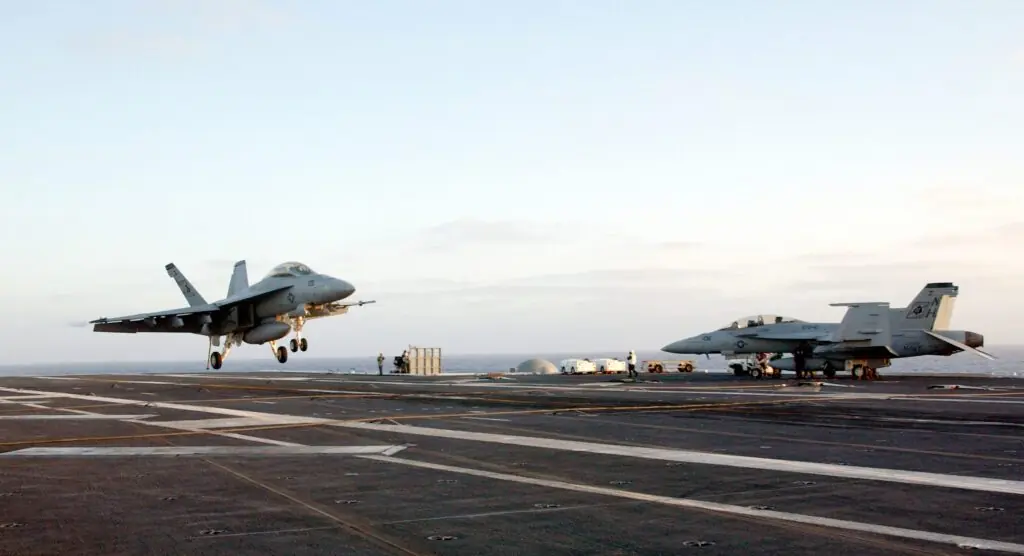
Ryan Graves, a former U.S. Navy F/A-18F pilot, detected unidentified objects in the Atlantic training areas together with other pilots of his squadron between 2014 and 2015, after an upgrade of the unit's radar. He went public in the national press in May 2019 and appeared under oath before a House of Representatives subcommittee on July 26, 2023. His claim is deliberately narrow: the objects existed and could not be identified, and there was no adequate channel to report them. He heads an aviation safety organization and chairs the specialized committee of a professional association in the sector.
Executive summary of the case file. Everything essential before you dig deeper.
Fact sheet
OSINT - Traceability
We are going to close this sector with the case that least resembles all the previous ones, and I want to explain why from the first line. There is no late revelation here, no filing cabinet nobody has seen, no meeting that appears in no minutes. There is a fighter pilot who was on active duty until recently, a radar upgrade in a specific squadron, a series of internal reports, and an organization devoted to one deliberately small thing: letting pilots report what they see without it costing them their careers.
Ryan Graves does not claim to know what those objects are. That is, in my judgment, the central fact of his whole case and the reason he has gone further than any of the previous ones. For years he has been repeating the same sentence in different words: I don’t know what it is, I know it’s there, and I know that if a pilot’s job is at risk for saying so, this is a flight safety problem before it is anything else.
Papers, agencies and procedure, then. Which is exactly the ground where this case defends itself.
What can be verified, first
Ryan Graves was an F/A-18F Super Hornet pilot in the U.S. Navy, assigned to a fighter squadron based on the Atlantic coast. Between 2014 and 2015, after an upgrade of the unit’s radar system, he and other pilots began detecting objects in the training areas off the East Coast, at a frequency he has described as practically daily.
That radar detail matters and is usually overlooked. A plague of objects did not suddenly appear: a better sensor did. It is a well-known phenomenon in any observational discipline (when the instrument improves, what is detected increases), and Graves has always been honest in pointing it out. That he himself supplies the argument that most relativizes his own experience says a good deal about how he works.
His leap into the public sphere is verifiable: he appeared in a New York newspaper in May 2019 in a report on Navy pilots who were reporting unexplained objects, and in 2021 on a prime-time U.S. television program. And what he did on July 26, 2023 is, above all, verifiable: he appeared under oath before a House of Representatives subcommittee alongside David Fravor and David Grusch, at the first modern congressional hearing on the subject. His statement is in the official record of Congress and we have it covered separately in its testimony file.
And the existence of the organization he leads is verifiable: it is dedicated to collecting testimony from aircrews, promoting non-stigmatized reporting channels, and bringing the subject into the field of aviation safety. He also chairs the committee that one of the major professional associations of U.S. aeronautics created specifically to integrate these phenomena into its technical framework. That is a professional structure with a name and bylaws, well beyond forum activism.
The radar upgrade
Graves's squadron receives a more capable radar system. From that point on, detections of unidentified objects in the Atlantic training areas multiply.
The internal reports
Crews begin documenting the encounters through the internal channels available, with uneven results and without a specific procedure for this kind of sighting.
The national press
A New York newspaper publishes a report with Navy pilots who report unexplained objects off the East Coast. Graves shows his face.
Prime-time television
A widely watched news program devotes a report to the subject with pilot testimony. The stigma begins to crack.
The organization
Graves founds and leads an organization devoted to aviation safety and to collecting aircrew testimony, and chairs the specialized committee of a professional aeronautical association.
Under oath
He appears before a House of Representatives subcommittee alongside two other witnesses. His statement focuses on flight safety and the absence of reporting channels.
A reporting channel
The Pentagon's specialized office sets up a mechanism for serving and former personnel to report this type of event.
What is said to have happened
Graves’s account is remarkably sober. He describes objects detected by radar and, in some cases, by infrared systems, that appeared in the training areas on a regular basis; that showed no visible exhaust signature; that remained apparently stationary in strong winds; and that on at least one occasion were involved in a proximity incident with an aircraft.
And he describes the institutional reaction, which is the part he cares about. There was no procedure. There was no box on any form for it. The civil aviation incident reporting system, which works well and anonymously, did not apply to a military squadron in a restricted area. And the culture of the service actively discouraged the conversation: reporting it had a professional cost and not reporting it had none. Anyone who has worked in a hierarchical organization knows what that combination of incentives produces.
A system where staying silent is free and speaking up is expensive does not produce silence because there is nothing to tell. It produces silence because it is designed to produce it.
Note what Graves does not say, because it is as important as what he does say. He does not claim they are craft. He does not claim there is recovered technology. He does not claim a secret program exists. He proposes no explanation. Before the subcommittee, in 2023, he held that line with a discipline I found admirable and that cost him, predictably, a good part of the enthusiasm of the more anxious public.
What it could be, no Martians required
The new sensor shows what was always there
It is the strongest hypothesis and, I repeat, the witness himself supplies it. A new-generation radar detects smaller, slower objects with a weaker signature than the one before it. In a training area over the Atlantic, next to the busiest coast in the country, there are weather balloons, high-altitude balloons, commercial and military drones, large-winged birds and airborne debris of every kind. The sudden appearance of a plague of detections after an equipment upgrade is exactly what one would expect.
Add the artifacts of the system itself. An electronically scanned radar produces its own ghosts, and infrared systems have optical effects (reflections, parallax, apparent motion from the rotation of the sensor) that fool the naked eye and that have already explained at least part of the material published in 2017. An excellent pilot is not necessarily an expert in the pathologies of his own sensor, and there is no shame in that: they are two different trades.
And drones, which in 2015 were already a problem
There is an even more uncomfortable explanation than the previous one, and it is worth putting on the table. Small, persistent, apparently stationary objects with no obvious thermal signature, appearing regularly over military training areas on the East Coast, reasonably describe an unmanned aerial system. It could be one of our own that was never disclosed, it could belong to a contractor, or it could belong to another power doing exactly what powers do.
That hypothesis is no comfort: from a security standpoint it is worse than the exotic one. And it has the virtue of explaining the institutional behavior all at once. If something like that were happening, the foreseeable reaction of the chain of command would be to minimize the matter and discourage the conversation rather than reveal it. The stigma, in that scenario, would be a tool instead of a cultural prejudice.
What is a hard fact: the reporting gap
And here we reach the part that does not depend on what the objects were, which is where Graves’s work is solid. Civil aviation developed, decades ago, an anonymous reporting system without punitive consequences, because the industry learned the hard way that a pilot who fears reporting is a pilot who does not report, and that the information that doesn’t arrive is what causes the next accident.
For this specific category of events, that channel did not exist in the military sphere. That gap is documented, the officials responsible acknowledged it, and it has been partially corrected with the creation of a specific channel in 2023. Whatever the nature of the objects, the diagnosis was correct and the correction was necessary. That is already on the credit side, and it does not depend on any craft turning up.
The civil aviation precedent
It is worth pausing on the model Graves invokes, because it is no invention of his own; it is one of the best ideas in the history of industrial safety. Civil aviation found out the hard way that incident reports stop coming the moment reporting has consequences, and it built a voluntary, anonymous, non-punitive reporting system, managed moreover by a body separate from the authority that imposes sanctions. That separation is what makes it work. The result has transformed air safety over the last half century and is now studied as a model case in other sectors.
Transferring that model to the military sphere has obvious difficulties, starting with the classification of information. But the diagnosis carries over intact: if reporting costs and silence is free, the organization is left without data on precisely what it understands least. And that statement does not need to know what the objects are to be true, which is exactly why this case file closes the sector in a different tone from the previous nine.
Why this case does not die
Because it is the model that works, and it should be said in so many words after nine case files in which we have seen the opposite. Narrow, checkable claims. No conclusion about what is not known. A problem framed in terms an institution can address. A professional channel instead of a stage. And an appearance under oath, with legal consequences, instead of a rented press room.
Compare it with the 2001 press conference, which asked for hearings by piling up witnesses and did not get them. Here the hearings happened, and the witness who came out of them best was precisely the one who promised the least. Twenty-two years between one and the other, and the difference lies in the size of the claim, not in the number of testimonies.
Nor does it die because the underlying problem is still alive. The objects remain unidentified. The data remain unpublished in full. And although the reporting channel has existed since 2023, stigma is removed when the first pilot who uses it finds that nothing happens to him, and no form does that. That takes years of checking. Ask the Japanese commander who in 1986 reported what he saw over Alaska and ended up assigned to a desk; that is the precedent every pilot knows even if they don’t know his name, and we cover it in the John Callahan case file.
And it does not die because it links directly to the best-documented part of the modern catalog. The Atlantic encounters are the chronological continuation of what happened off the coast of California in 2004, and their administrative context is the one opened by Luis Elizondo’s departure from the Pentagon in 2017. Three pieces of the same puzzle, with one notable difference: this is the only one in which the witness has never expanded his claim.
Ten case files later, the conclusion of this sector fits in one line, and it is not the one I expected to find when I began. The witness who has achieved the most is the one who claimed the least. All the others came to tell us what was behind the door. This one limited himself to saying that the door had no handle on the inside, and got them to fit one.
OSINT – Source traceability
The statement before the subcommittee is not quoted verbatim because no verified transcript is available; its content is described. The founding year of the organization he heads is not given because it cannot be stated with certainty. The squadron is not identified by its official designation nor the base by name, as they cannot be verified with the precision this site requires; they are described generically. The technical radar data are described qualitatively for the same reason.